In a report published on November 16, 2026, Artemis examined whether Circle’s stablecoin payment network could become a substantial business. Its estimate is a 2032 scenario, not a measured revenue figure or an established valuation.
The payment thesis and its inputs
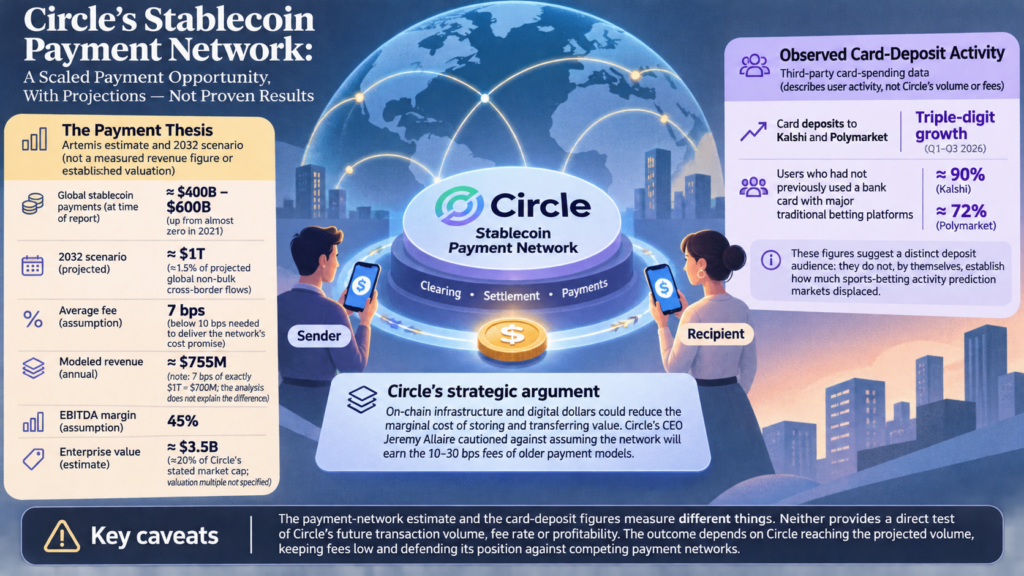
Circle is building a dedicated clearing network for stablecoin payments. Artemis estimated that annual global stablecoin payments had grown from almost zero in 2021 to roughly $400 billion–$600 billion by the time of its report. It did not identify a dataset or measurement date for that range in the supplied analysis.
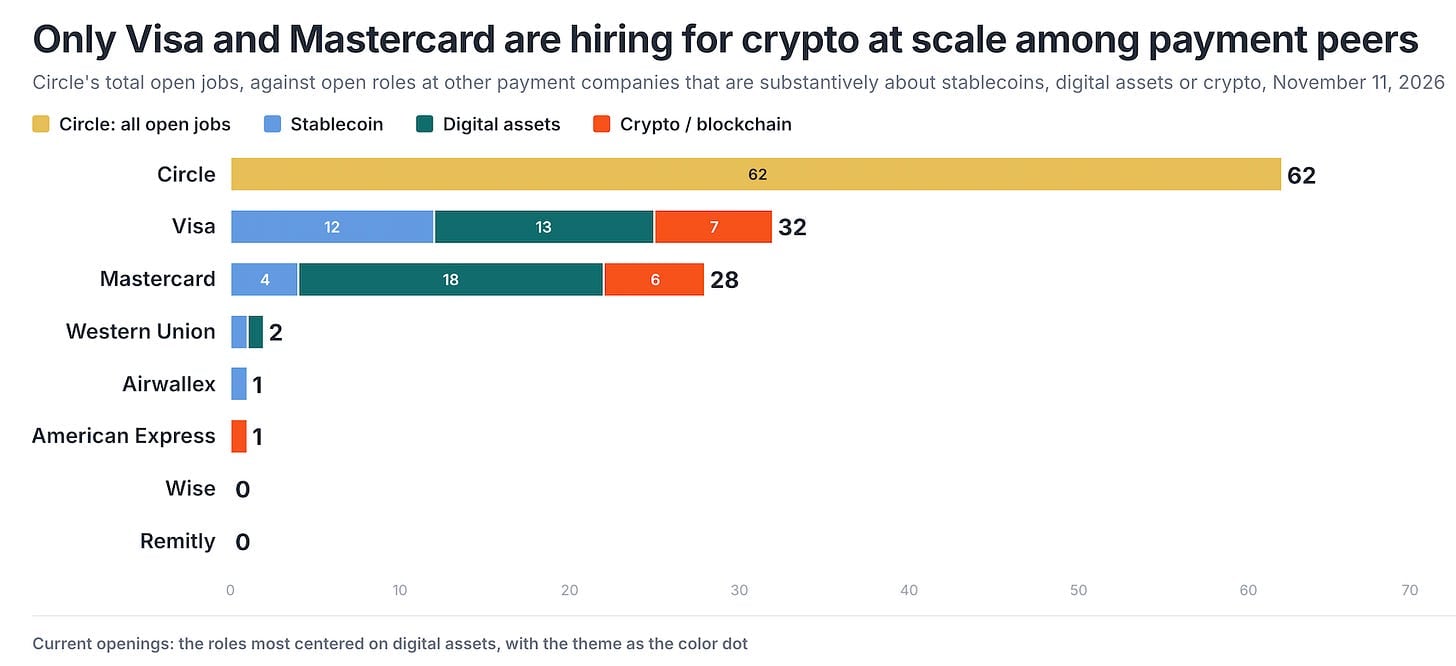
On a recent earnings call, Circle CEO Jeremy Allaire argued that on-chain infrastructure and digital dollars could reduce the marginal cost of storing and transferring value. He cautioned against assuming the network would earn the 10–30 basis-point fees associated with older payment models. That is Circle’s strategic argument, not evidence that the network has achieved those costs or volumes.

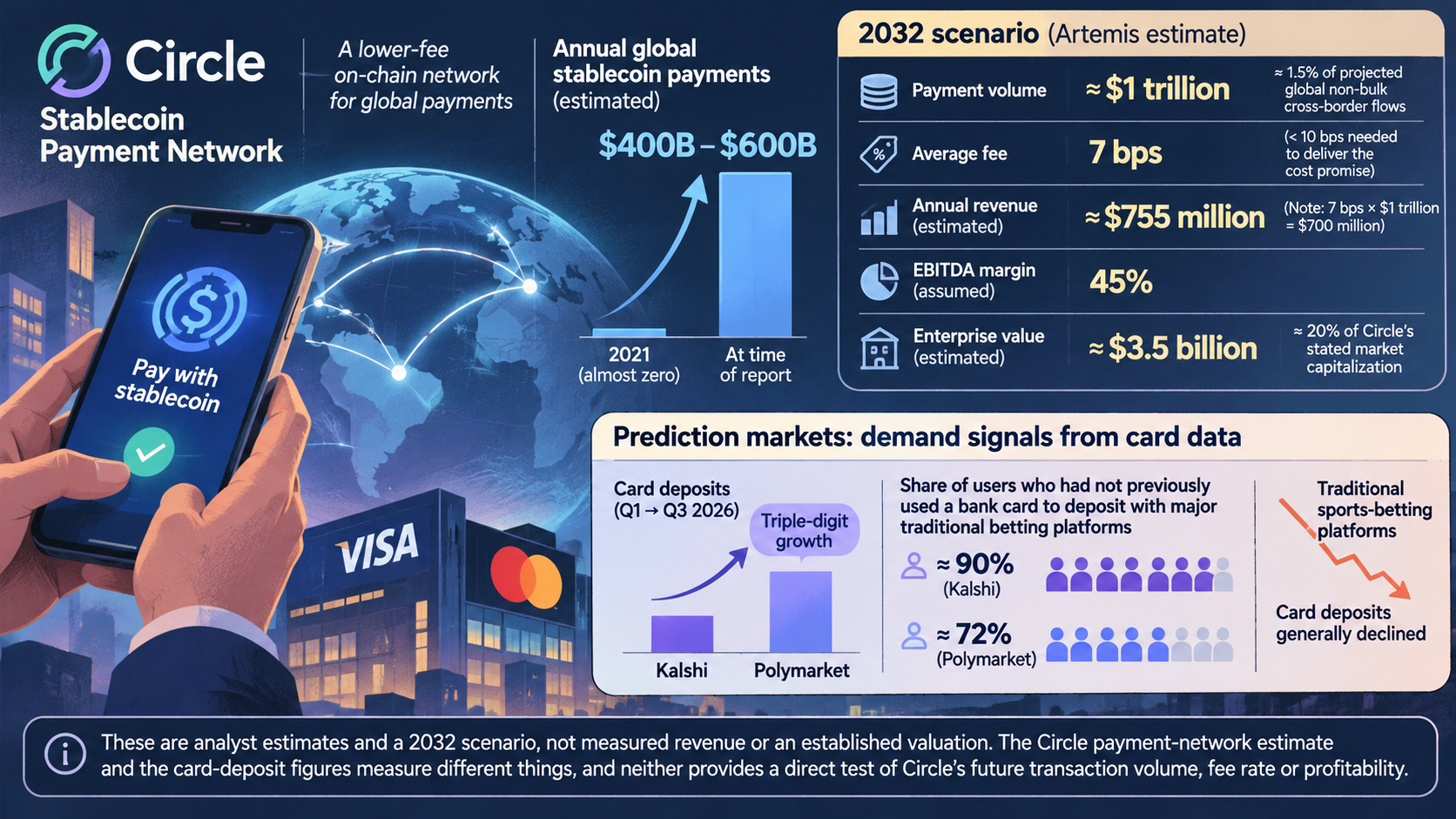
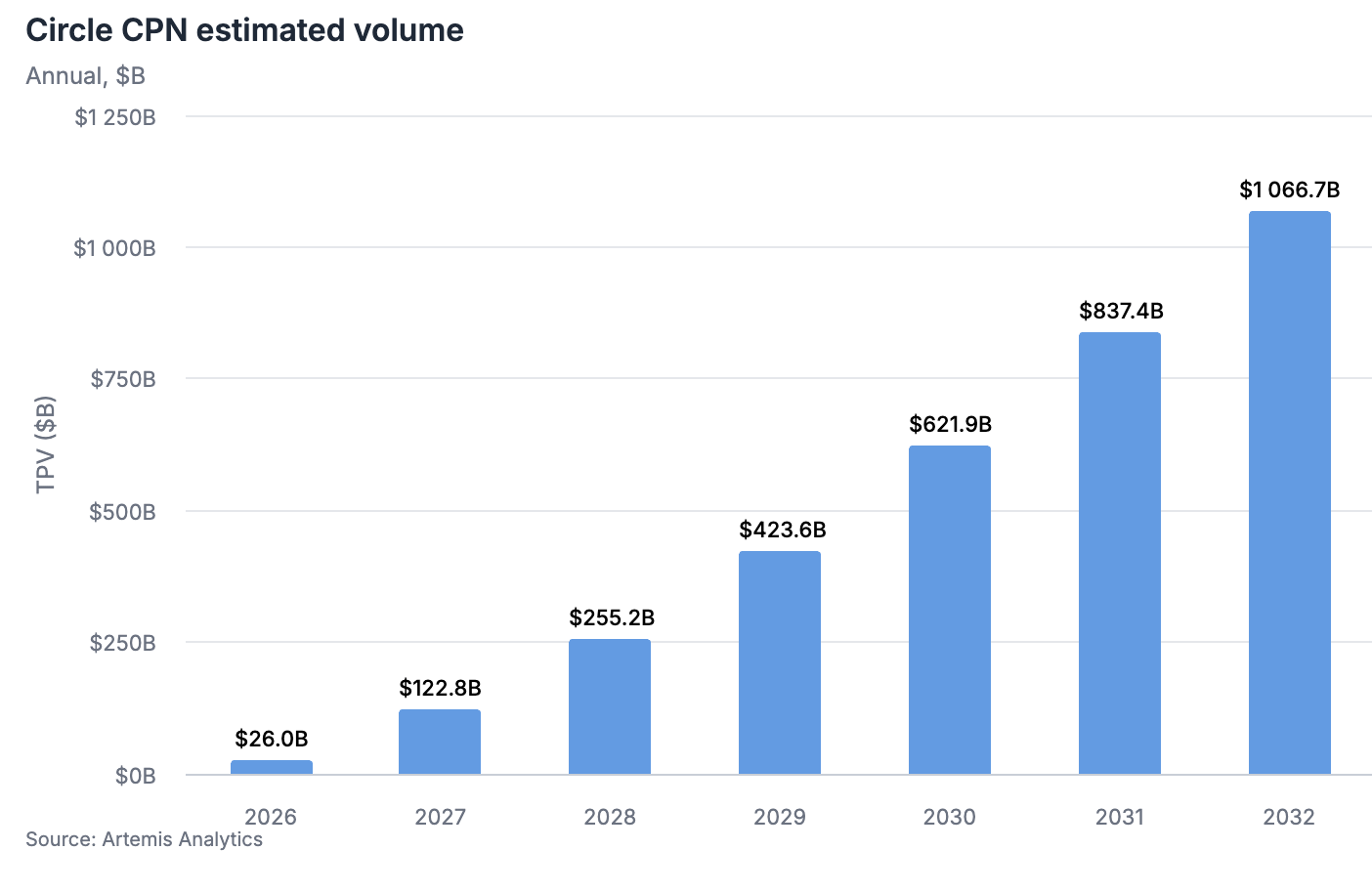
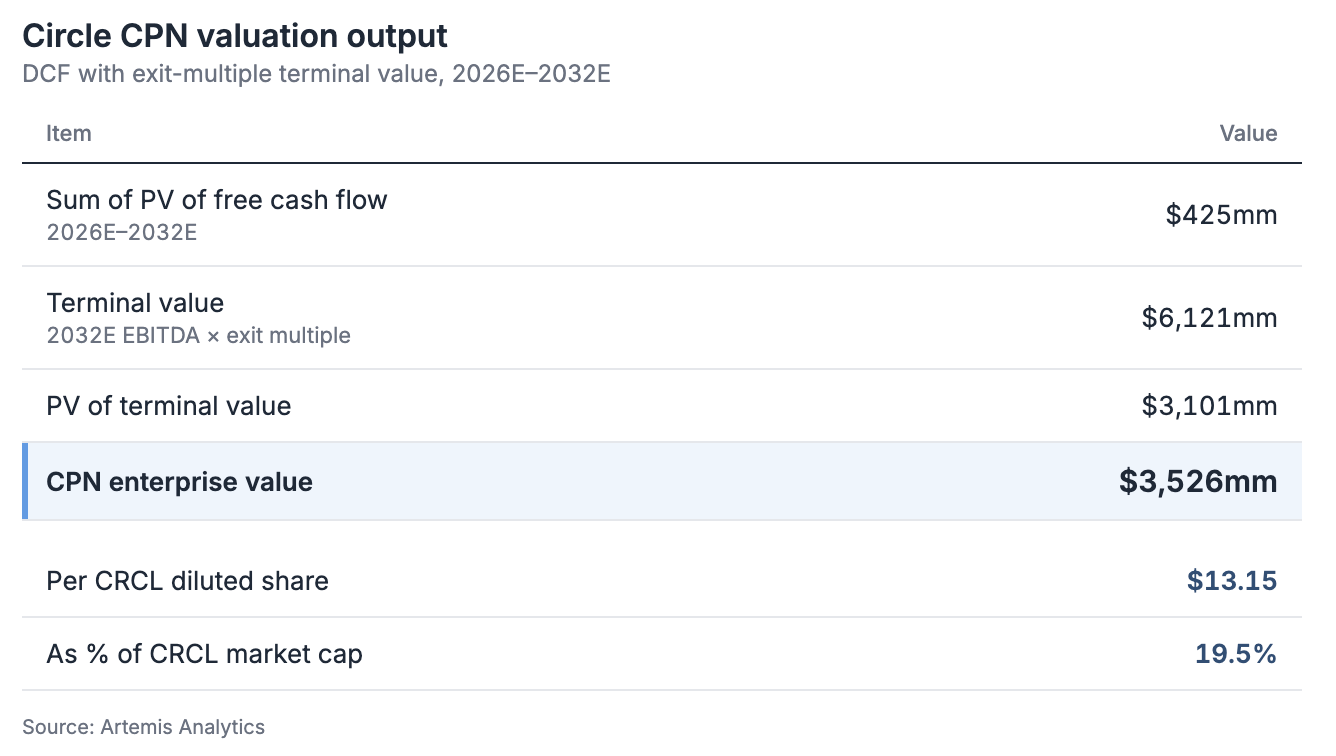
Artemis reasoned that a fee below 10 basis points would be needed to deliver on the network’s cost promise. It projected approximately $1 trillion in payment volume by 2032—about 1.5% of projected global non-bulk cross-border flows—and modeled an average fee of 7 basis points. From this, it presented approximately $755 million in annual revenue, then used a 45% EBITDA margin to arrive at a $3.5 billion enterprise-value estimate, equivalent to about 20% of Circle’s stated market capitalization.
The calculation needs a qualification: seven basis points applied to exactly $1 trillion yields $700 million, not $755 million. The supplied analysis does not explain the difference or specify the valuation multiple behind the $3.5 billion figure. Its outcome also depends on Circle reaching the projected volume while keeping fees low and defending its position against competing payment networks.
What the adjacent demand data can—and cannot—show
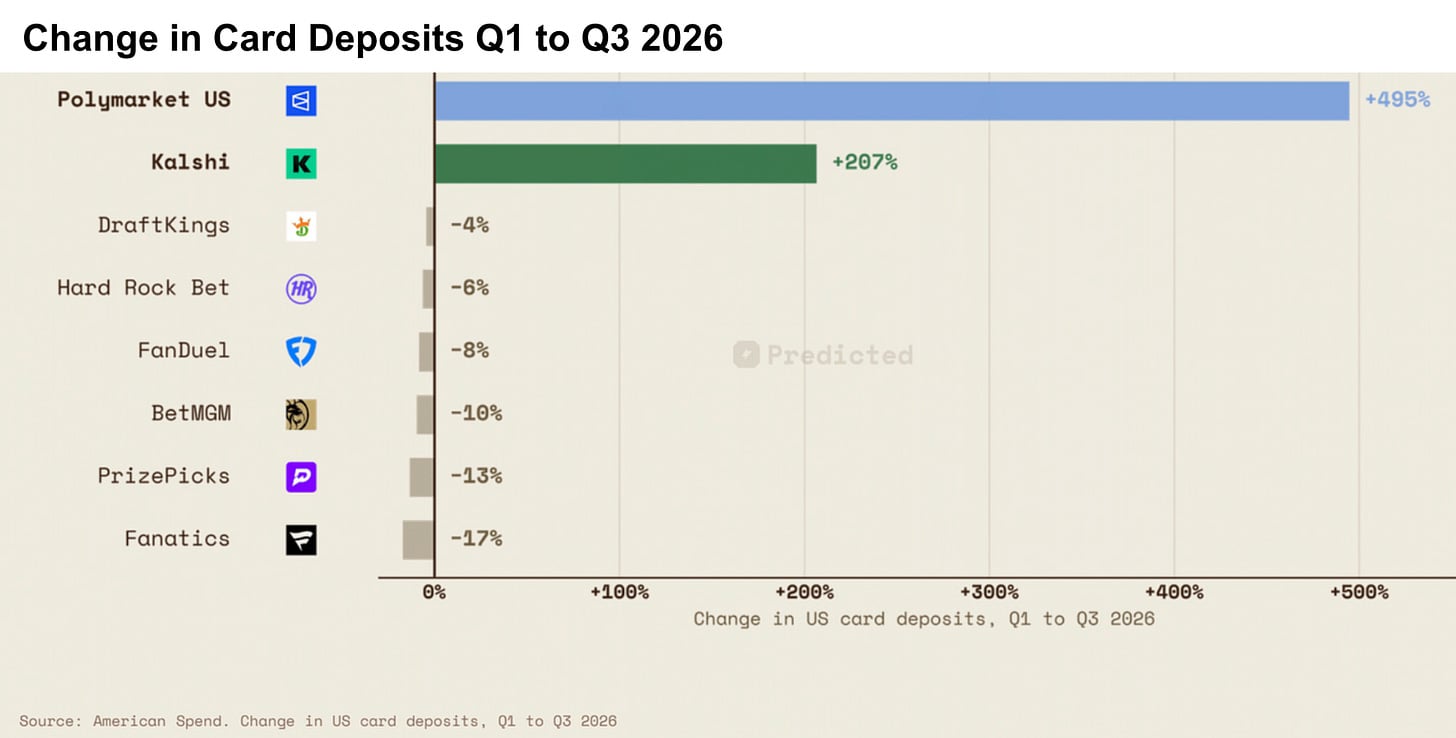
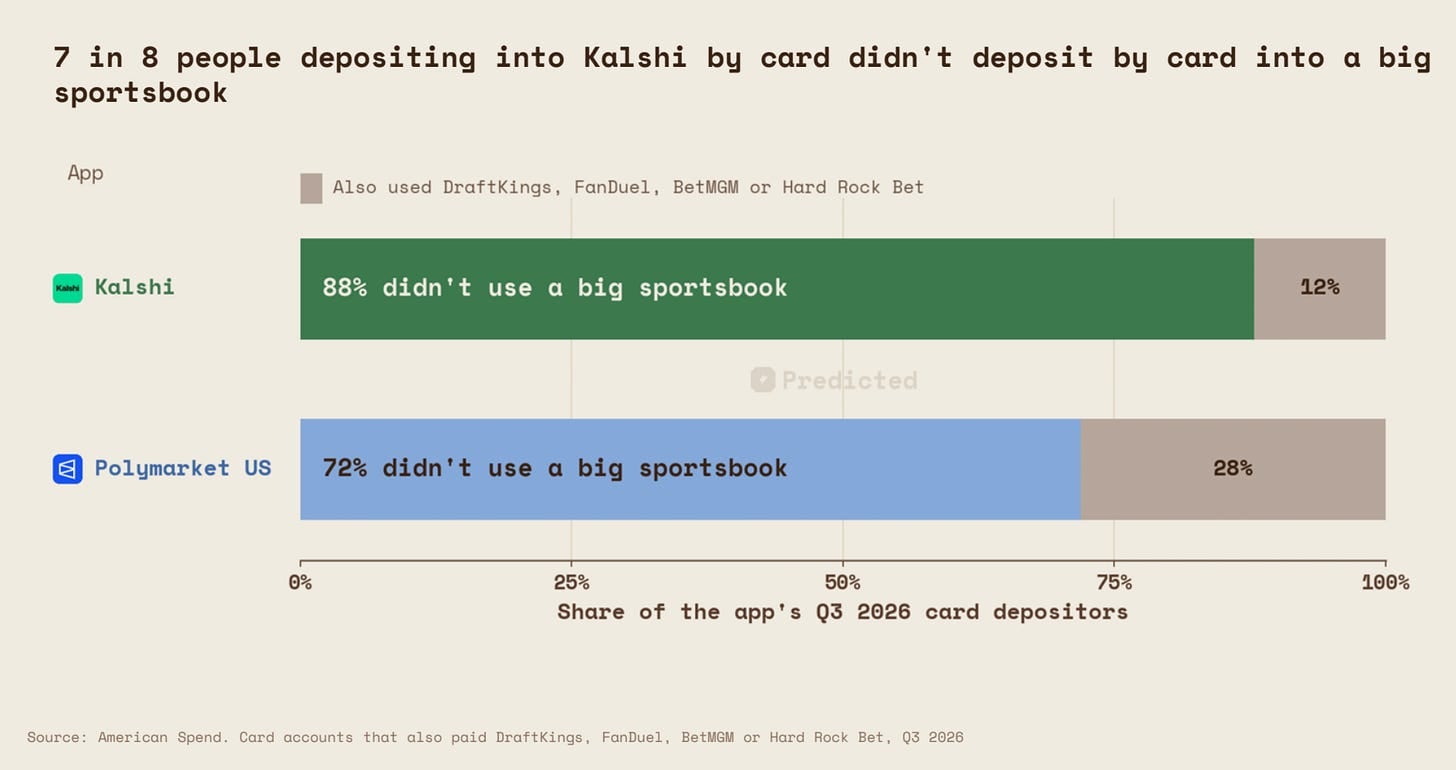
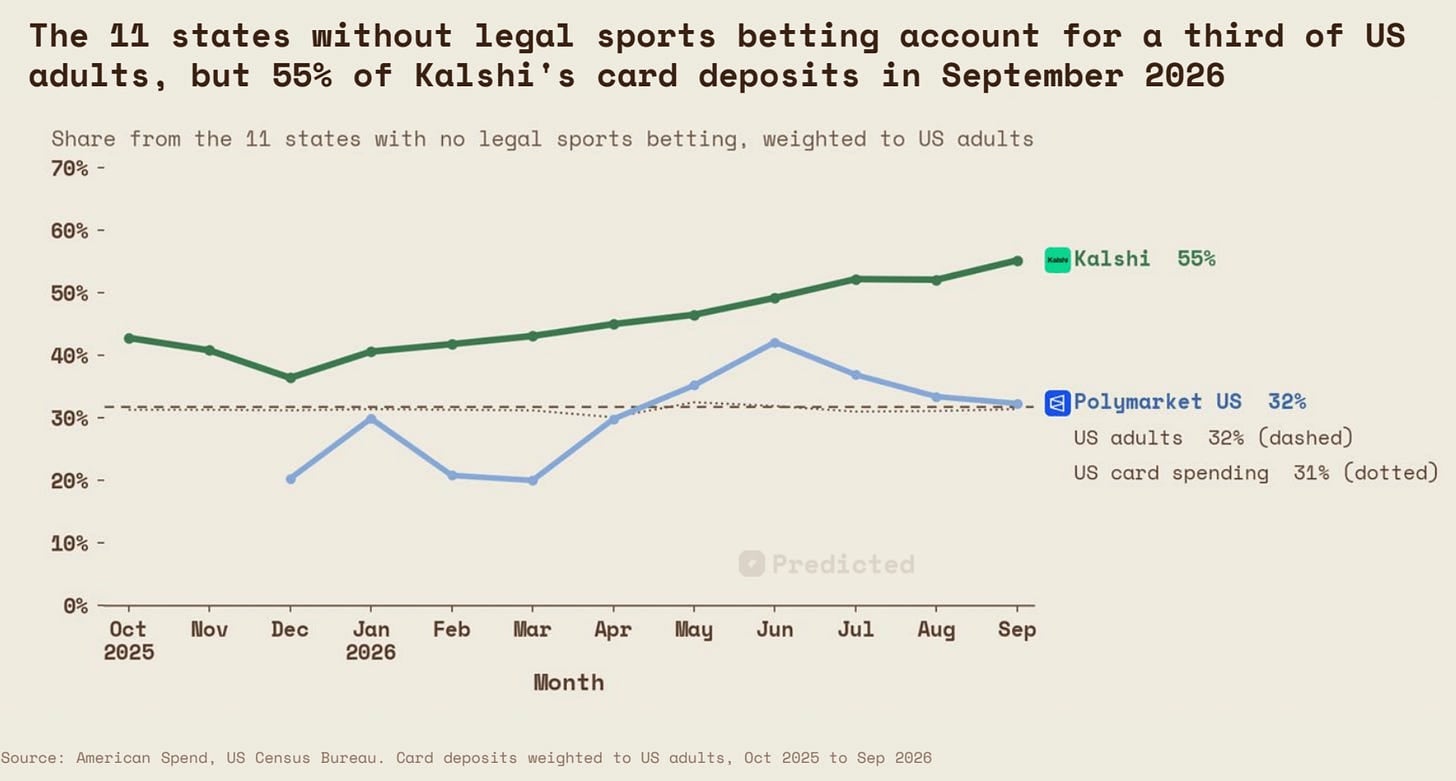
Artemis also cited third-party card-spending data showing triple-digit growth in card deposits to Kalshi and Polymarket from the first to the third quarter of 2026, while deposits to traditional sports-betting platforms generally declined. According to that data, nearly 90% of users depositing to Kalshi and 72% of those depositing to Polymarket had not previously used a bank card to deposit with major traditional betting platforms. Those figures suggest a distinct deposit audience; they do not, by themselves, establish how much sports-betting activity prediction markets displaced.

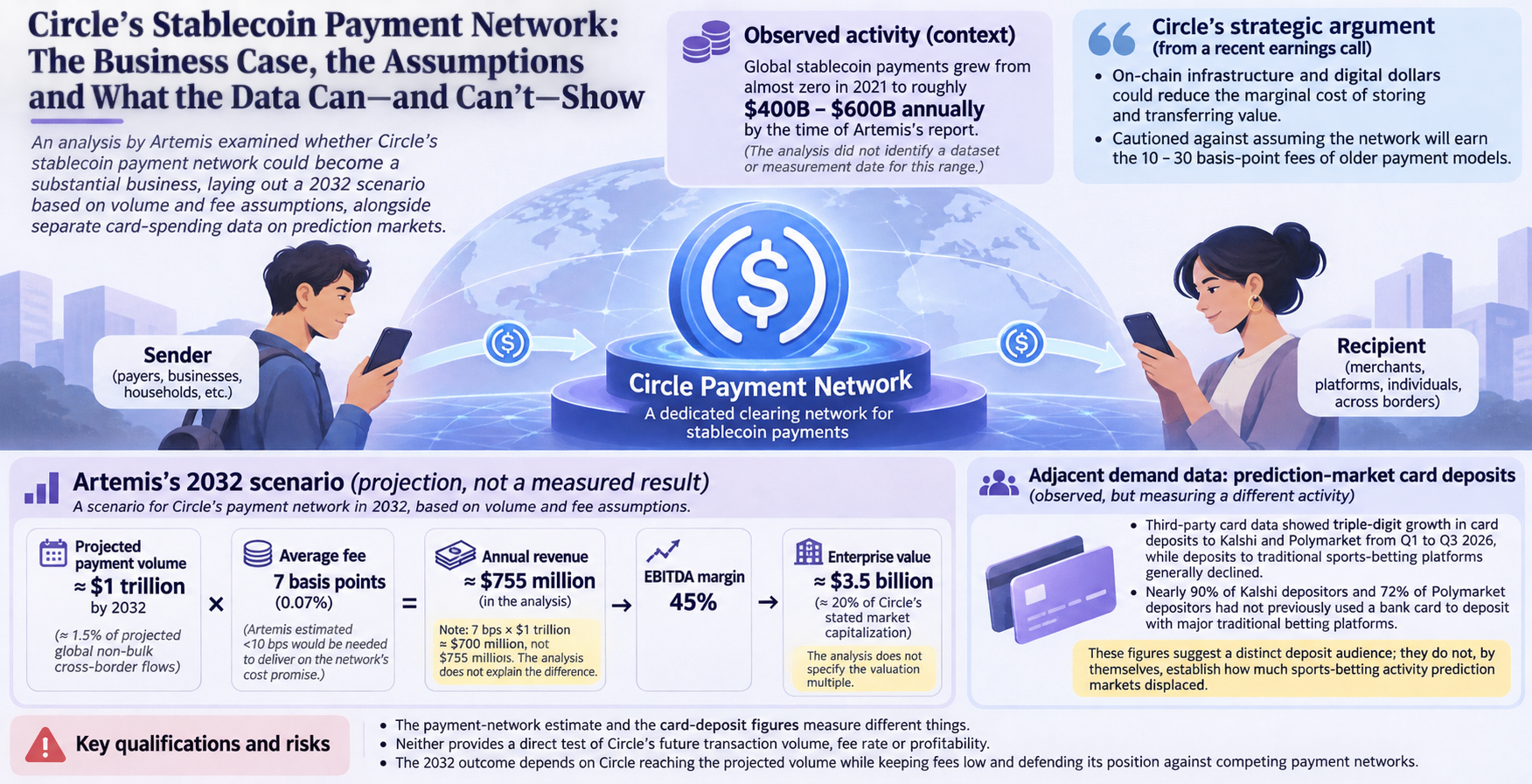
The payment-network estimate and the card-deposit figures measure different things. Neither provides a direct test of Circle’s future transaction volume, fee rate or profitability.