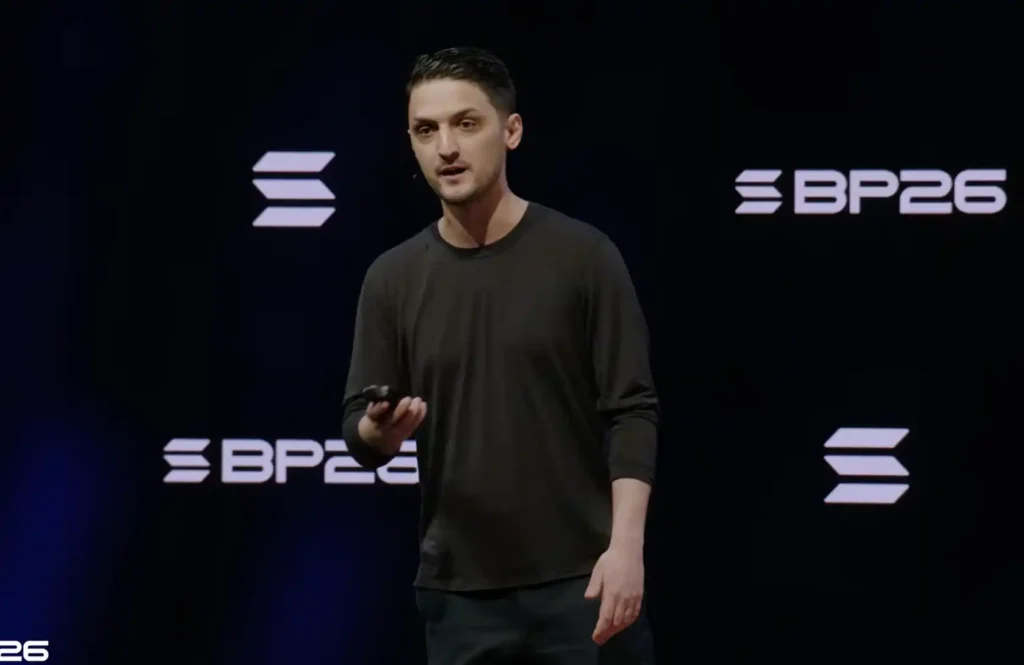
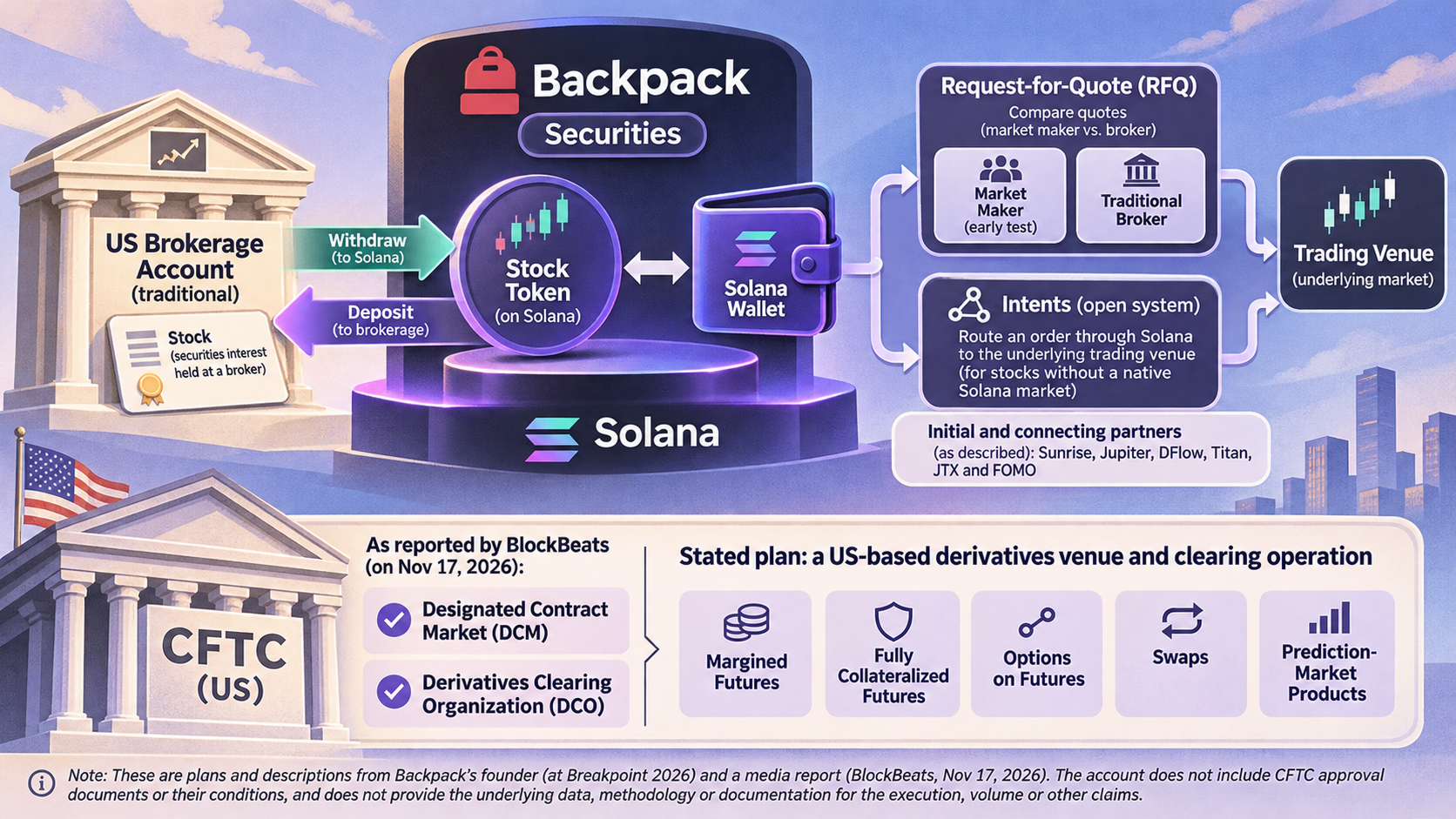
At Breakpoint 2026, Backpack’s founder, Armani, described a plan to connect US brokerage accounts, Solana-based stock tokens and derivatives trading. In a report published on November 17, 2026, BlockBeats said Backpack had obtained US Commodity Futures Trading Commission (CFTC) designations as both a designated contract market (DCM) and a derivatives clearing organization (DCO). The supplied account does not include the CFTC’s approval documents or their conditions, so the scope of those designations cannot be assessed from it alone.
Moving stocks between a brokerage account and Solana
Armani said Backpack Securities lets a user buy a stock through a traditional brokerage account and withdraw a token representing that stock to a Solana wallet. He described deposits in the opposite direction as working like a crypto deposit. According to him, the tokens are redeemable one-for-one, while the holder retains a securities interest held through a traditional broker.
That account describes the intended user experience, not the underlying legal and custody arrangements. The speech does not specify how token holders’ claims are recorded, what happens if an intermediary fails, or which restrictions may apply to transfers and redemption. Those details matter when evaluating whether moving a token through DeFi preserves the rights available in a brokerage account.
Liquidity and execution: claims with limited context
Armani said 94 stocks were available on Solana and set a goal of reaching 10,000. Citing Blockworks figures shown in his presentation, he claimed Backpack Securities offered execution 40 times better than stocks on Robinhood Chain. He also cited a snapshot in which Solana trading volume for PTN was 486% higher than volume on traditional exchanges. The supplied account provides neither the underlying chart nor the measurement period and methodology for either comparison; neither should be read as a general finding about execution quality or market share.
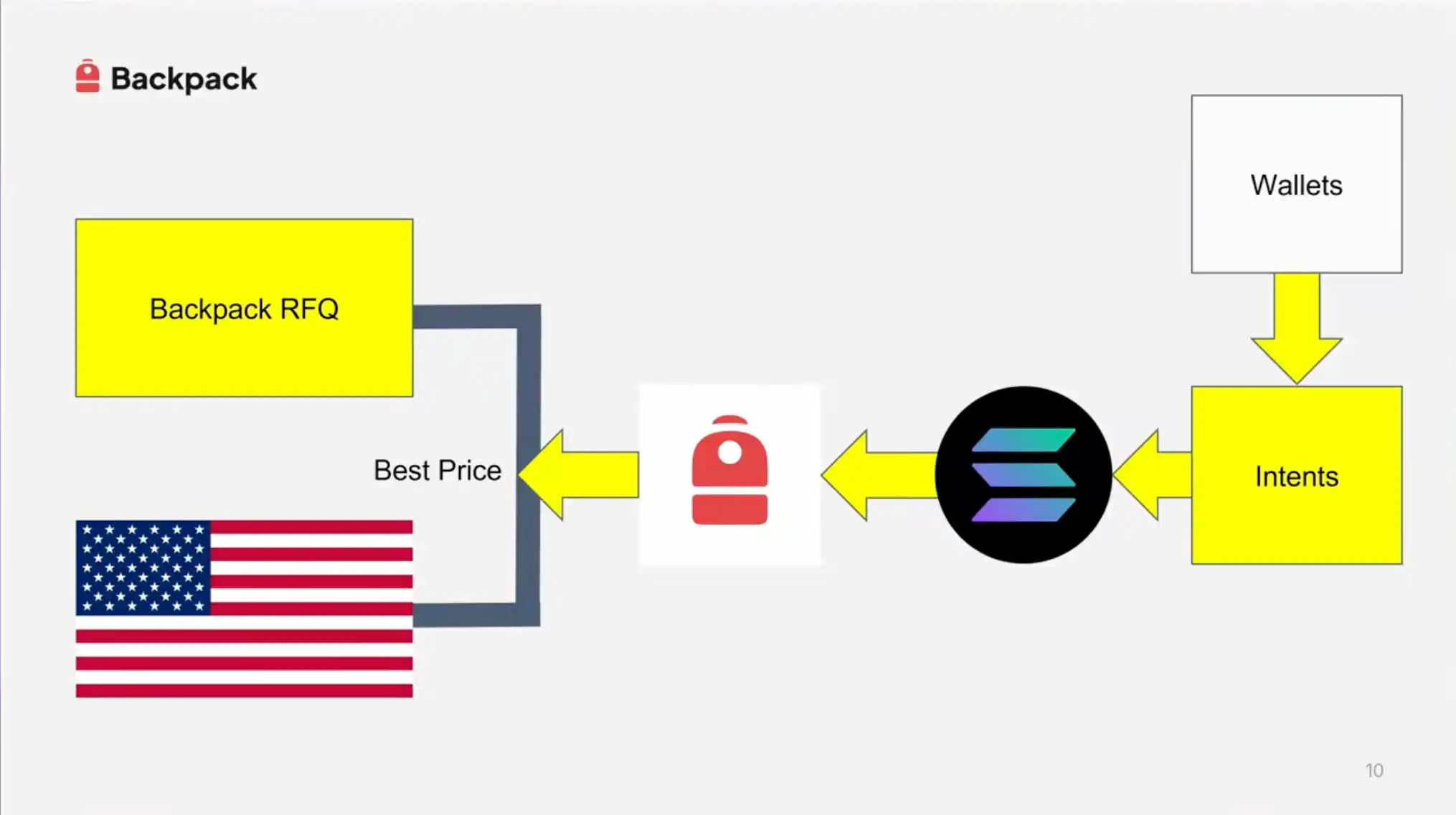
Backpack’s proposed route to a larger stock universe has two further components. First, Armani described an internal request-for-quote (RFQ) system that compares a market maker’s quote with a traditional broker’s price. He said one market maker was connected in an early test and that 25% of orders on the RFQ received a better execution price than through the traditional broker. The speech does not state the sample size, test dates or how the comparison was calculated.
Second, he proposed an open intents system: for a stock without a native Solana market, a wallet could submit an order through Solana for routing to an underlying trading venue. Armani named Sunrise as an initial integration partner and said Jupiter, DFlow and Titan were connecting, alongside trading applications JTX and FOMO. These were descriptions of integrations and plans, not evidence that every stock was already accessible through that route.
The derivatives ambition
Armani linked the reported CFTC designations to plans for a US-based derivatives venue and clearing operation. He listed margined and fully collateralized futures, options on futures, swaps and prediction-market products as intended offerings. Obtaining designations, as reported, should not be conflated with all those products being live or approved on identical terms.
The architecture he outlined depends on more than putting a stock token on Solana: brokerage custody and redemption, competitive quotes, order routing and regulated clearing each carry separate operational and legal assumptions. The speech provides a roadmap and selected early metrics, but not enough documentation to independently test its claims about token-holder rights, execution quality or the reach of the proposed market.