Historical analysis: originally published by imToken via PANews on November 11, 2026, at 21:36 UTC+8. The project decisions and network data below reflect that reporting date, not current status.
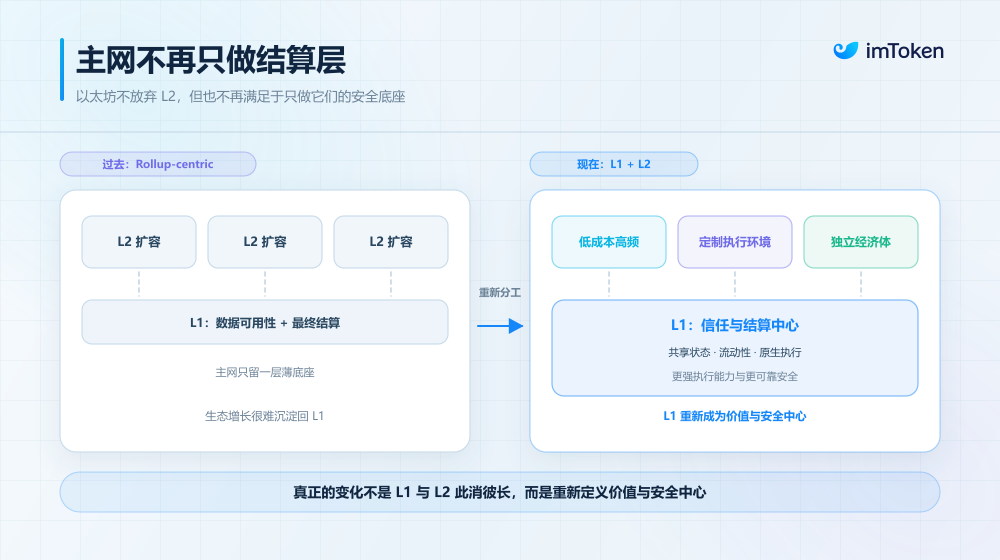
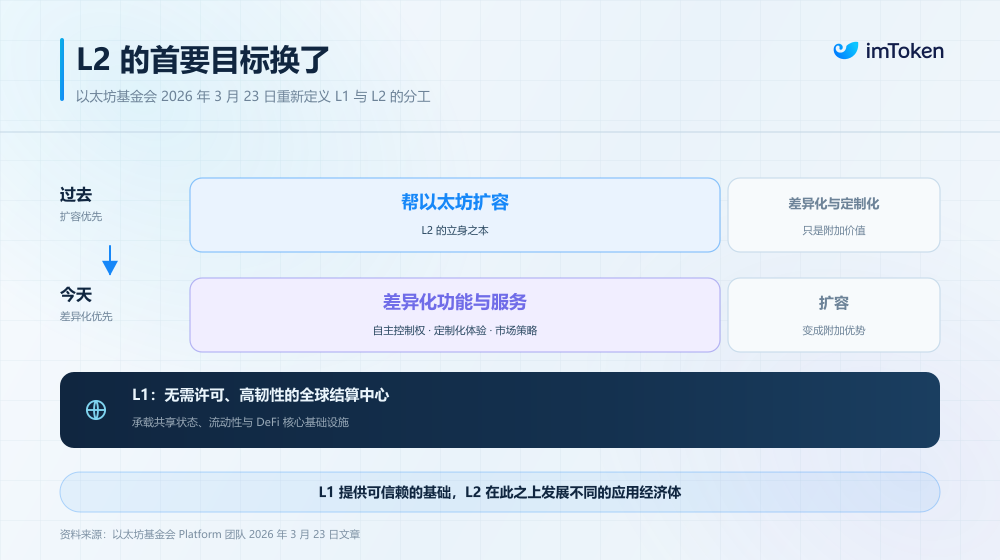
For a project choosing where to run, cheaper transactions are only one part of the calculation. An independent Ethereum layer 2 (L2) also brings infrastructure, bridging, security and ongoing operating requirements. The examples assembled by imToken suggest that some projects were reassessing those costs as Ethereum’s mainnet capacity improved. They do not establish that L2s as a whole were being abandoned.
The decisions behind the shift
ENS Labs planned Namechain, a dedicated ZK rollup for ENSv2, in 2024. In February 2026, ENS co-founder Nick Johnson announced that Namechain development would stop and ENSv2 would deploy on Ethereum L1 instead. He attributed the decision to mainnet scaling that had outpaced expectations. According to figures disclosed by ENS Labs and cited by imToken, the average gas cost of registering an ENS name had fallen about 99% over the preceding year, from nearly $5 to under $0.05. Those figures describe ENS registrations, not a network-wide fee benchmark.
Other choices reflected different needs. Synthetix criticized liquidity fragmentation and infrastructure instability in a June 2025 publication, then launched its new perpetuals exchange on Ethereum mainnet that December. imToken also reported that Trueo announced a move of its primary deployment from Base to L1 in September 2026; ShapeShift moved its rFOX staking program from Arbitrum to L1 on October 1 because most FOX was already held there; and Superseed stopped its L2 in August, planning to move core products to mainnet. In October, Nillion began moving node operations from its L2 to Blacklight L1, with a plan to phase out the former network.
Operating a chain presents a separate economic question. Blast announced on October 2 that it would wind down, saying network maintenance costs exceeded L2 revenue. Abstract subsequently announced a plan to close on December 15; as of the article’s November 11 publication, that date was still in the future. The source says Abstract had integrated more than 144 applications and attracted over 400,000 users, but cites insufficient liquidity, a limited DeFi ecosystem and little institutional participation as obstacles. Application and user counts alone therefore do not demonstrate sustainable chain economics.
What can remain on L1?
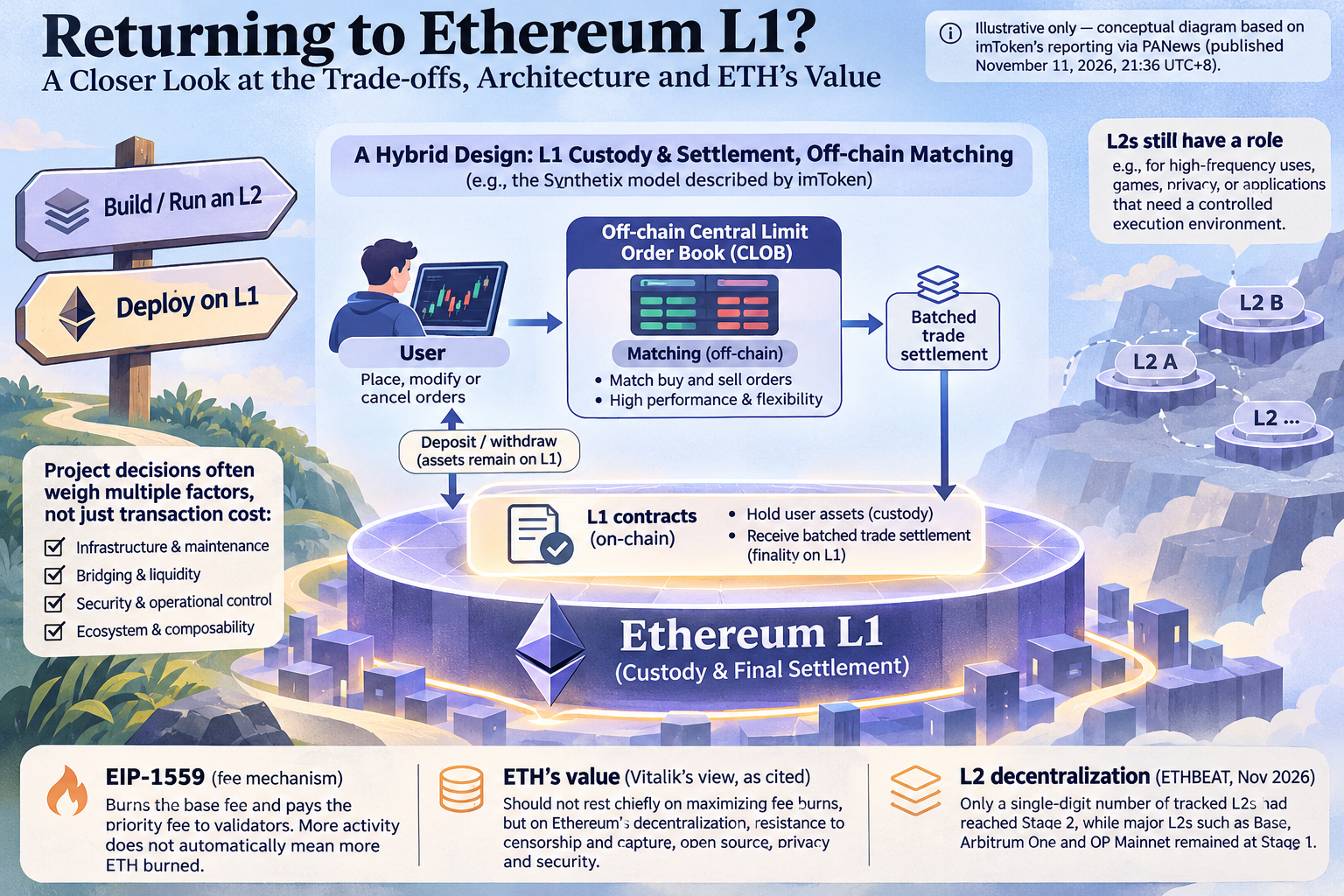
The architectural alternative is not necessarily to perform every operation on mainnet. In the Synthetix design described by imToken, Ethereum L1 contracts hold user assets, an off-chain central limit order book matches orders, and trades are batch-settled on L1. That reduces the need to bridge assets to a separate L2, but it does not eliminate trust assumptions: the source says some margin management still depends on the off-chain order book. The distinction is between where execution happens and where custody and final settlement are enforced.
Decentralization also varies among L2s. Citing ETHBEAT data as of November 2026, imToken says only a single-digit number of tracked L2s had reached Stage 2, with negligible assets relative to the sector, while Base, Arbitrum One and OP Mainnet remained at Stage 1. A project may retain administrative powers for commercial or regulatory reasons, but such an arrangement should not be treated as equivalent to a fully decentralized extension of L1. Native rollups and closer cross-rollup interaction were research directions discussed in the source, not deployed solutions to fragmentation.
The unresolved ETH valuation question
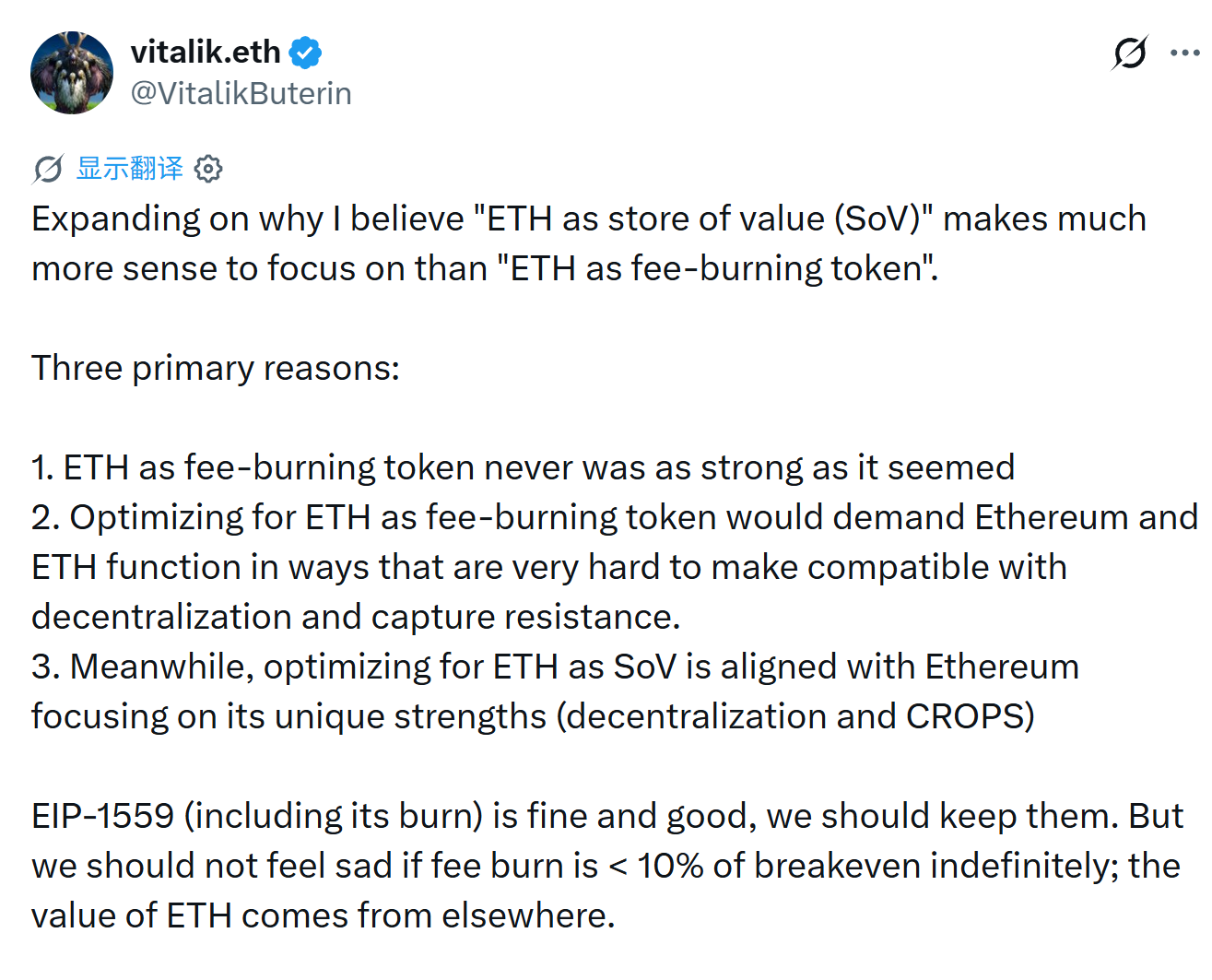
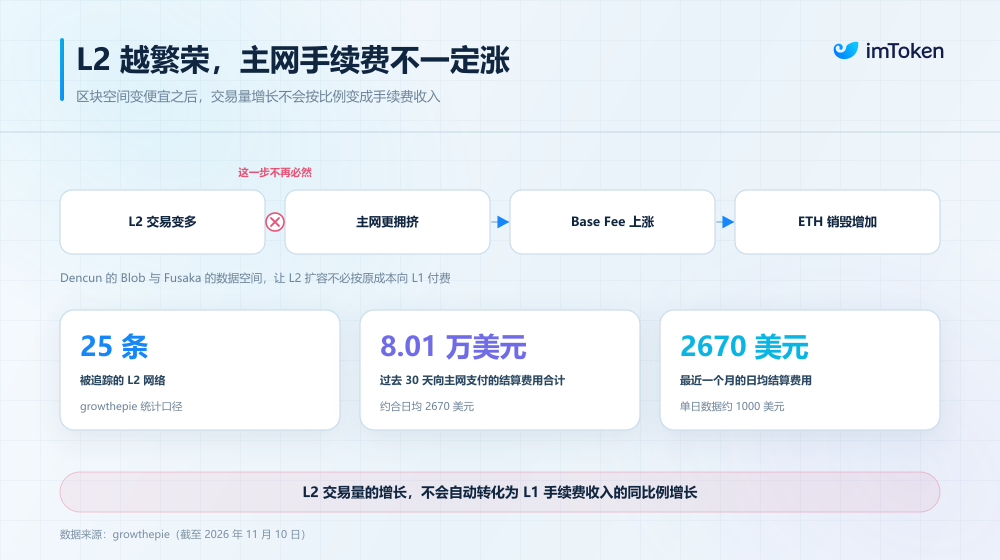
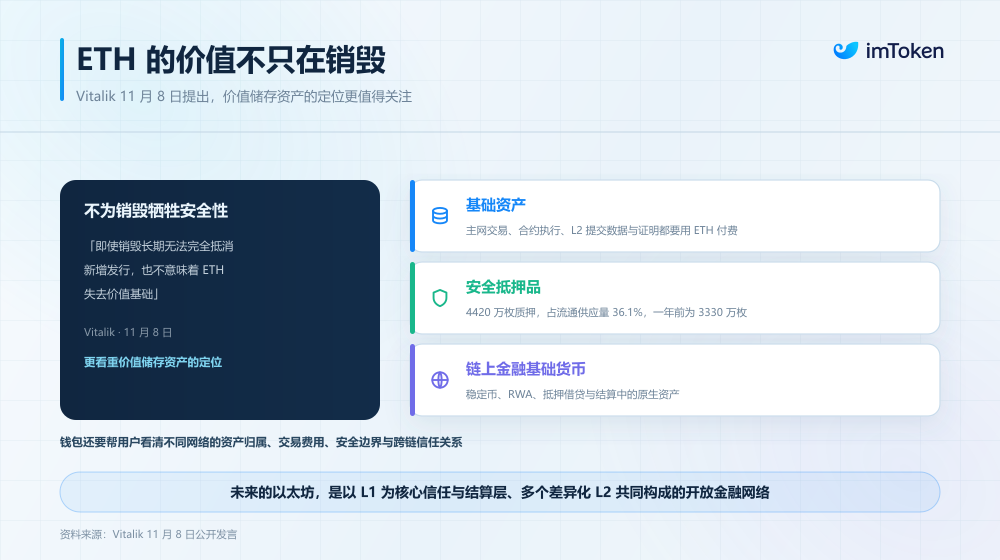
Under EIP-1559, Ethereum burns the base fee and pays the priority fee to validators. More activity does not automatically mean more ETH burned: lower data-posting costs for L2s and greater L1 gas capacity can reduce fees per transaction. imToken cites Vitalik Buterin’s view that ETH’s long-term case should not rest chiefly on maximizing fee burns. He supports retaining EIP-1559, but emphasizes Ethereum’s decentralization, resistance to censorship and capture, open source, privacy and security as foundations for its usefulness.
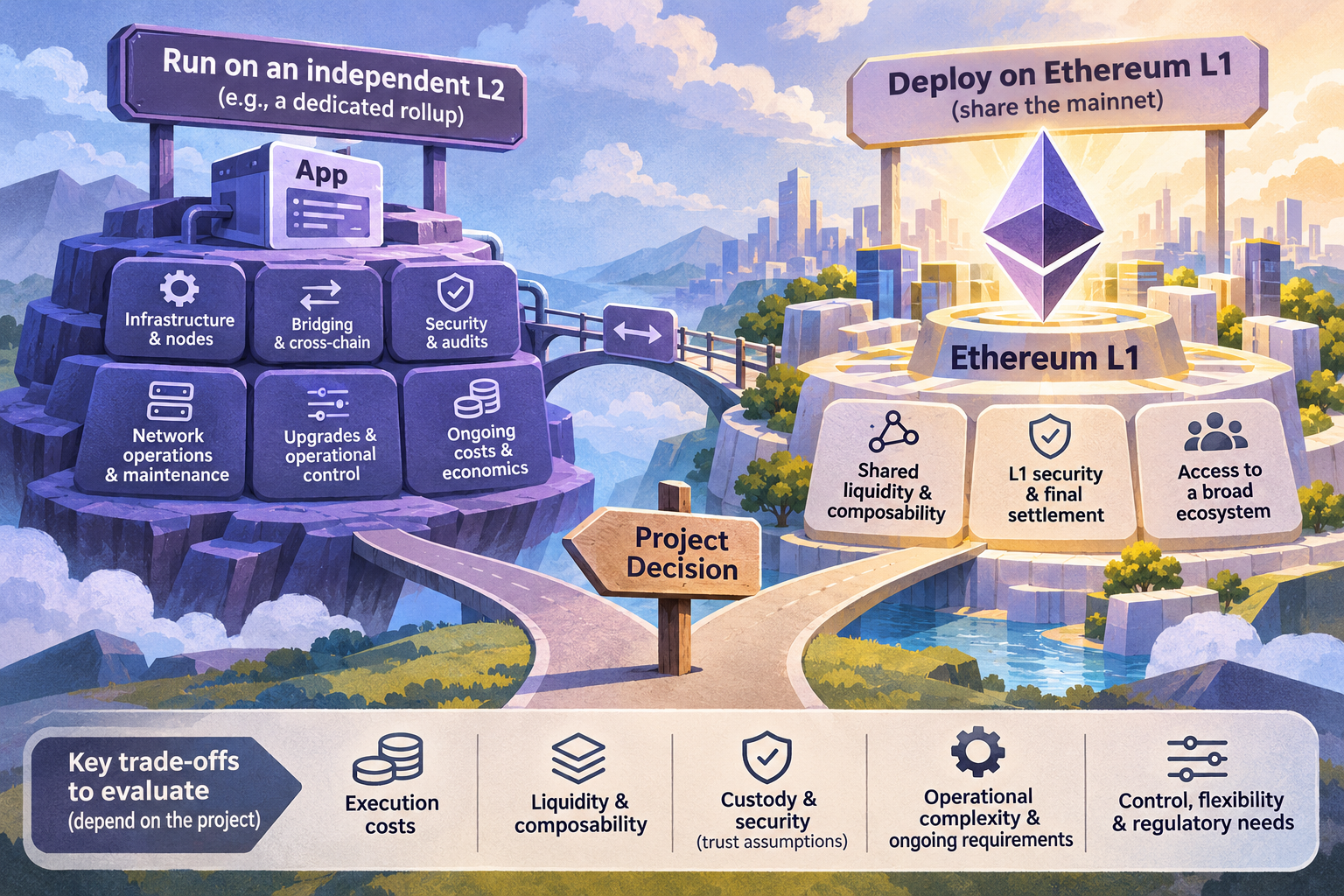
That is a proposed way to assess value, not a valuation model or a demonstrated price outcome. The evidence in the original article supports a narrower conclusion: projects face different trade-offs among execution cost, shared liquidity, custody and operational control. Stronger L1 capacity changes those trade-offs without making specialized L2 execution unnecessary.
Source: panewslab.com (originally published 2026-11-11 21:36 UTC+8)