As reported by PANews on November 11, 2026, at 16:40 UTC+8, some large Bitcoin holders were exchanging directly held BTC for shares of BlackRock’s IBIT. The shift raises a custody question: which risks does an ETF reduce, and which does it leave with the investor?
The risks behind the shift
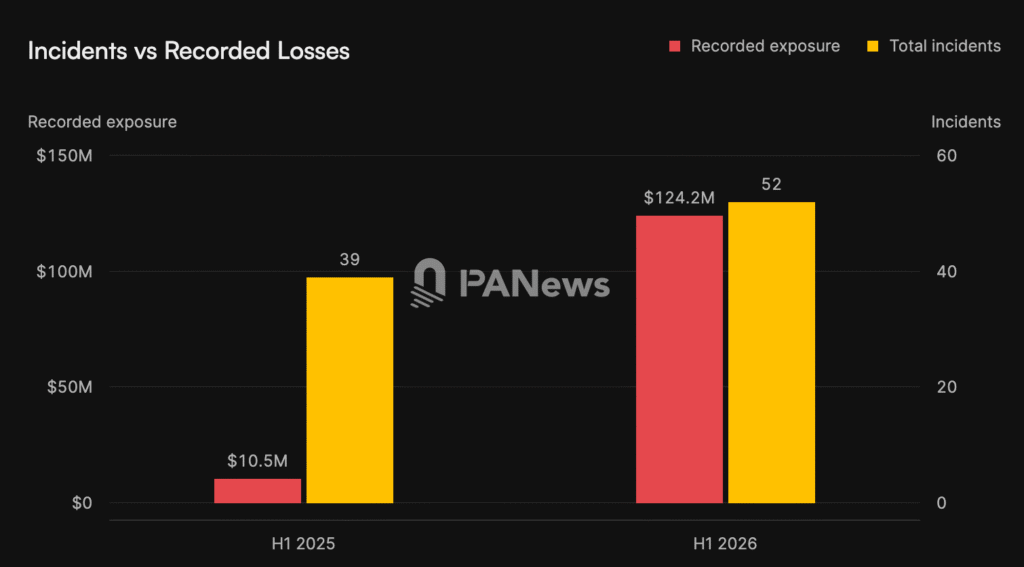
PANews cited a CertiK report that recorded 52 violent attacks targeting crypto holders worldwide in the first half of 2026, up 33.3% year over year. The report put the recorded funds exposed in those incidents at approximately $124.1 million, versus $10.5 million a year earlier. It counted 33 incidents in France. These are reported incident and exposure figures, not a measure of every holder’s likelihood of being attacked.
The article also described alleged hardware-wallet security incidents involving Coldcard, Ledger devices sold through CryptoBilis, and potentially Trezor devices sold through the same channel. PANews reported estimated losses of more than $100 million in the Coldcard case and up to approximately $93 million in the Ledger case. Those incident descriptions and estimates are claims in the supplied report, not independently established findings here. Together with physical coercion, they illustrate why keeping a private key offline does not address every threat to its owner.
What an IBIT conversion changes
BlackRock digital assets head Robbie Mitchnick told an interviewer, according to PANews, that BlackRock had recorded approximately $3.6 billion in in-kind conversions from directly held Bitcoin into IBIT shares since regulators approved such conversions in 2025. He said the true total could be higher because BlackRock does not handle or observe every conversion. PANews also reported that the minimum conversion size had fallen from roughly $30 million to about $1 million–$2 million.
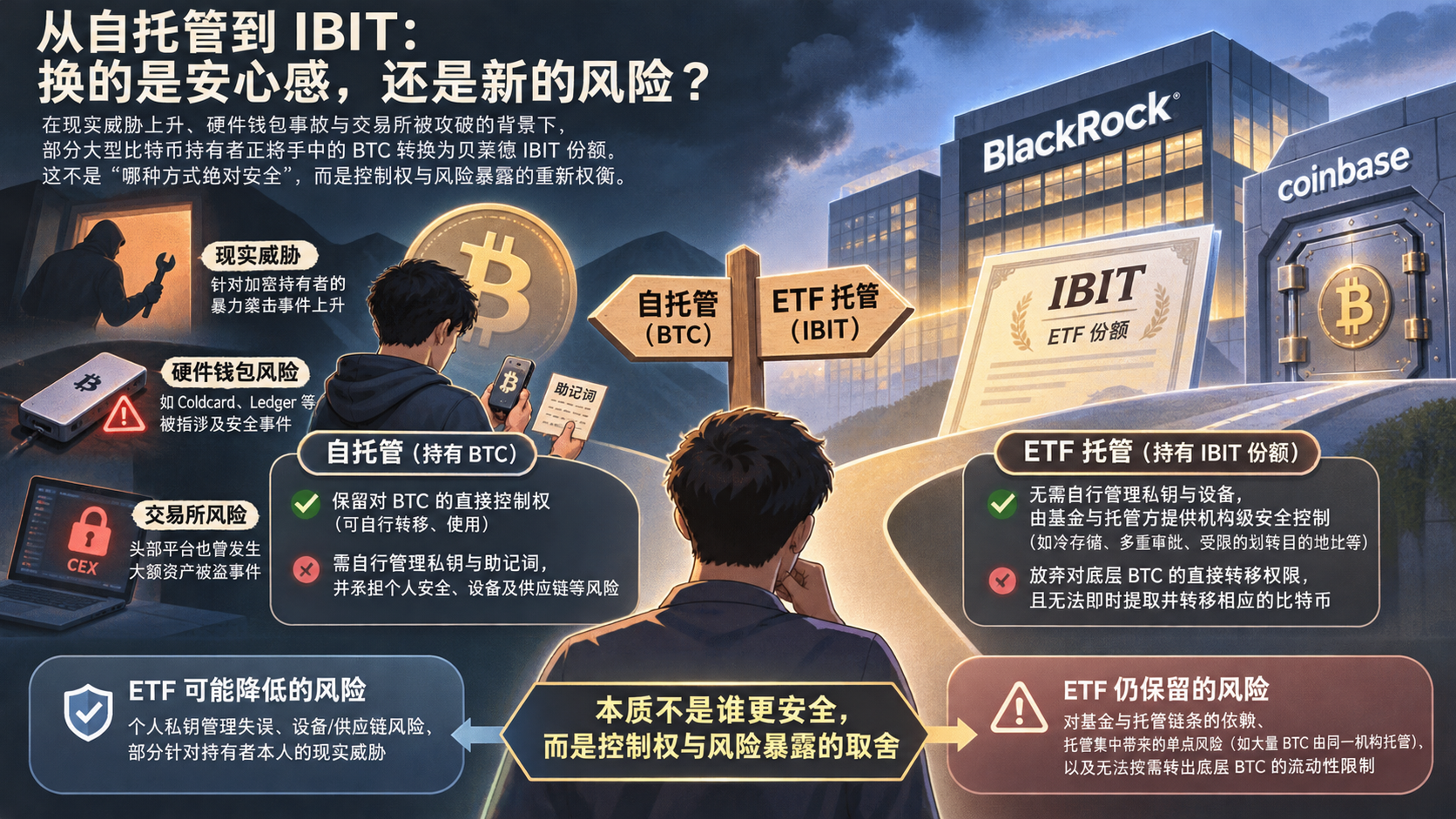
An IBIT shareholder holds a fund share rather than a private key to the underlying Bitcoin. That removes the need to manage personal signing devices and recovery material, but also gives up the ability to move the underlying BTC directly. Bitwise chief investment officer Matt Hougan argued that ETF custody adds controls such as offline storage, multiple approvals and restricted transfer destinations. He also noted a limitation: although ETF shares trade during market hours, an investor cannot immediately withdraw and transfer the corresponding Bitcoin.
Risk moves to the custody chain
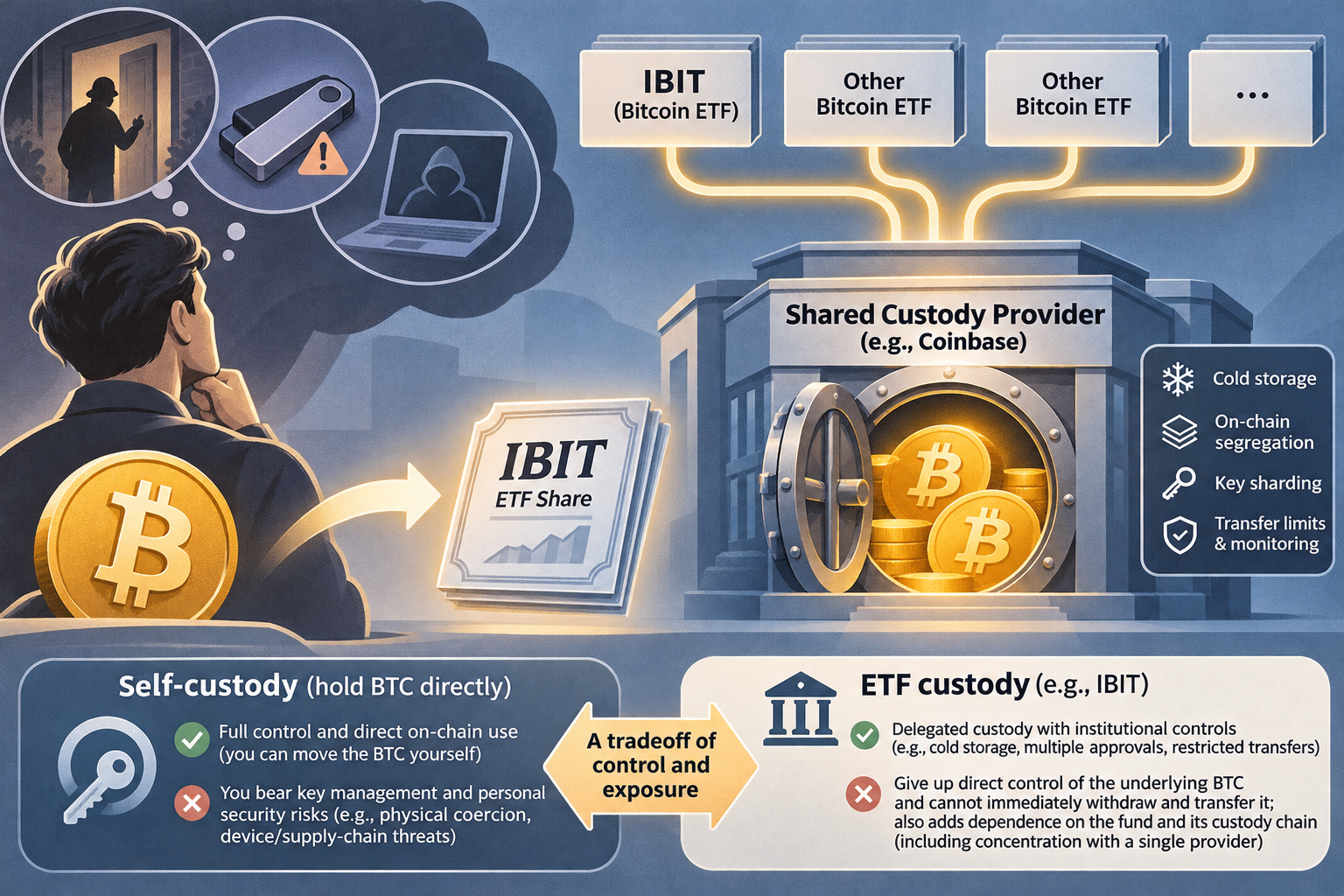
Institutional custody does not eliminate concentrated operational risk. PANews cited Coinbase’s disclosure that it held approximately 90% of the Bitcoin ETF custody market. OneKey founder Yishi warned that concentrating substantial BTC with one custodian could create a significant target; his suggestion that IBIT might be a North Korean target was speculation, not an established threat finding. Coinbase, for its part, said its custody assets use cold storage and on-chain segregation, alongside controls including key sharding, transfer-rate limits and abnormal-activity monitoring. Those are Coinbase’s descriptions of its safeguards, not proof that an attack is impossible.
The distinction is therefore about control and exposure, not whether one arrangement is categorically safe. Self-custody retains direct control but leaves key management and personal security with the holder. An ETF delegates custody and its controls while introducing dependence on the fund and its custody chain—and does not provide on-demand access to the underlying BTC.
Source: panewslab.com (originally published 2026-11-11 16:40 UTC+8)