Originally reported by PANews on December 23, 2025, at 16:00 (UTC+8). The voting status and market figures below reflect that reporting, not current conditions.
Aave’s governance dispute began with a question that its smart contracts alone cannot answer: who controls revenue generated by the protocol’s official user interface?
The fee-flow dispute
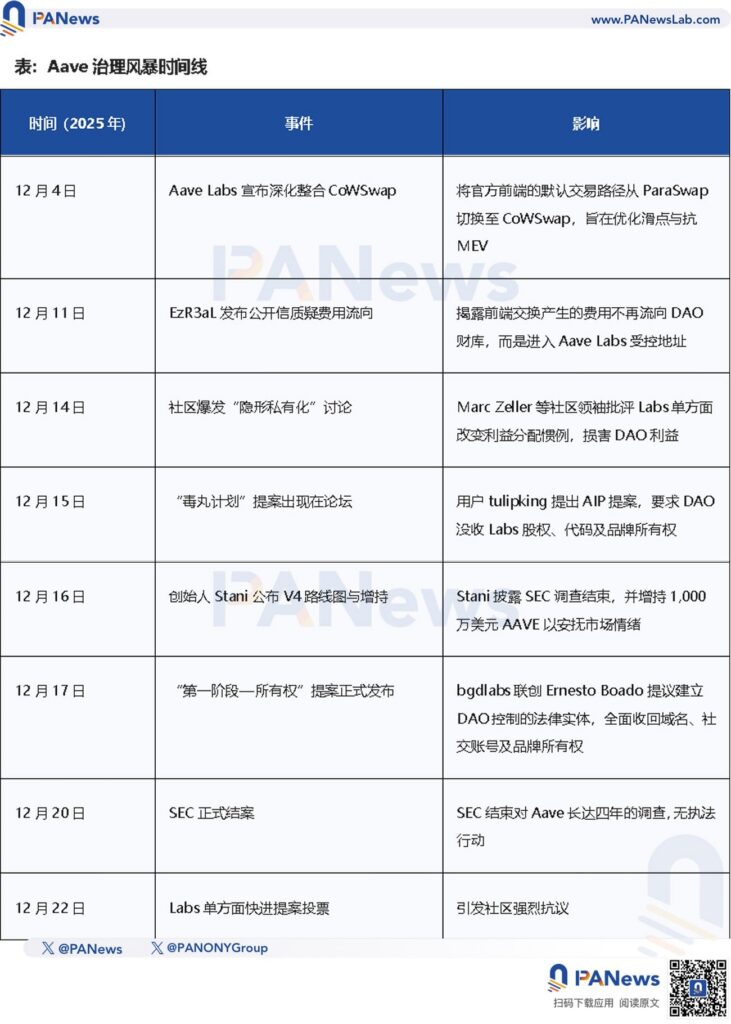
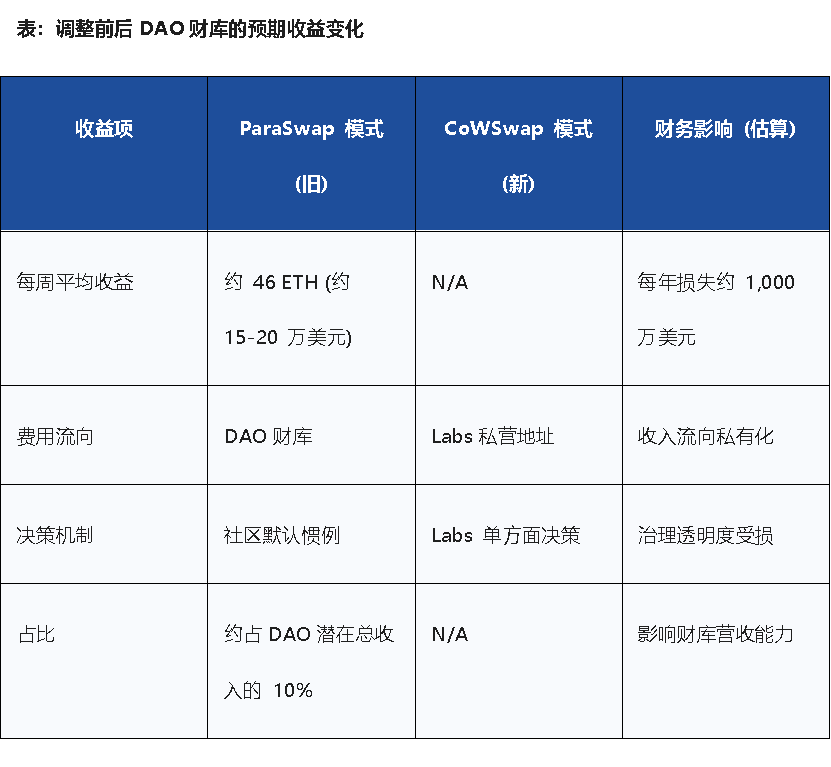
On December 4, 2025, Aave Labs announced that the swap provider on app.aave.com would change from ParaSwap to CoWSwap, citing better pricing and protection against maximal extractable value (MEV). According to PANews, community representative EzR3aL subsequently traced user-generated swap fees that had previously gone to the DAO treasury to an address controlled by Labs. EzR3aL estimated the potential lost treasury income at up to $10 million annually, using historical data. That is an estimate, not a reported total of funds already lost.
Community figure Marc Zeller characterized the change as a private capture of value associated with the Aave brand. Founder Stani Kulechov drew a different boundary: he argued that the DAO owns the smart-contract protocol, while Labs builds and operates the front-end product and should hold its commercial rights. In his account, earlier payments to the DAO were voluntary donations. The competing claims leave the scope of DAO control over the interface and its revenue unresolved.
Proposals to control the assets around the protocol
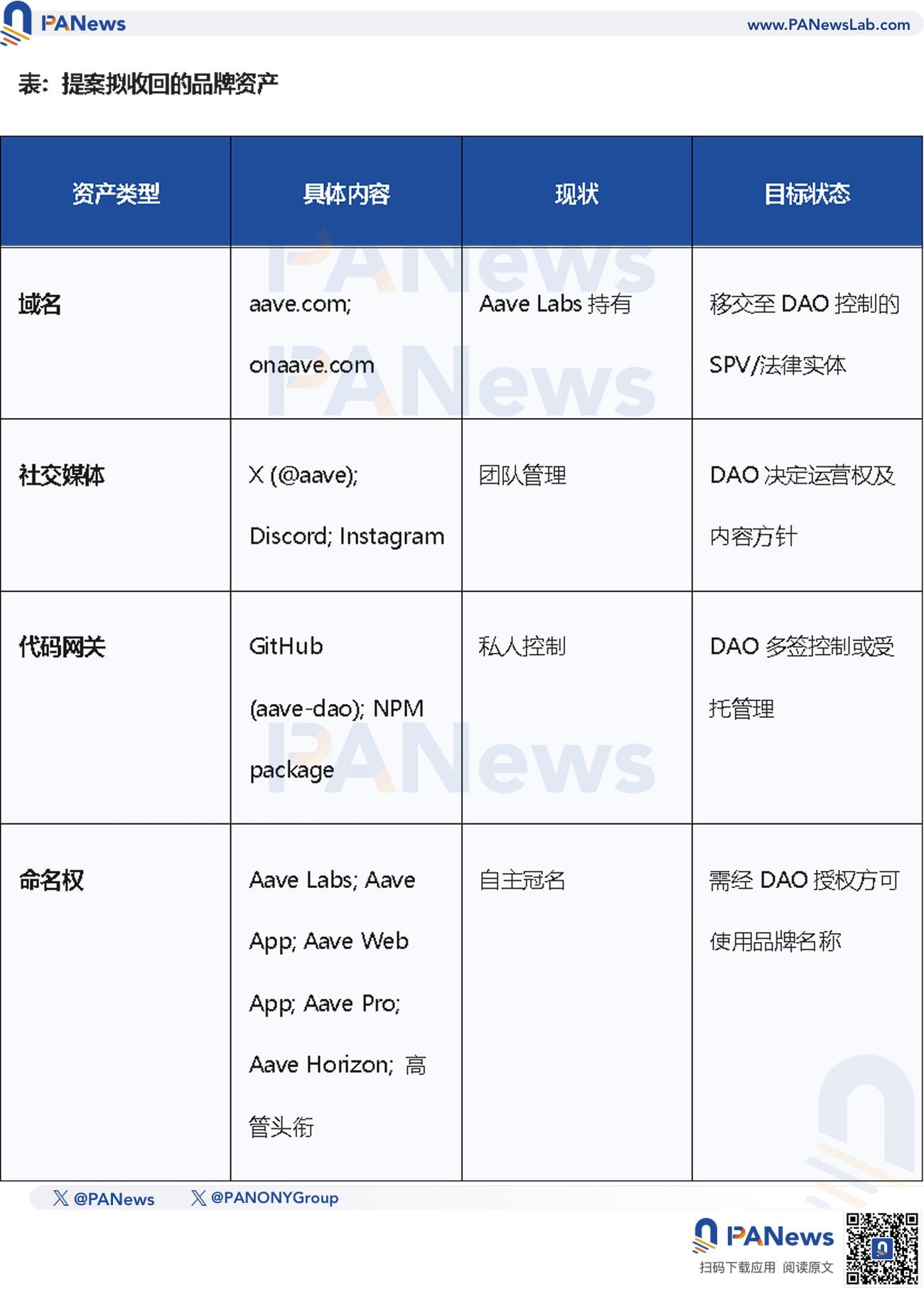
On December 15, a user named tulipking proposed what PANews called a “poison pill”: transferring Labs’ repositories, intellectual property and trademarks to the DAO; giving the DAO full ownership of Labs; and reclaiming past front-end revenue. PANews reported that the proposal was set aside over procedural issues. Those demands were proposals, not enacted rules or completed transfers.
Former Aave CTO Ernesto Boado offered a separate “Phase 1—Ownership” proposal concerning control of domains including aave.com, official social accounts and GitHub repositories. He also proposed a DAO-controlled legal entity to hold brand assets. This approach addresses an architectural limit of token voting: votes do not, by themselves, establish control over domains, accounts or legally held intellectual property.
PANews reported that Labs advanced Boado’s proposal to a Snapshot vote without his consent, prompting procedural objections. Commentator 0xTodd argued that the scheduled December 23–26 vote could suffer from holiday participation and that the proposal was still at a discussion stage. Kulechov responded that the vote complied with the governance framework. At the time of PANews’s report, it said affirmative votes accounted for 3%; that interim figure does not establish a final result.
What the evidence does—and does not—show
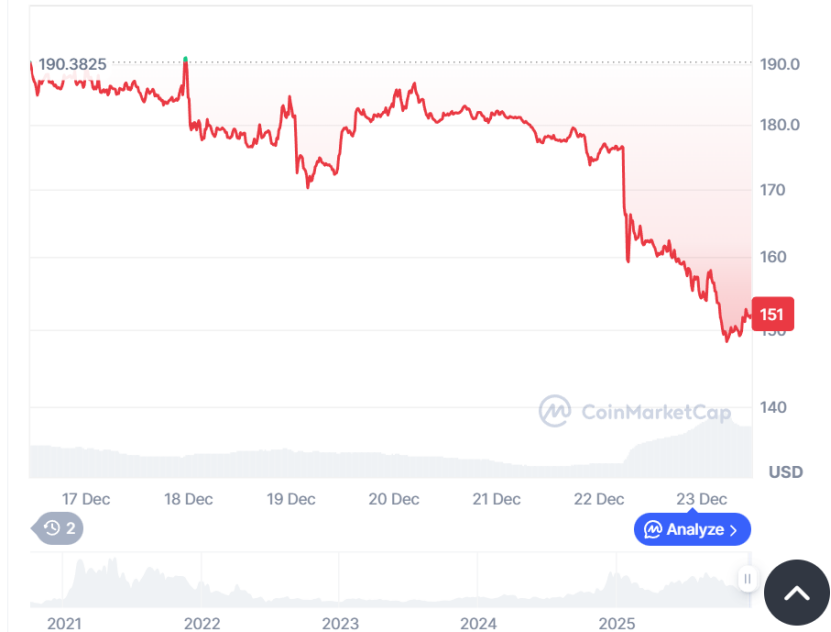
PANews reported that Aave managed approximately $34 billion in assets, that AAVE had fallen by more than 25% over two weeks, and that a large holder sold roughly 230,000 AAVE on December 22 at about $165 per token after accumulating them near $223. Those reported market observations do not, on their own, establish why the holder sold or how much of the price move the governance dispute caused.
The substantive question remains whether front-end rights and fee-sharing should be governed by an explicit agreement with the DAO. Neither the reported fee estimate nor the ownership proposals settle that question; they show why the distinction between a DAO-governed protocol and a company-operated interface matters.
Source: panewslab.com (originally published 2025-12-23 16:00 UTC+8)