Originally reported by Odaily on November 11, 2026, at 18:26 (UTC+8). This article describes the position at that reporting date, not subsequent developments.
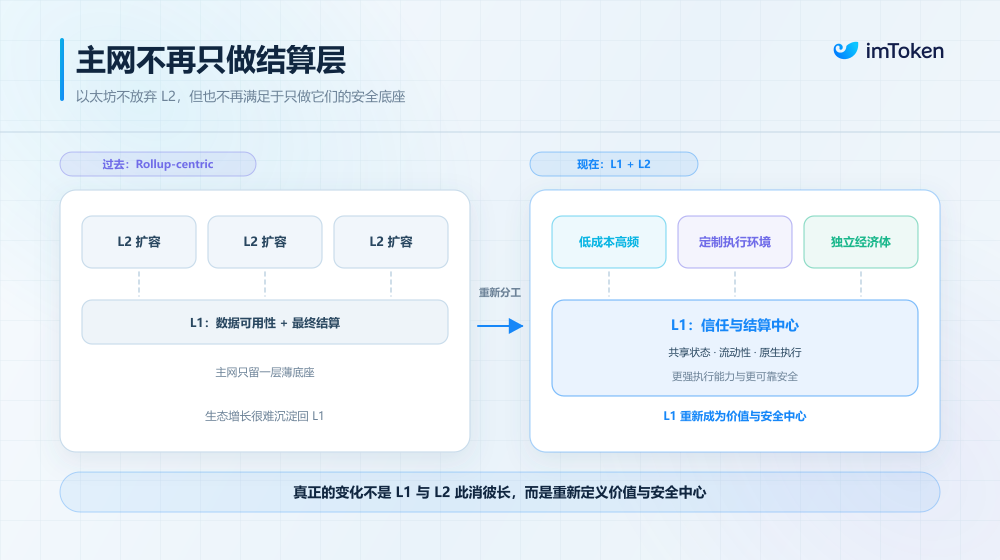
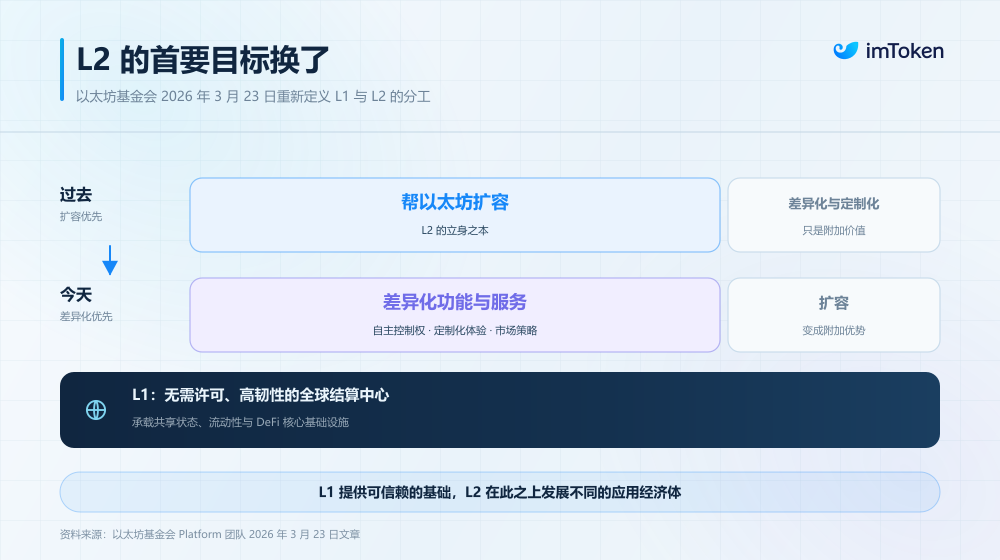
Ethereum’s scaling debate is no longer only about where transactions are cheapest. The question raised by several project decisions in 2026 is whether a dedicated L2 still justifies its operating costs, bridging requirements and separation from liquidity on Ethereum’s mainnet. These cases do not establish a general retreat from L2s; they show that the answer depends on the application.
When a separate chain stops paying for itself
ENS Labs planned Namechain, a dedicated ZK rollup for ENSv2, in 2024. In February 2026, ENS co-founder Nick Johnson said development would stop and ENSv2 would instead deploy on Ethereum L1, citing faster-than-expected mainnet scaling. According to ENS Labs figures reported by Odaily, the average gas cost of an ENS name registration had fallen by about 99% over the preceding year, from nearly $5 to less than $0.05. At that cost, ENS also had to weigh the work of operating an L2 and handling cross-chain resolution, bridging and security.
Other decisions had different motivations. Synthetix launched its new perpetuals exchange on mainnet in December 2025 after arguing that L2 deployment had created liquidity fragmentation and infrastructure problems. ShapeShift moved its rFOX staking program from Arbitrum to mainnet on October 1, 2026; Odaily reports that most FOX tokens were already held there, making a bridge an unnecessary step for many users. Superseed stopped its L2 in August 2026 and planned to move core products to mainnet while pursuing application-level revenue strategies rather than relying on chain gas revenue for loan repayments.
Independent-chain economics also came under pressure. Odaily reports that Blast announced on October 2, 2026, that it would wind down because network maintenance costs exceeded L2 revenue. Abstract subsequently announced a plan to close its network on December 15; that date was still in the future when the original article was published. Neither example proves that L2s as a class are unsustainable.
What belongs on L1?
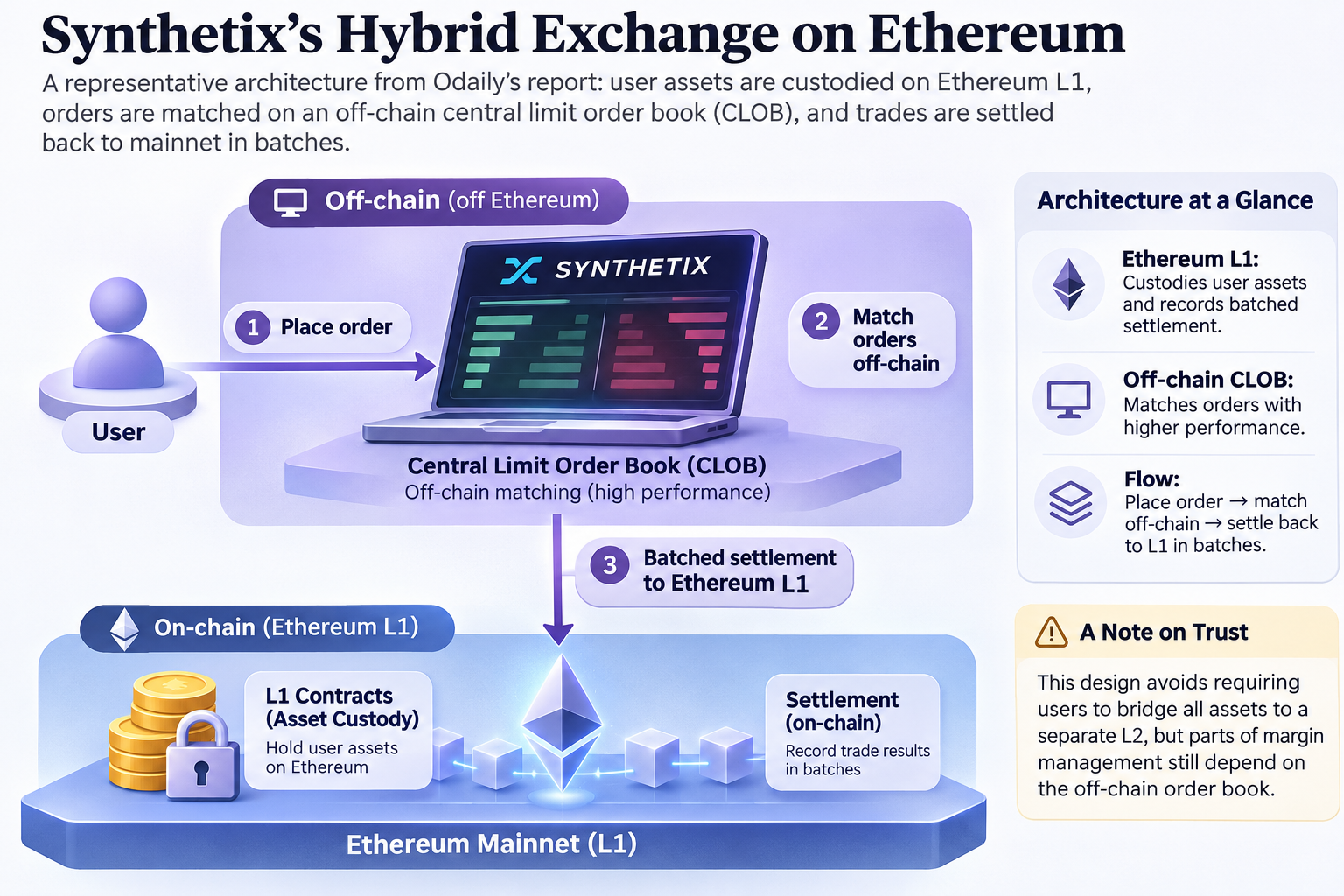
One architectural response is to keep assets and critical state on Ethereum while moving frequent computation elsewhere. Odaily describes Synthetix’s exchange as using L1 contracts to custody user assets, an off-chain central limit order book to match trades, and batched settlement back to mainnet. This avoids requiring users to bridge all their assets to a separate L2, but it does not remove trust questions: the article notes that parts of margin management still depend on the off-chain order book.
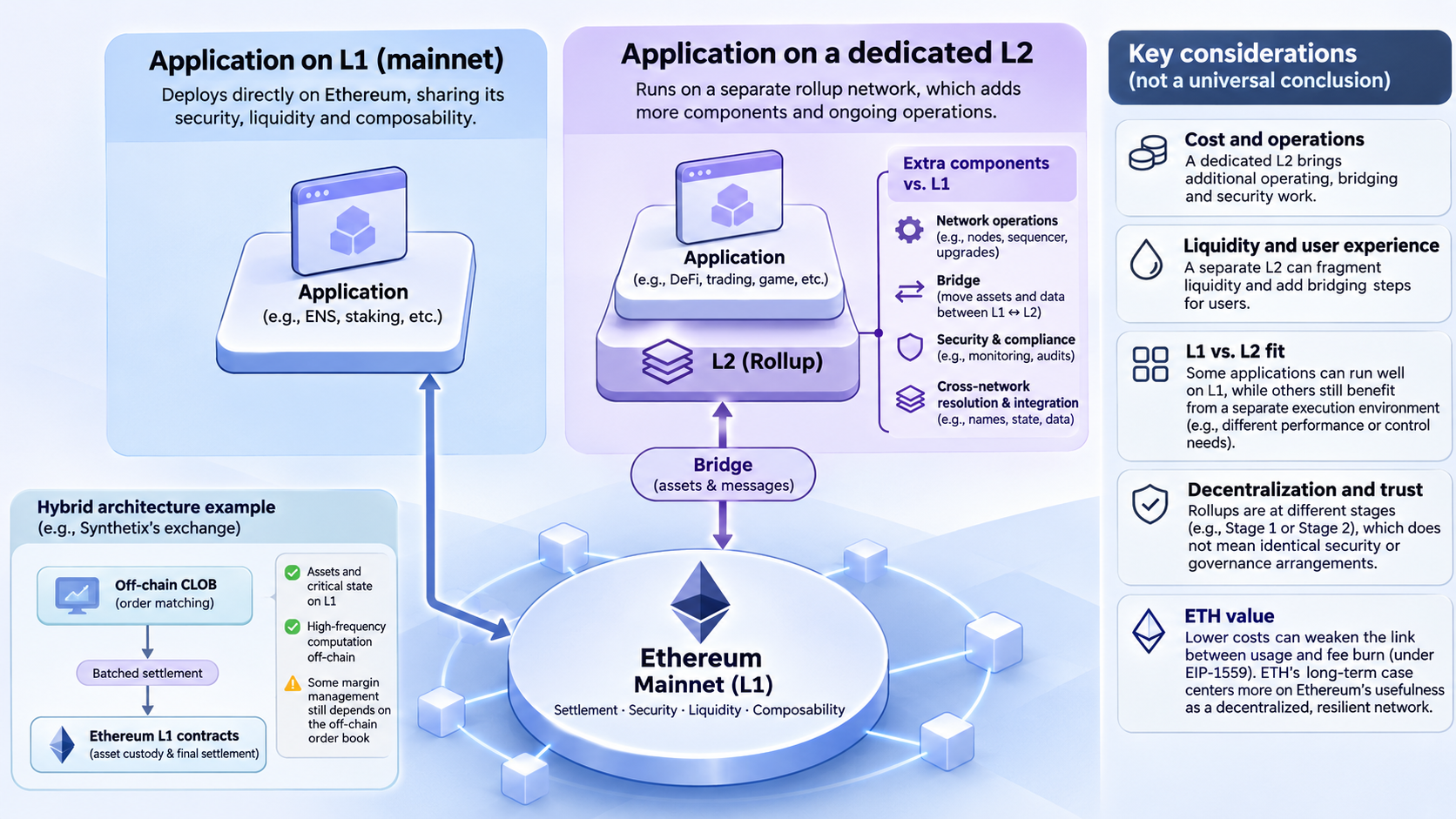
The decentralization of existing rollups remains a separate question. Citing ETHBEAT data as of November 2026, Odaily says only a handful of the L2s it tracked had reached Stage 2, while Base, Arbitrum One and OP Mainnet remained at Stage 1. Stage labels should not be treated as proof that every network has the same security or governance arrangements. Proposed approaches such as native rollup verification and the Ethereum Economic Zone aim to improve trust or interoperability across execution environments, but the article describes them as research and development directions, not deployed solutions.
ETH value is not the same as fee burn
Returning activity to mainnet does not, by itself, establish a valuation for ETH. Under EIP-1559, base fees are burned and priority fees go to validators. Lower costs per transaction can therefore weaken the link between growing usage and growing burn, even if total activity rises.
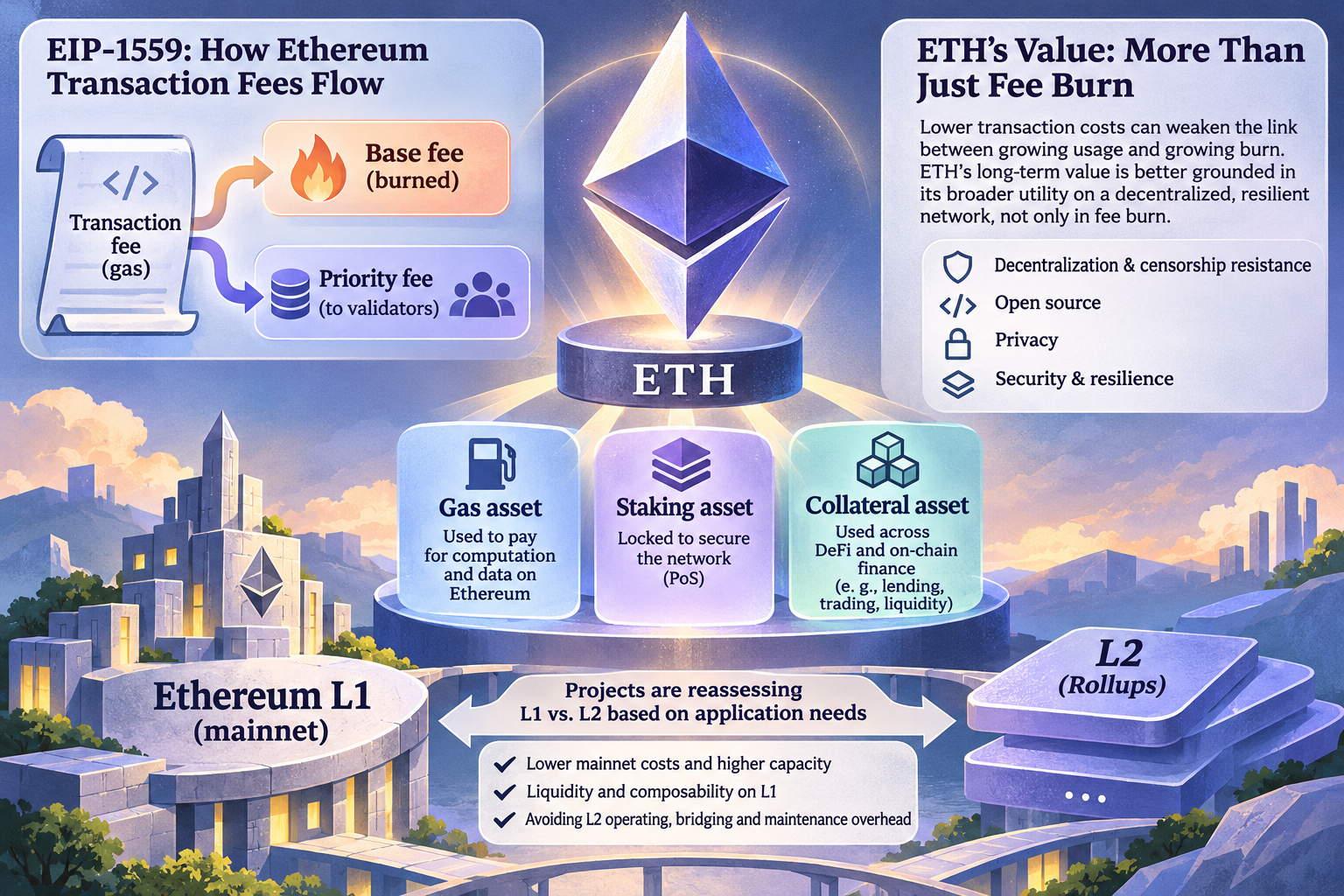
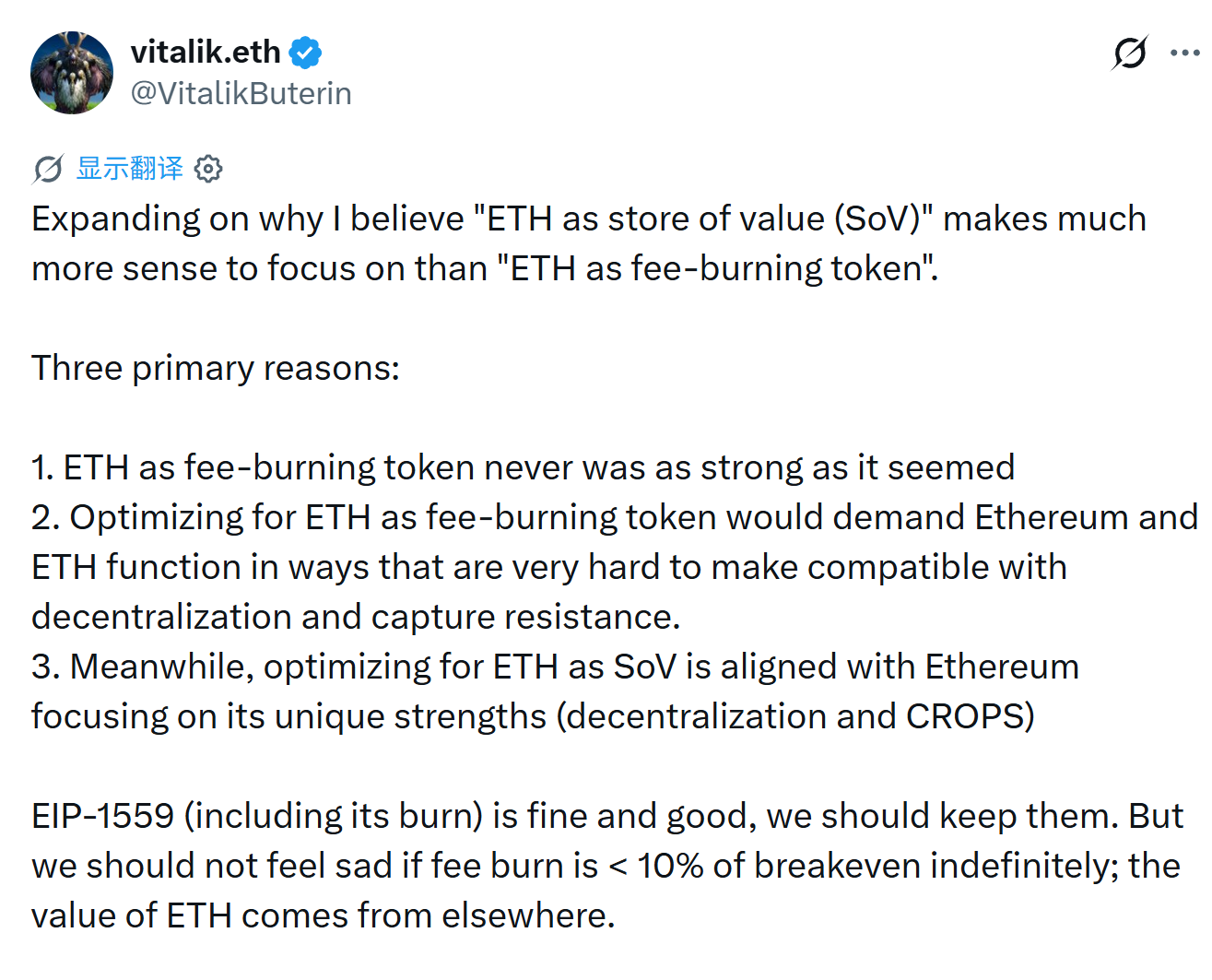
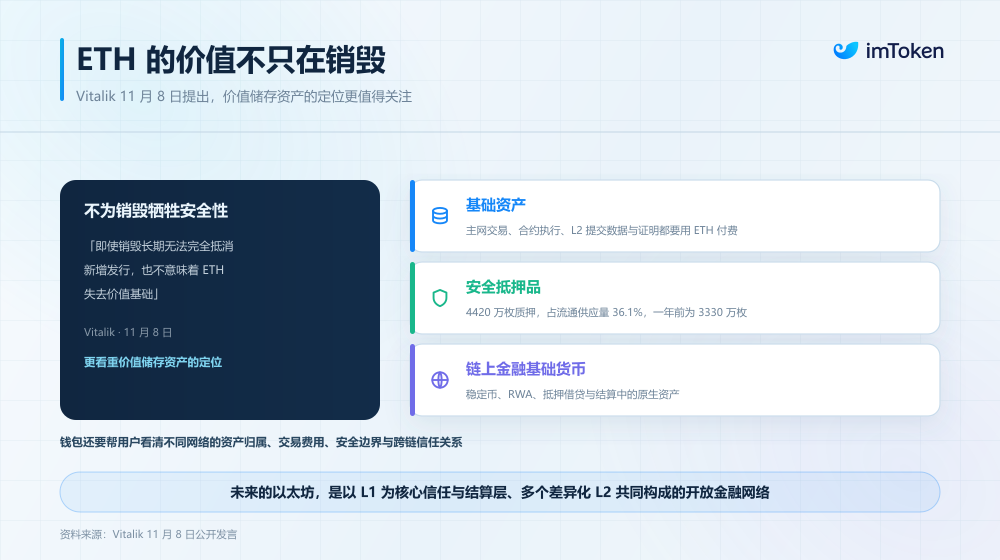
Odaily recounts Vitalik Buterin’s argument that ETH should not be understood chiefly through fee burn. He supports retaining EIP-1559, but places greater weight on Ethereum’s long-term usefulness as a decentralized, resilient network. That is a thesis about the source of potential value—not a measured valuation result. The evidence in the article supports a narrower conclusion: as mainnet costs change, projects are reassessing which functions need a separate execution environment and which benefit from sharing Ethereum’s settlement layer and liquidity. L2s can still serve applications that need different performance or control over execution.
Source: odaily.news (originally published 2026-11-11 18:26 UTC+8)