Historical research, originally published November 11, 2026, at 13:53 (UTC+8). The figures and proposals below reflect the source’s reporting at that time, not current platform conditions.
Research question: Does Pump.fun’s fee model reward tokens that endure, or the repeated launch and trading of short-lived tokens? In analysis attributed to Sparsity Research, the answer is the latter. That is an interpretation of the reported data—not proof that the fee model alone caused the behavior described.
Where the fees arise
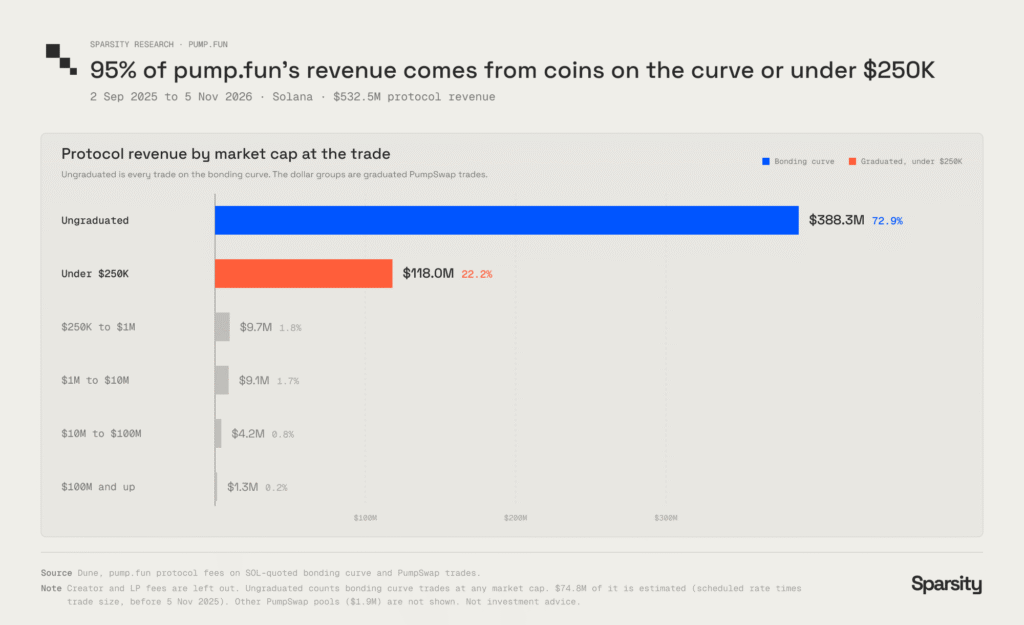
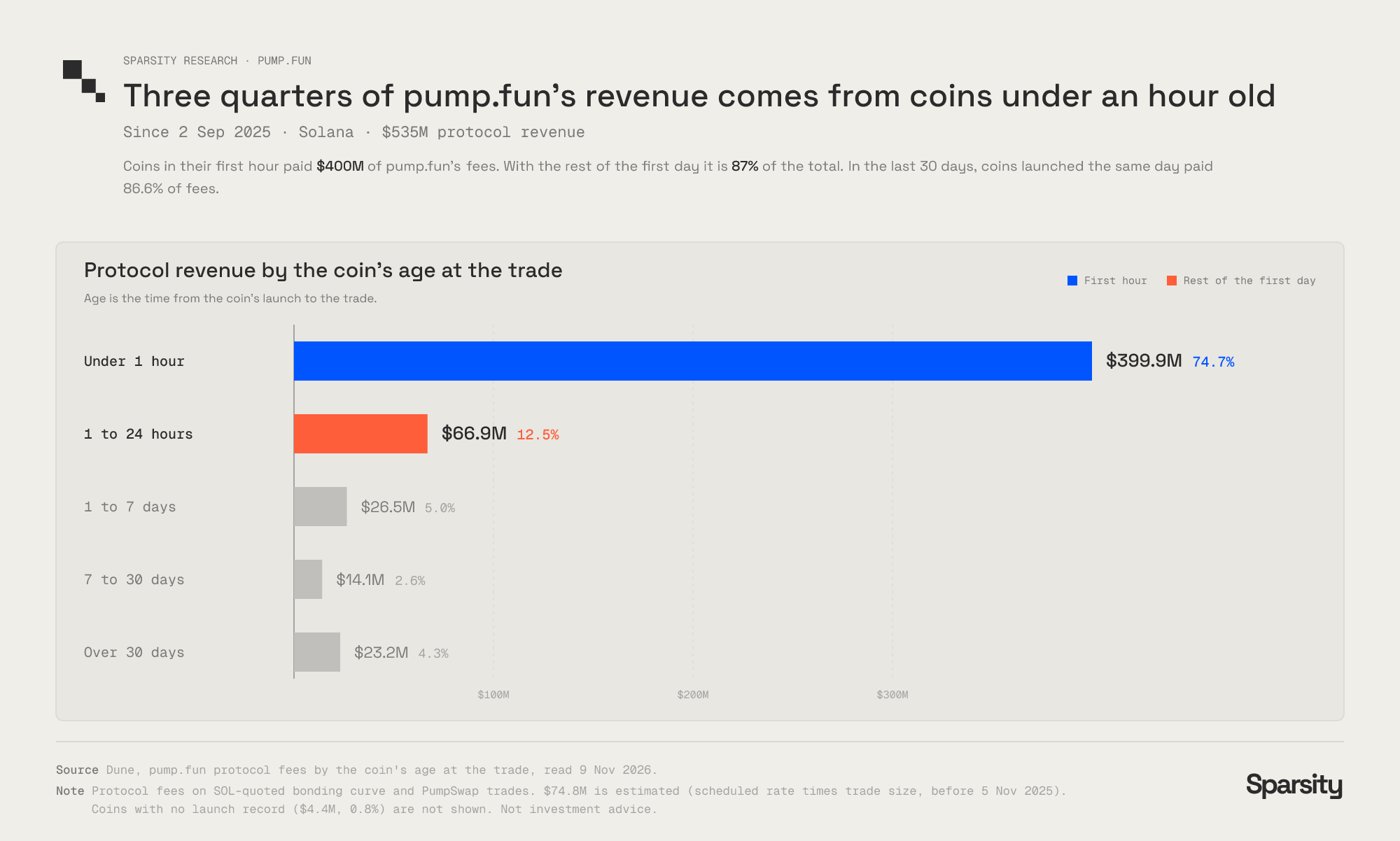
According to the research, Pump.fun accounted for 92% of token launches and 84% of trading volume among meme-token launch platforms across chains during the reported preceding 30 days. The analysis says 95% of its protocol revenue came from trading while tokens were on the bonding curve or below a $250,000 market capitalization. Its revenue chart covers September 2, 2025, through November 5, 2026.
During bonding-curve trading, the source reports a 1.25% fee on each buy and sell: 0.95% to Pump.fun and 0.30% to the token creator. A buy followed by a sell therefore incurs 2.5% in stated fees, excluding any price movement. The research also attributes roughly three-quarters of platform revenue to tokens less than one hour old and 87% to tokens less than a day old. Those measurements support a narrow conclusion: early trading was the dominant reported revenue source. They do not establish that every short-lived launch was created to generate fees.
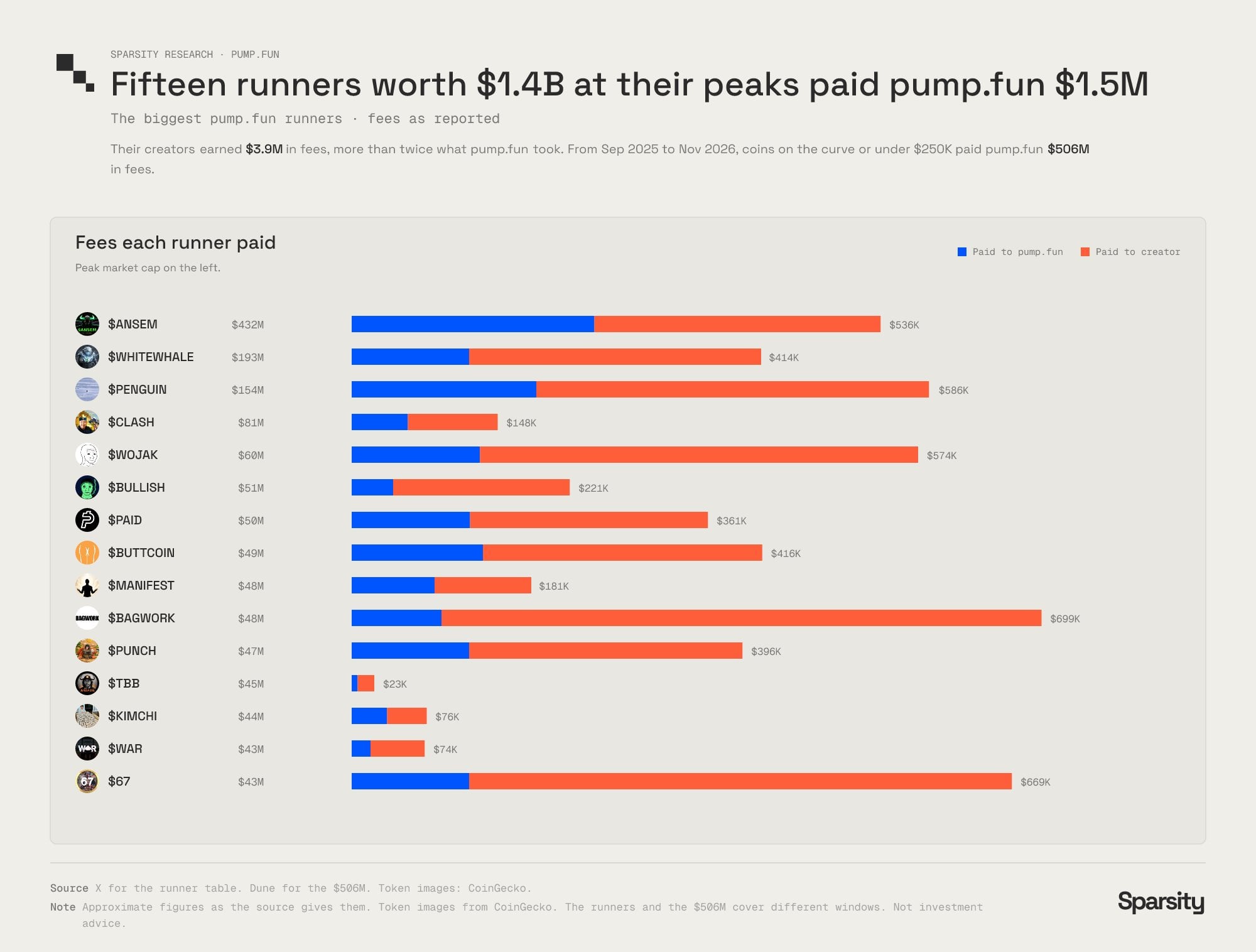
The comparison is stark in the source’s dataset: 15 tokens whose combined peak market capitalizations reached $1.4 billion generated about $1.5 million in Pump.fun fees, versus $506 million from tokens still on the bonding curve or valued below $250,000. These are different groups of tokens, not a controlled comparison of their returns.
Incentives observed by the researchers
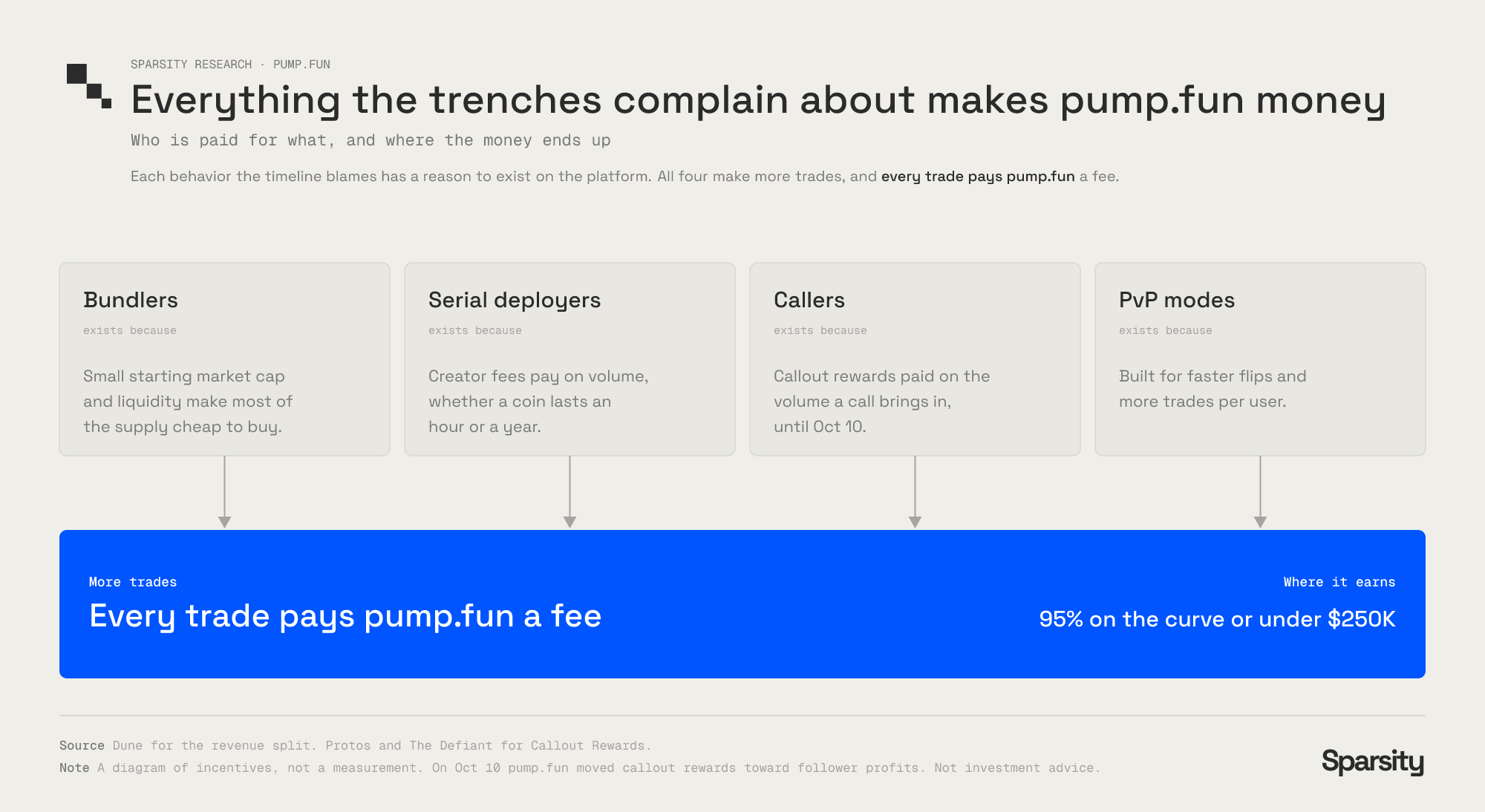
The research links early-trading fees to several practices it criticizes. It argues that low initial capitalization and liquidity make launch-block accumulation cheaper for bundlers using multiple wallets. It also says creator fees based on trading volume reward repeated launches regardless of how long a token survives. Its 25 highest-volume launch addresses issued a combined 761,000 tokens, with fewer than 1% graduating, and earned a reported $128 million. Those figures describe the addresses examined; they do not, by themselves, establish every operator’s intent.
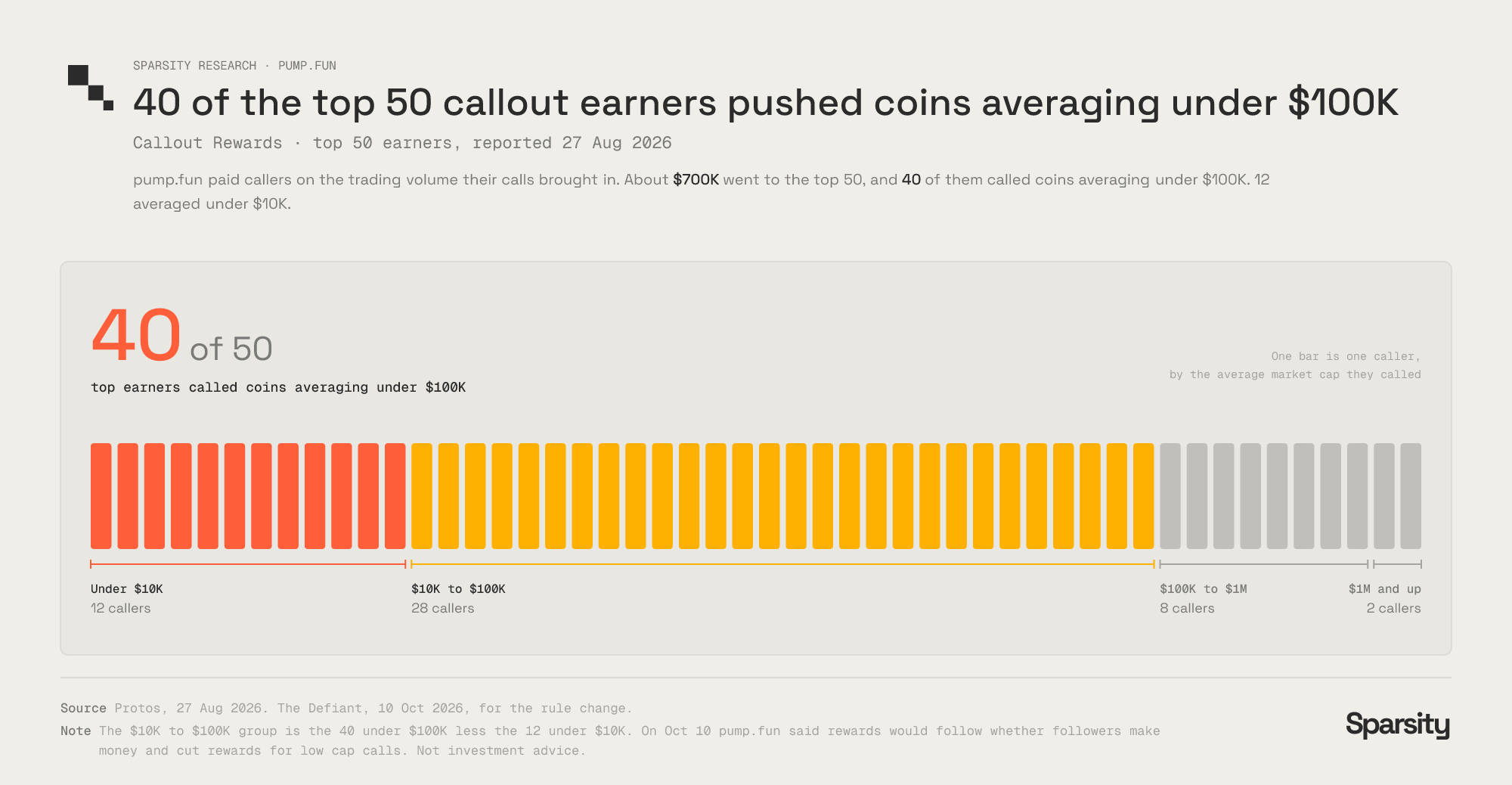
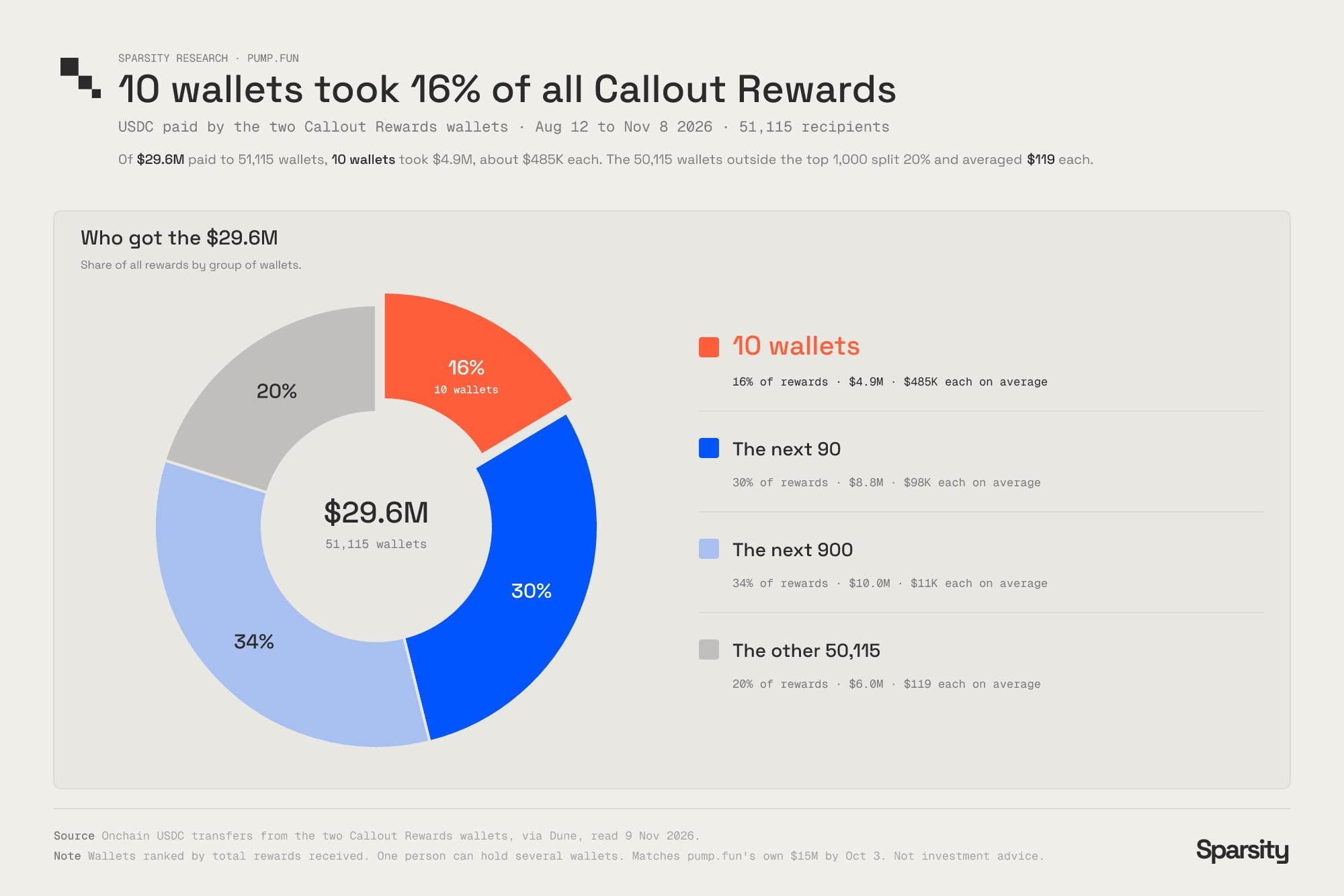
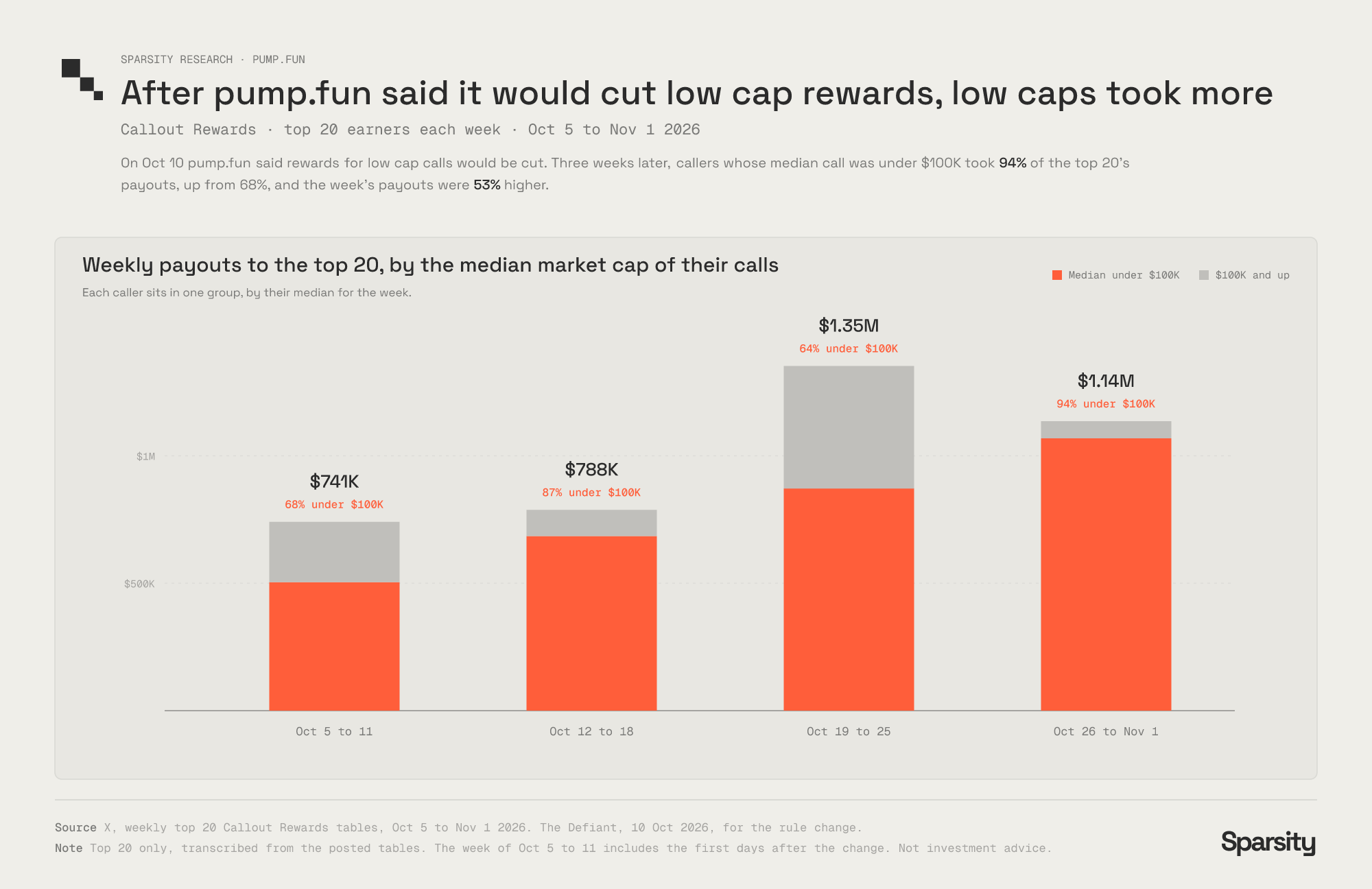
For paid token promoters, the source reports that Pump.fun distributed $29.6 million to 51,115 wallets from August 12 through November 8, 2026. Ten wallets received 16% of those rewards, while the median recipient received $13. The researchers say rewards were tied to trading volume. After Pump.fun said on October 10 that future incentives would account for follower profit and loss and reduce rewards for small-cap promotions, the researchers observed a contrary short-term pattern: over the following three weeks, the share of rewards to the top 20 promoters associated with tokens whose median capitalization was below $100,000 rose from 68% to 94%, and total weekly rewards rose 53%. The source does not establish why that happened.
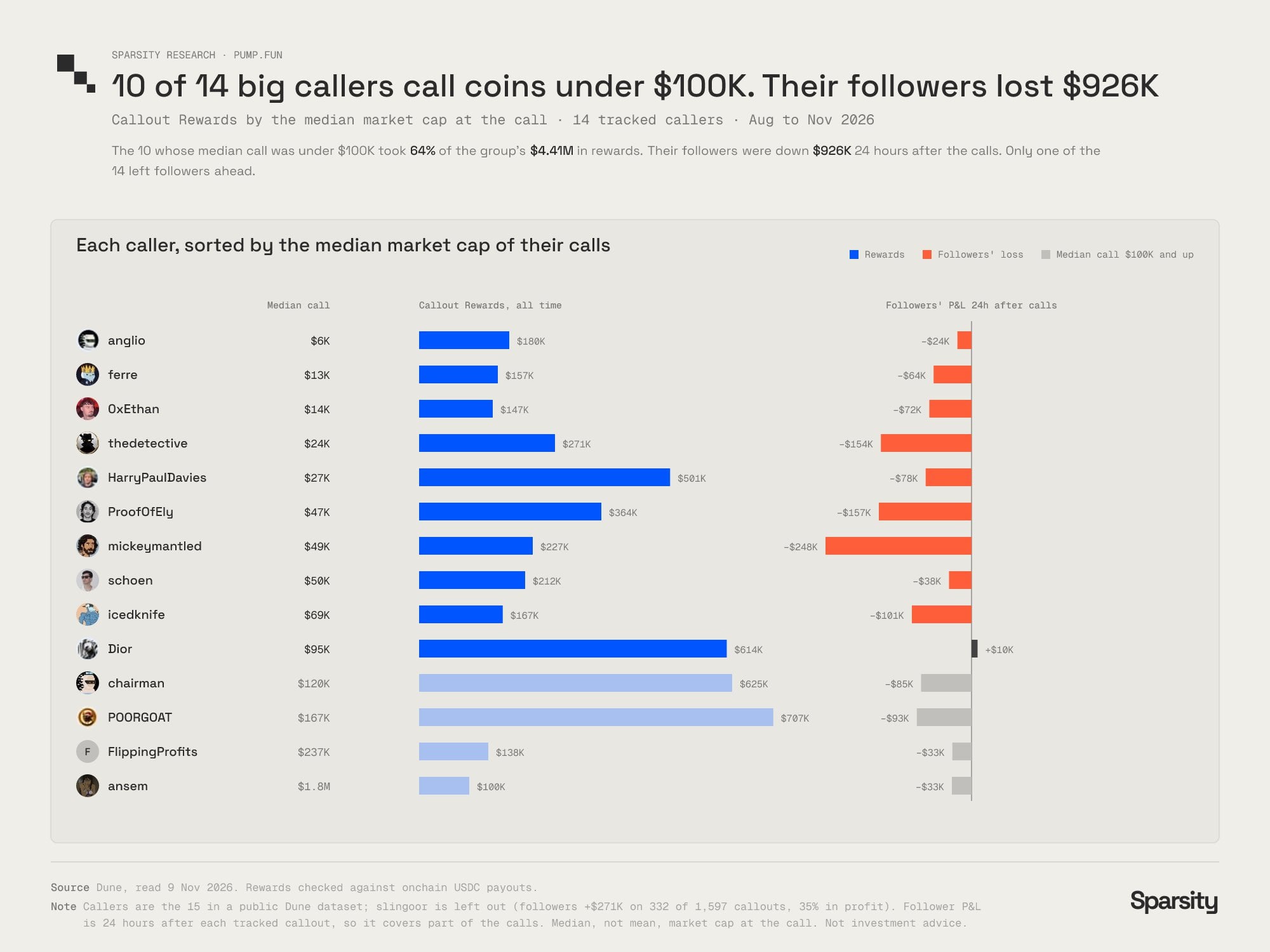
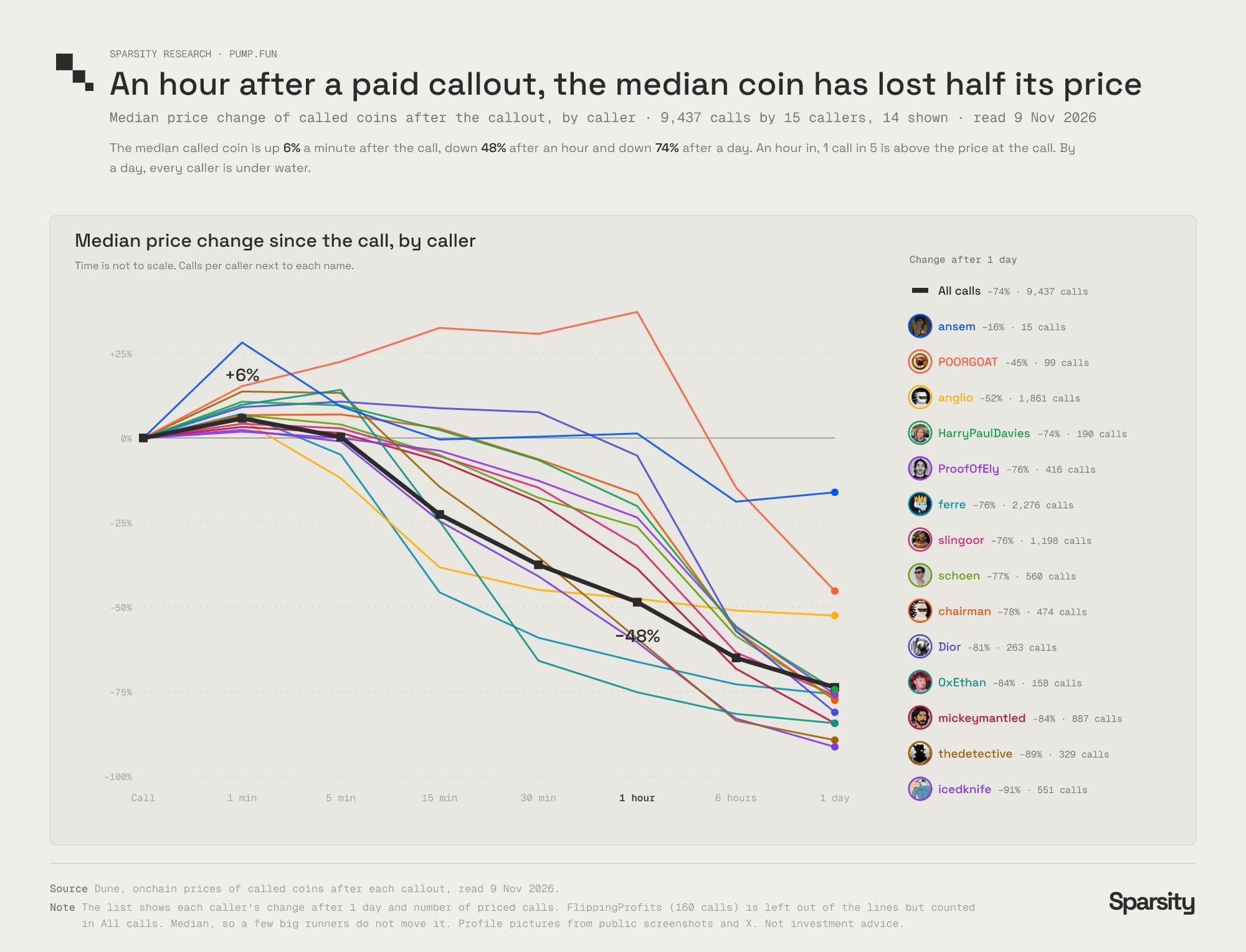
In a separate sample of 14 promoters, the research says followers of ten who primarily promoted tokens below $100,000 in median market capitalization lost a combined $926,000 by the following day. Across the promoted tokens, it reports a median price rise of 6% after one minute, followed by declines of 48% after one hour and 74% after one day. These are reported sample outcomes, not a forecast for other tokens.
Supply, survival and the limits of the evidence
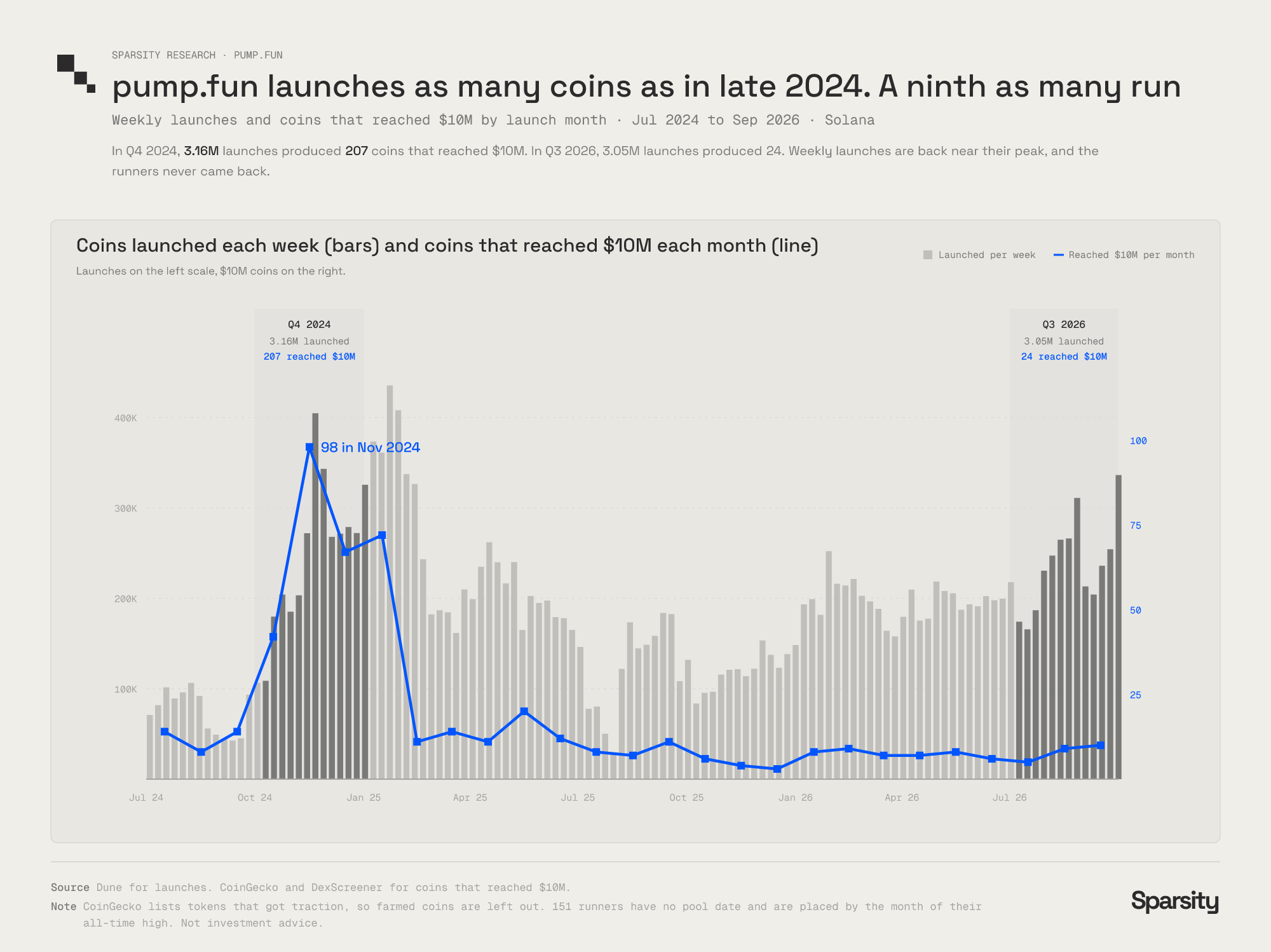
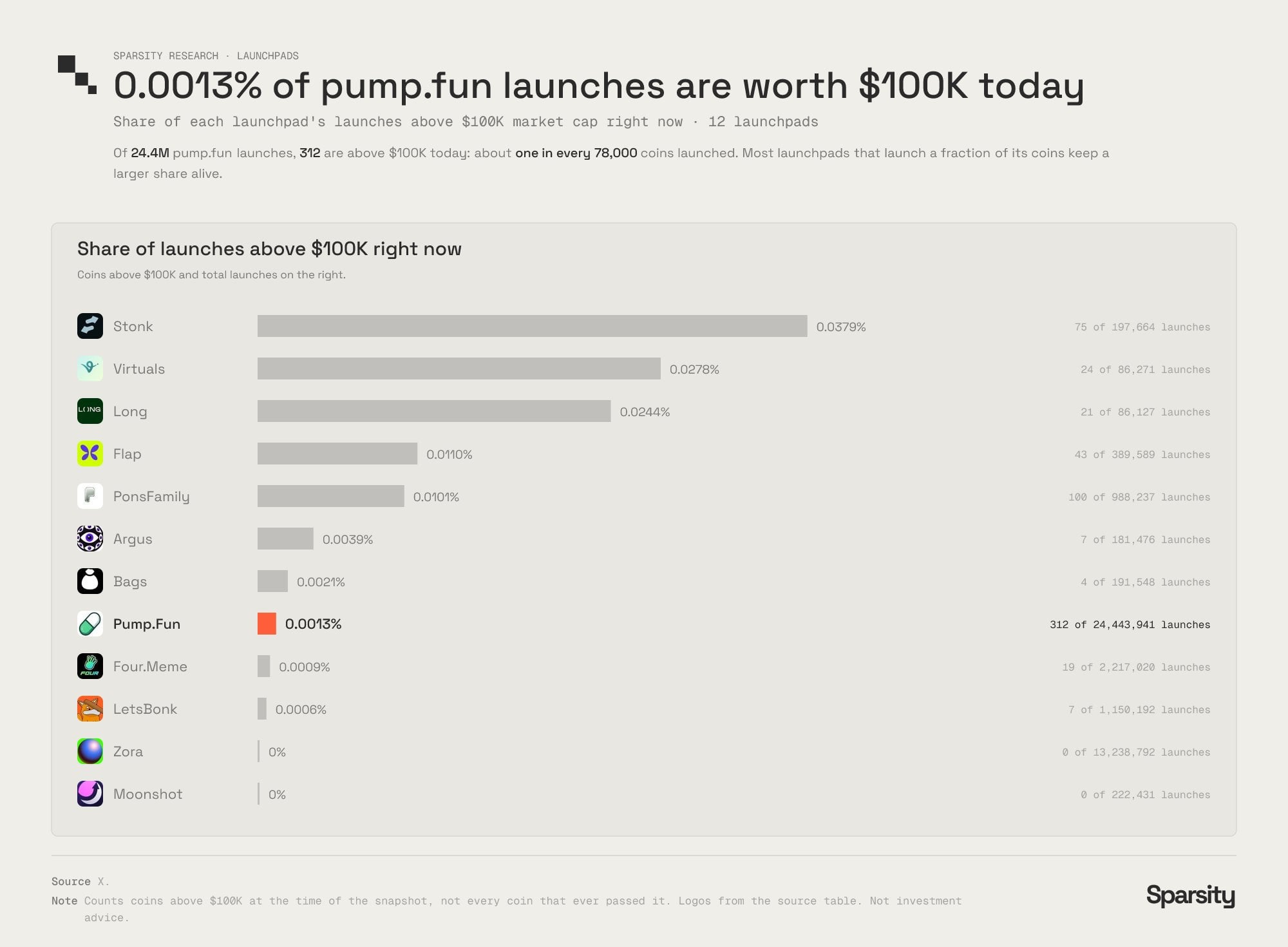
The source contrasts 3.16 million Pump.fun launches in the fourth quarter of 2024, which produced 207 tokens exceeding a $10 million market capitalization, with 3.05 million launches and 24 such tokens in the third quarter of 2026. It also reports that, among 24.4 million cumulative launches, only 312 tokens remained above $100,000 in market capitalization on its measurement day—about 0.0013%, or one in 78,000. The source does not give an exact calendar date for that survival snapshot.
The researchers interpret these figures as evidence of abundant new supply alongside weaker demand for enduring tokens. They note an important distinction: although bonding-curve volume had risen since June, combined bonding-curve and PumpSwap monthly volume had fallen from $25 billion–$30 billion in the first quarter of 2026 to $13.8 billion in October. Launch counts, volume and token-survival snapshots measure different things; together they support the researchers’ concern, but do not isolate a single cause.
A proposed alternative—not an implemented design
Sparsity Research proposes moving rewards away from first-hour trading. Its suggestions include deeper initial liquidity, creator-fee vesting tied to token longevity, and promoter rewards contingent on whether followers remain invested and profitable days later. These are proposals, not reported Pump.fun rules.
The researchers also sketch a launch model without a bonding curve: participants subscribe at the same price during a fixed 24- or 48-hour window; an unmet fundraising minimum triggers full refunds; and a successful raise creates a liquidity pool with its LP tokens burned or permanently locked. A per-wallet subscription cap, such as 1% of the raise, is proposed to limit concentration. Under this proposal, the platform would collect fees only when fundraising succeeds, receiving nothing from failed raises rather than earning from each trade.
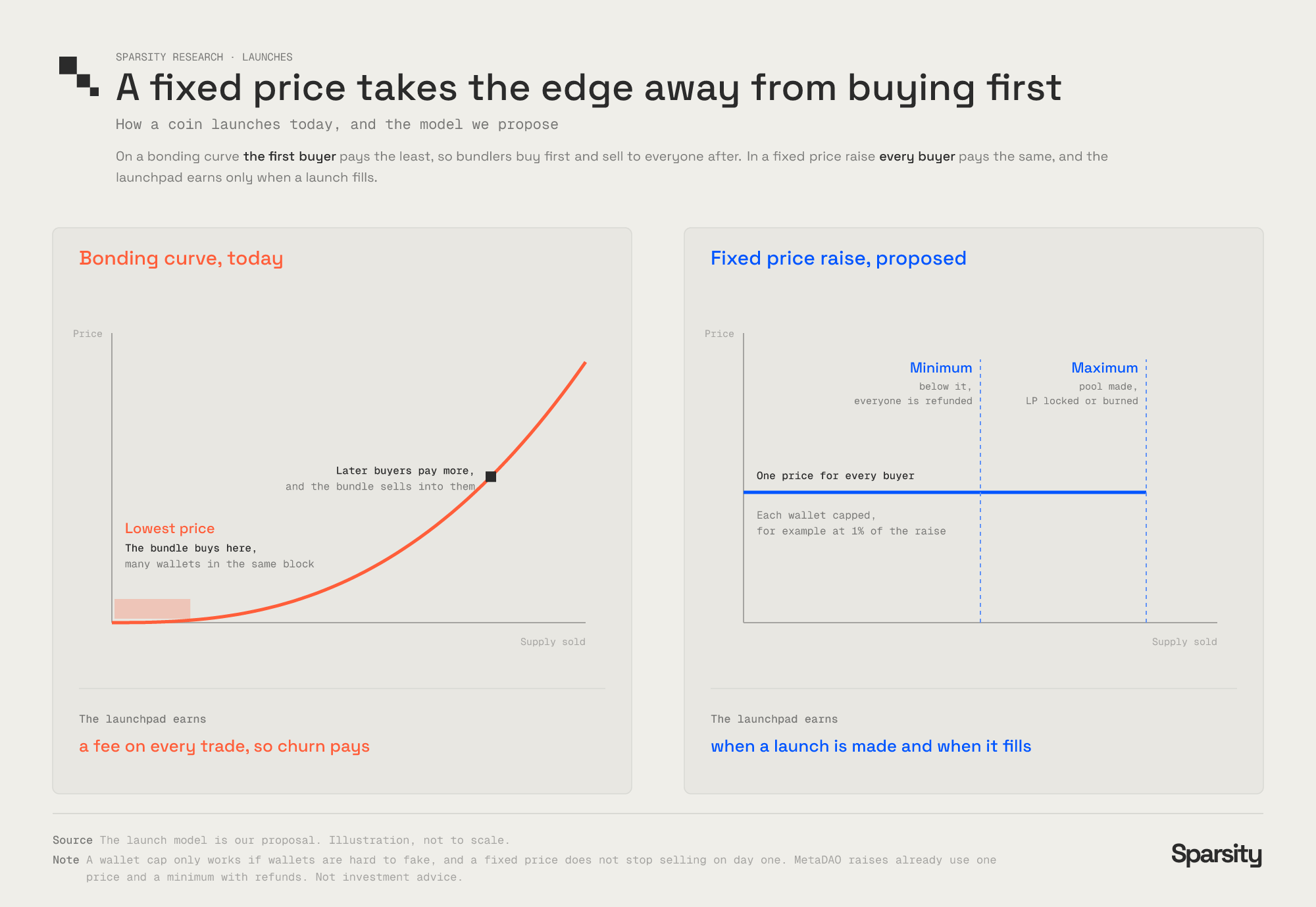
The source explicitly identifies limits. Multiple wallets could evade a per-wallet cap, and equal subscription prices would not prevent selling immediately after launch. Its case for changing the fee model is therefore an argument about incentives, not evidence that the proposed mechanism has been built or tested.
Source: techflowpost.com (originally published 2026-11-11 13:53 UTC+8)