Historical research note: Originally published by Deep Tide TechFlow on November 10, 2026, as a translation of Alea Research. Figures below refer to the measurement dates in that report, not current network conditions.
Monad’s growth story in the source report is less about trading fees than about credit. By September 30, 2026, six lending platforms on the network had $909 million in outstanding loans, up from $117 million at the end of 2025. The research question is what that lending activity earned, who received the income, and whether it translated into value captured by MON.
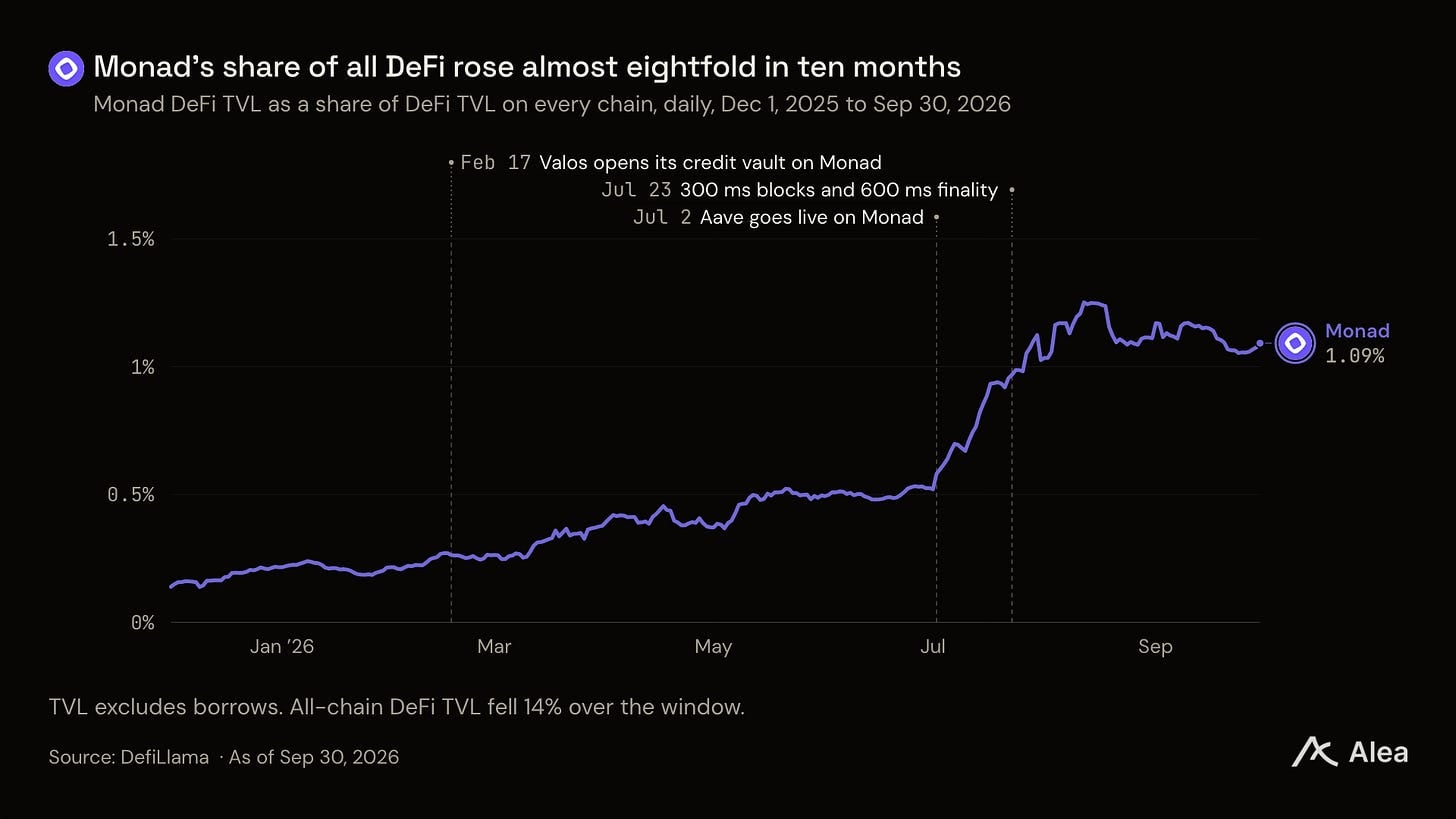
A larger share of a smaller DeFi market
The report puts total DeFi value locked (TVL) across networks at $111.4 billion on December 1, 2025, falling to $68.2 billion on June 30, 2026, before recovering to $95.5 billion at the end of September. Over that period, Monad’s DeFi TVL rose from $155 million to $1.04 billion; its share of the reported total increased from 0.14% to 1.09%.
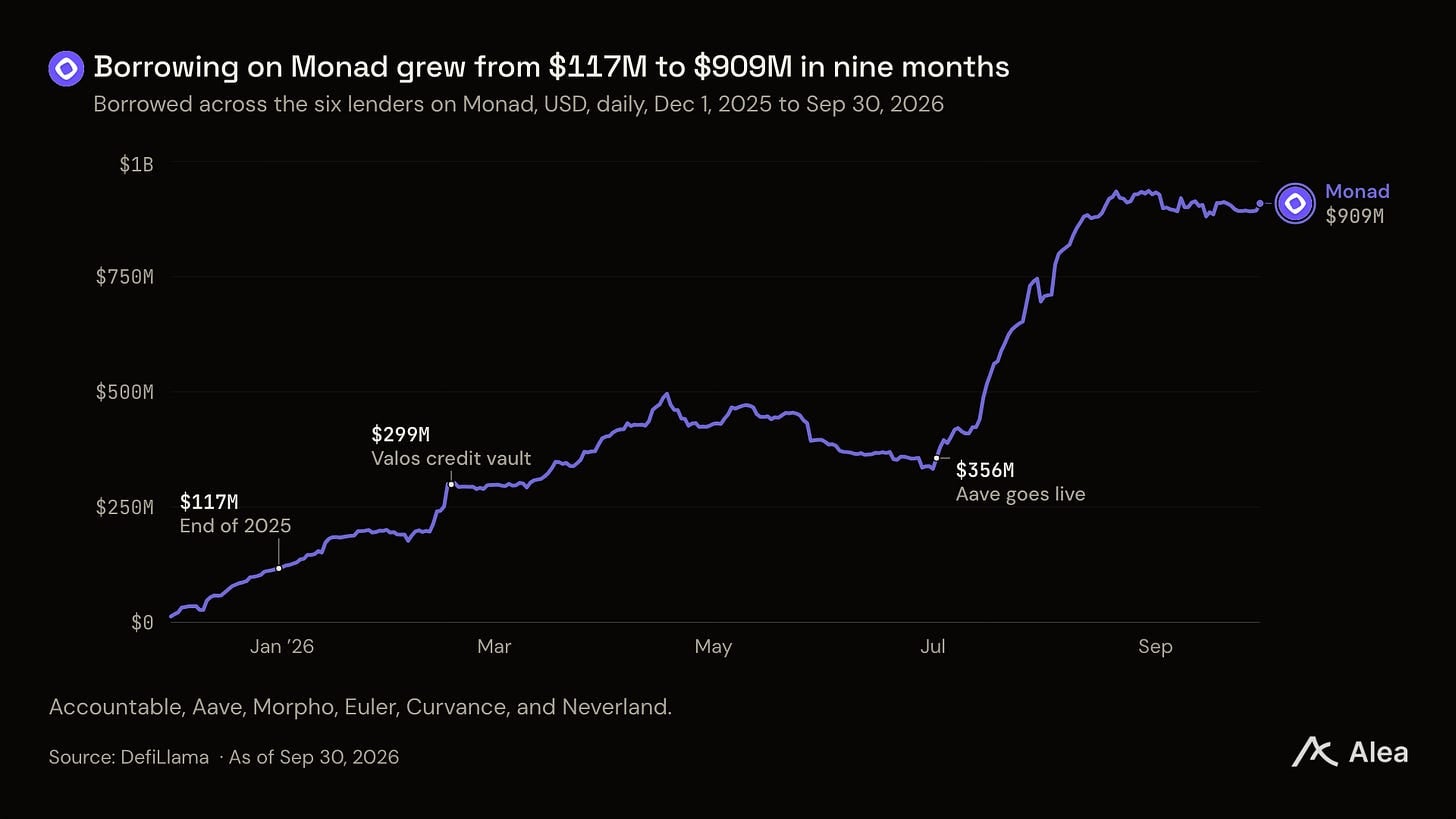
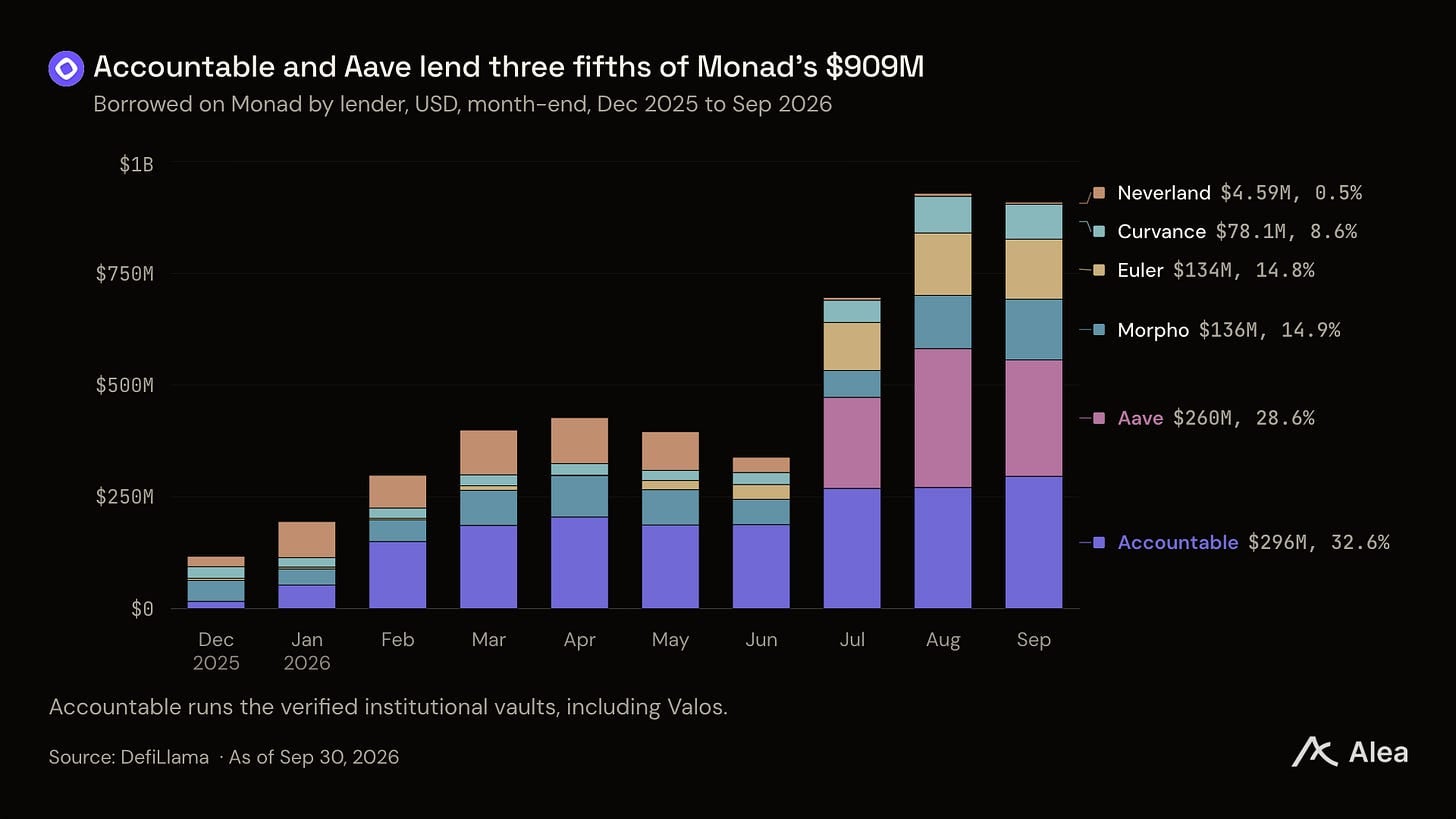
Aave launched on Monad on July 2, 2026, with 12 lending markets available on its first day. At September’s end, the report attributed 33% of Monad’s outstanding loans to Accountable-verified institutional credit vaults and 29% to Aave. It estimated $287 million in unsecured institutional loans on Monad. In this context, unsecured means the loans lacked a hard on-chain overcollateralization requirement; the report says they instead relied on borrowers’ balance sheets and off-chain legal agreements. That distinction matters when interpreting TVL or loan growth as evidence of resilience: neither measure, by itself, establishes how these loans would perform under stress.
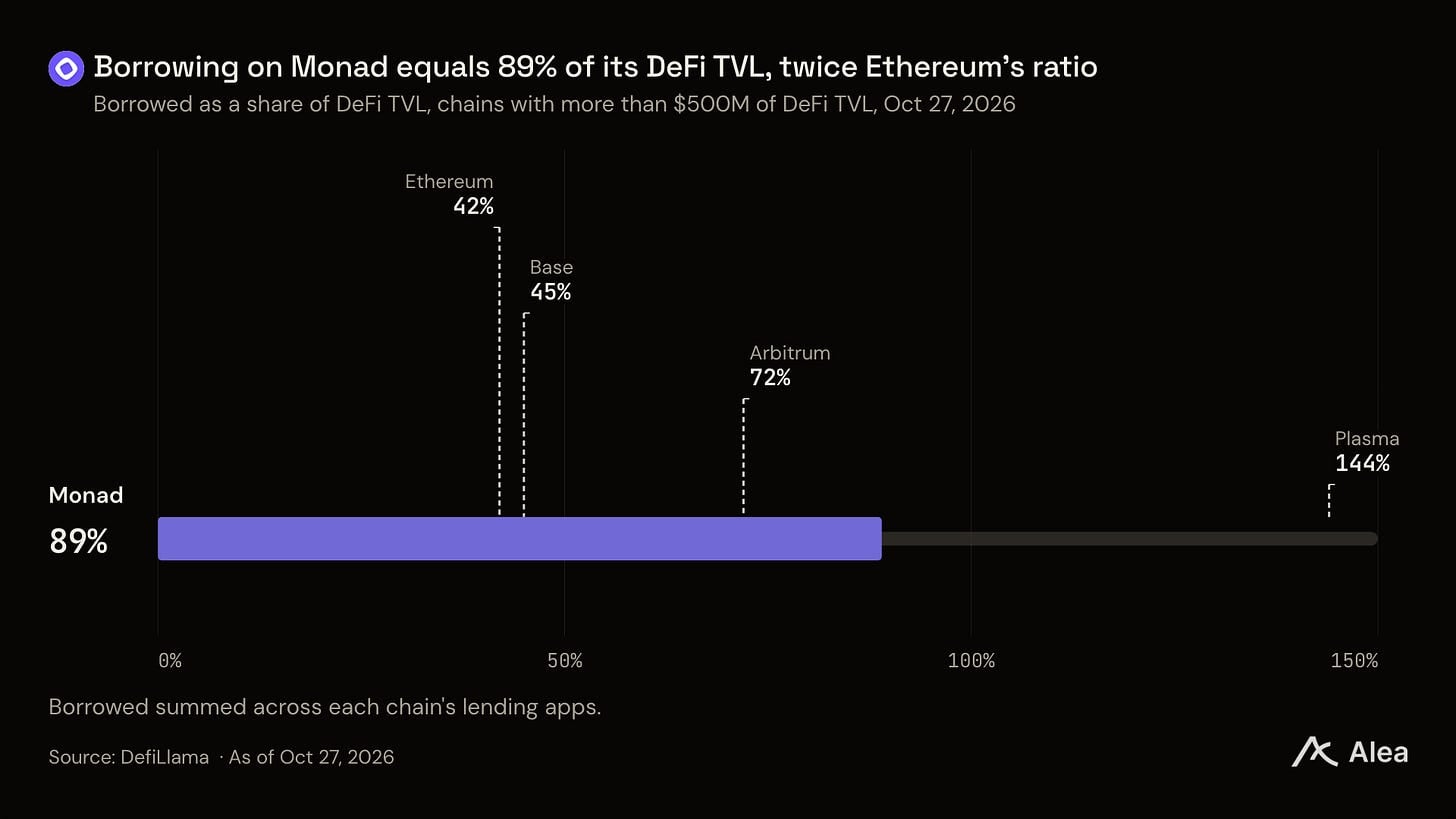
Interest dominates application fees, not network revenue
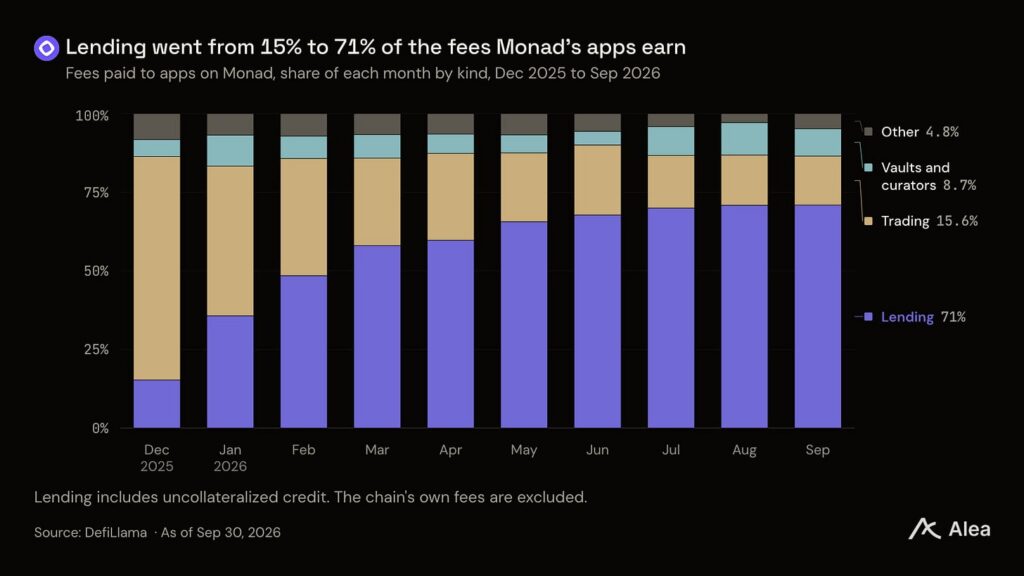
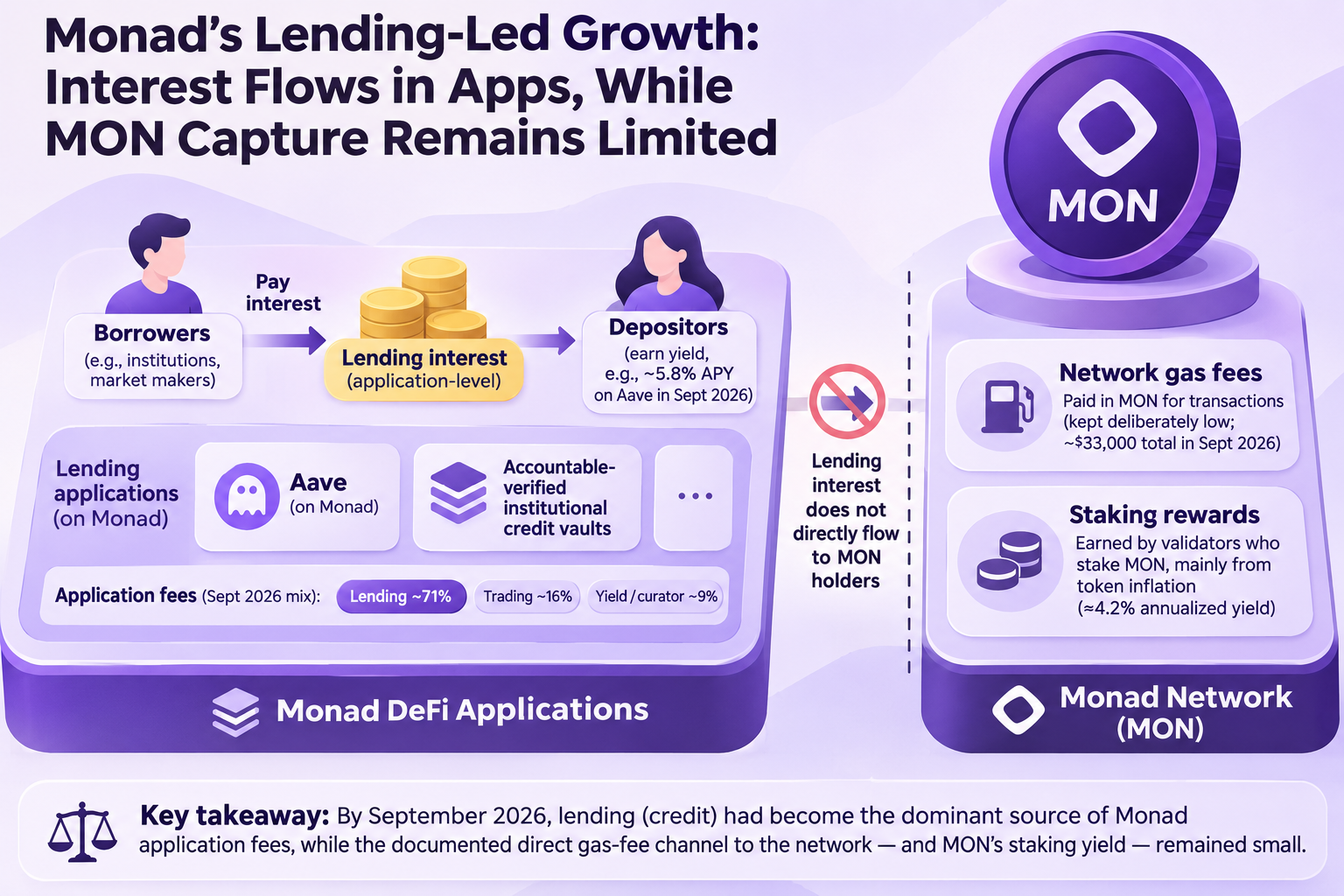
The reported mix of application fees changed sharply. Trading applications generated 71% of those fees in December 2025. In September 2026, lending applications generated 71%, trading applications 16%, and yield vaults and curator protocols 9%.
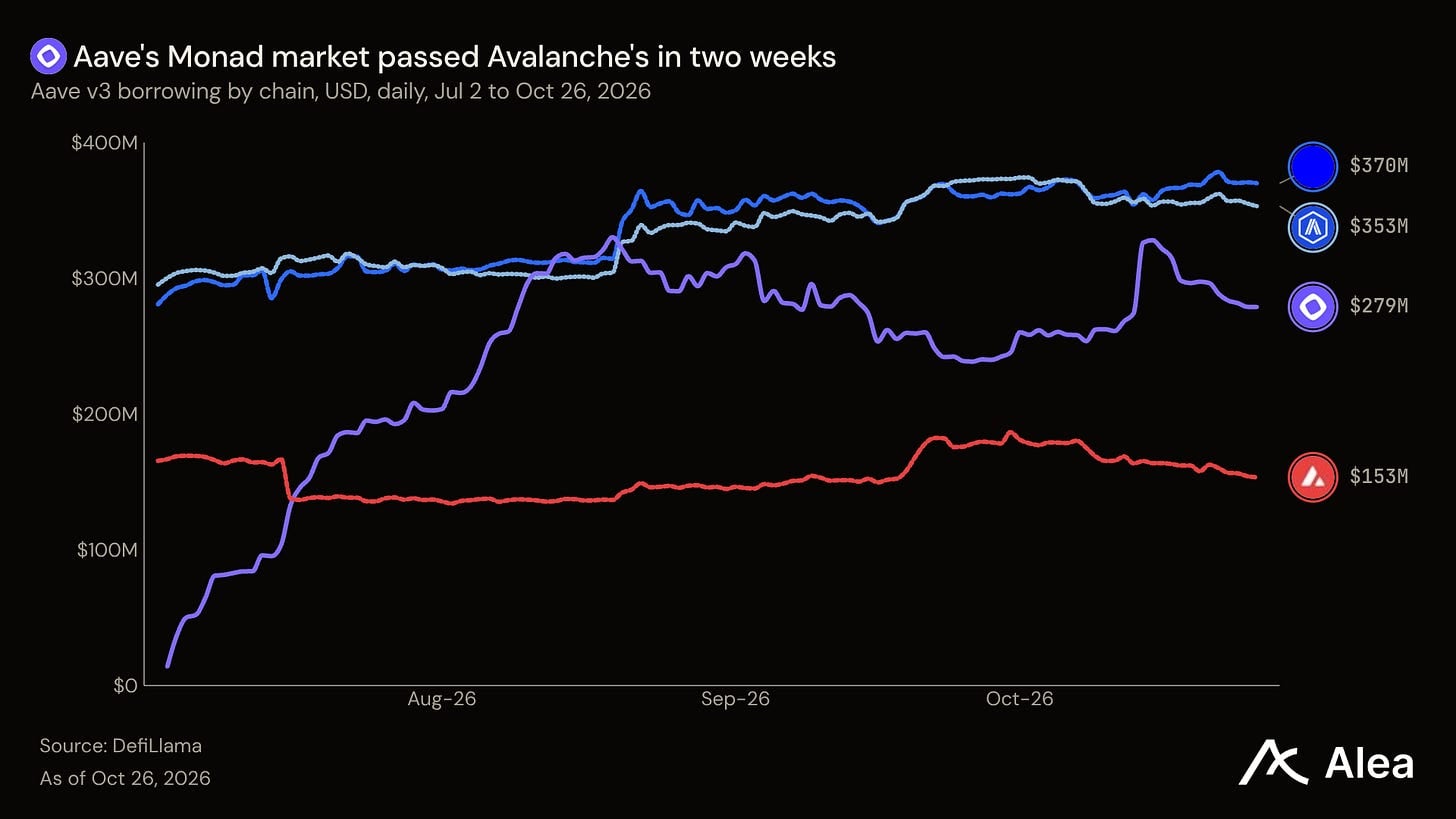
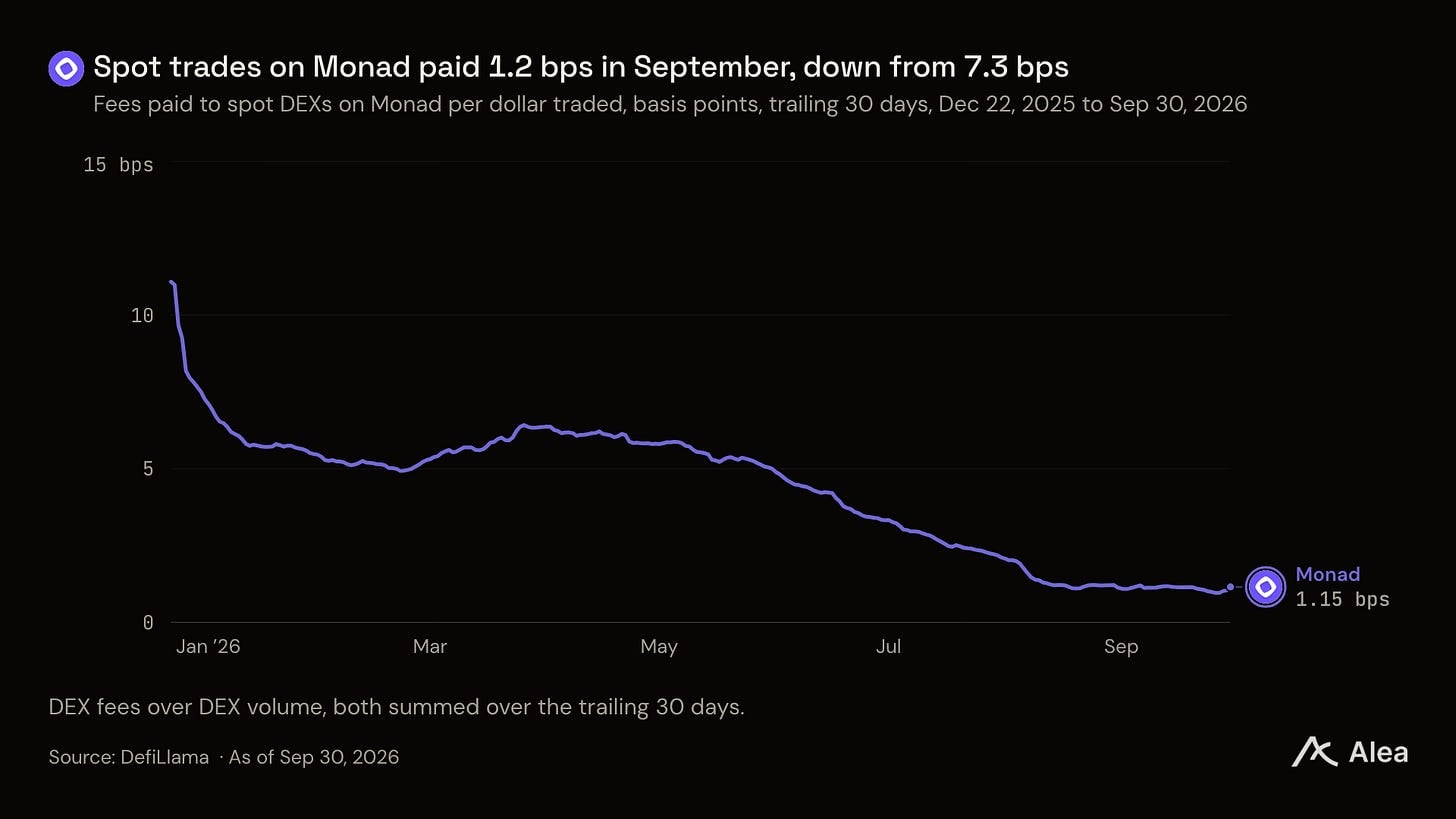
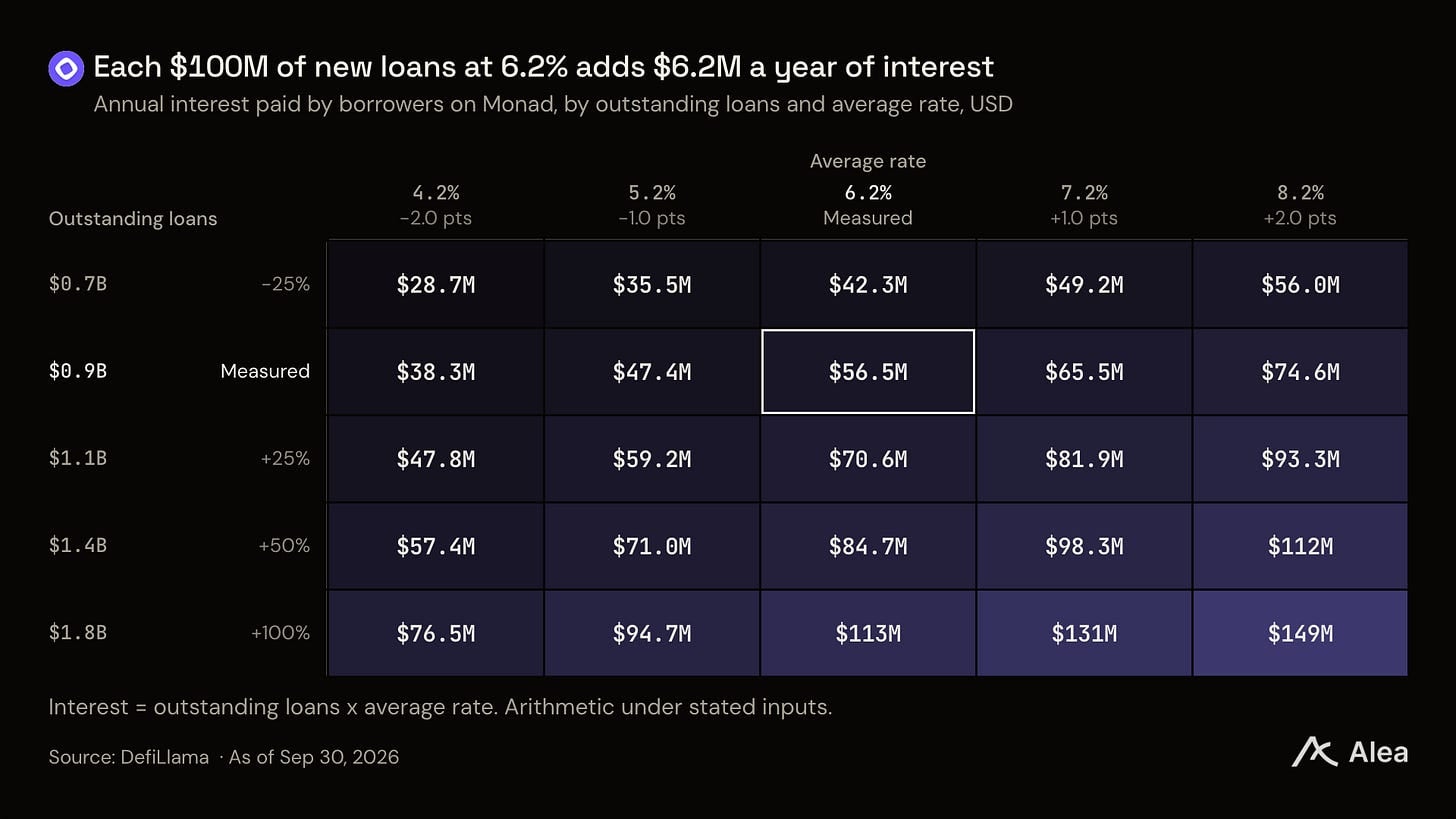
Alea Research estimated that September’s borrowing activity implied a weighted average annual rate of 6.2%. Applied to the $909 million outstanding at September 30, that produces approximately $56.5 million in annualized interest. This is a rate-and-balance calculation, not interest already collected over a year or revenue accruing to the chain. Borrowers pay interest through lending applications; depositors receive much of it, while protocol rules determine any retained portion. The report says Aave’s Monad depositors earned an average 5.8% APY in September while borrowers paid an average 6.4% rate. Aave’s stated reserve share was 10% for stablecoins and as high as 20% for volatile assets.
The estimate is sensitive to both inputs. At an unchanged 6.2% rate, another $100 million of outstanding loans would imply $6.2 million more annualized interest. Neither that calculation nor the report’s discussion of planned deployments establishes that credit balances or rates will persist.
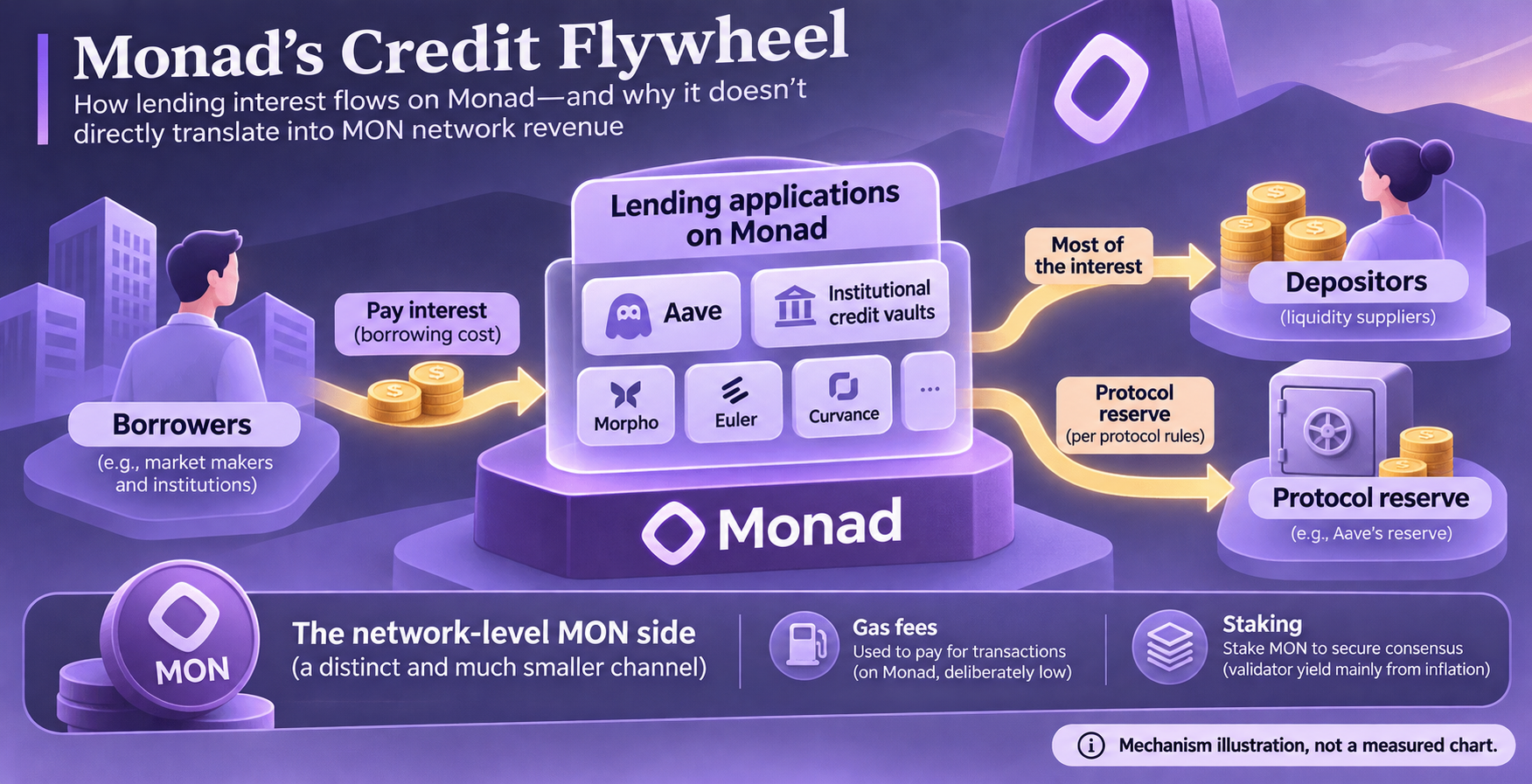
The unresolved MON capture question
MON pays network gas and is staked to secure consensus, but the report describes deliberately low transaction costs. It records approximately $33,000 in total network gas fees for September 2026 and less than one-tenth of a cent in average gas cost per transaction. The approximately 4.2% annualized validator staking yield was described as coming primarily from token inflation. Large lending-interest flows therefore should not be read as equivalent to MON fee income.
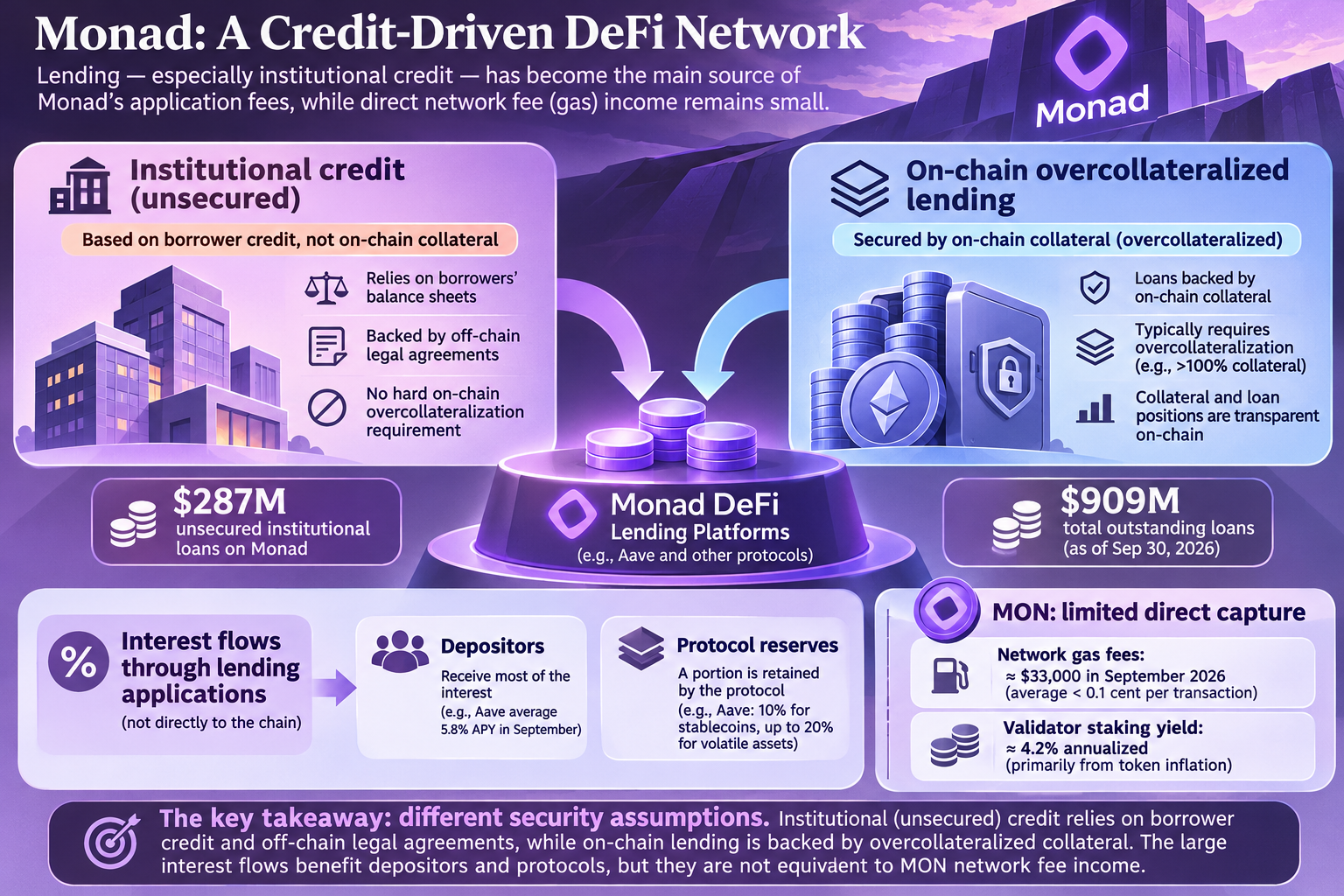
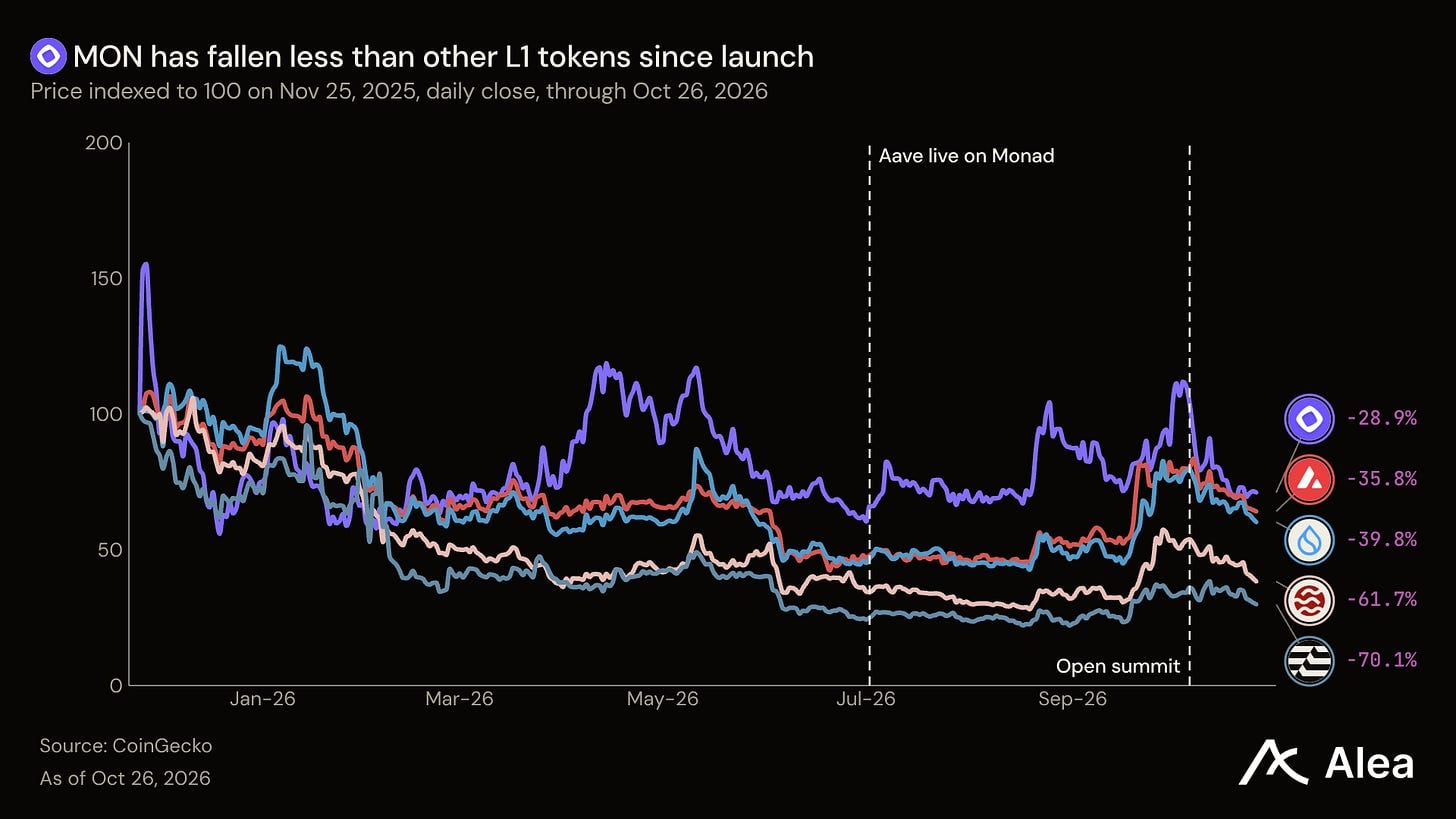
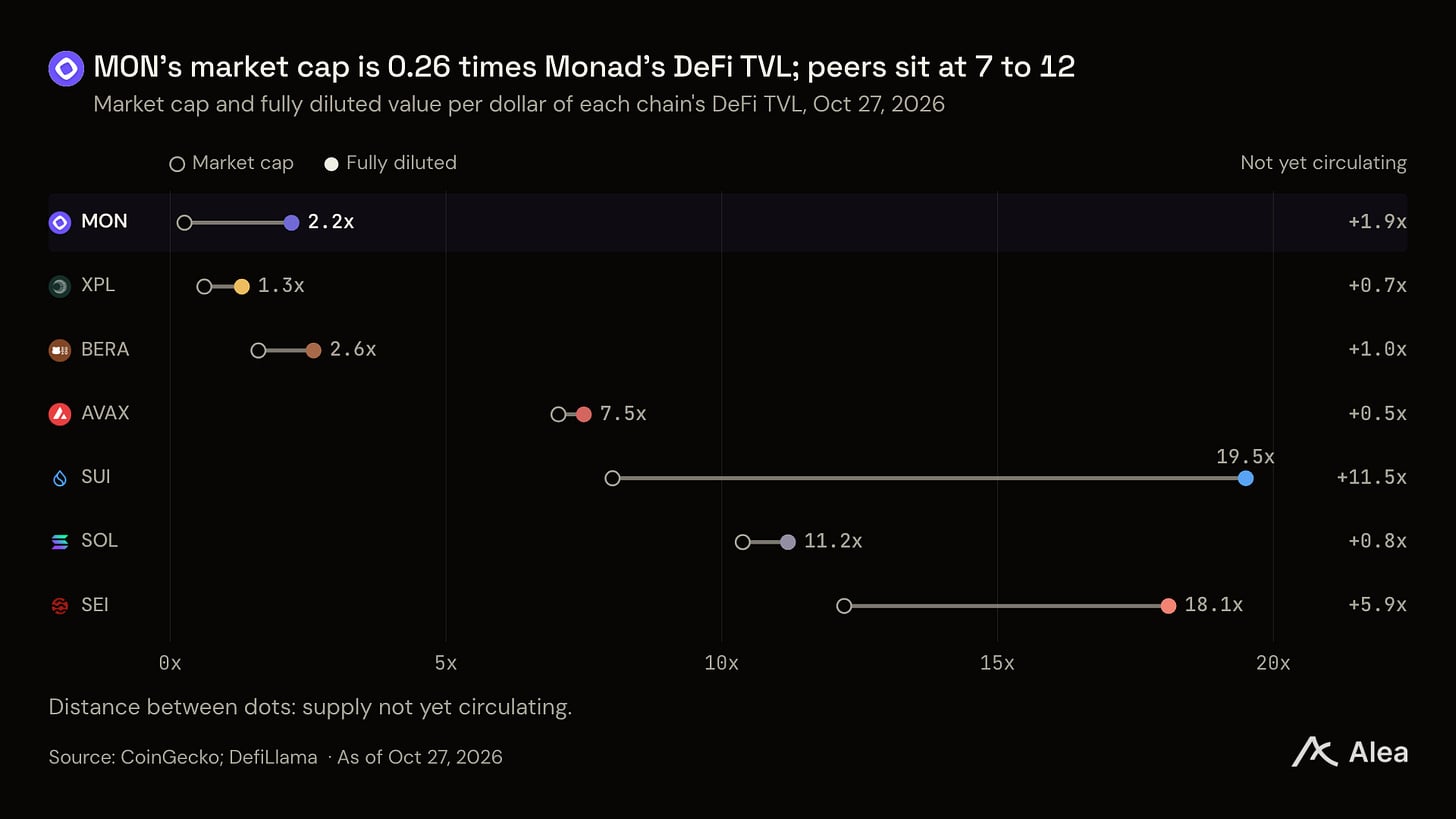
The report also compares MON’s circulating market capitalization with Monad DeFi TVL at roughly 0.25 times, versus 7–12 times for the cited peer tokens. That is a comparison of market capitalization and locked assets, not a measure of the interest MON holders receive or a standalone valuation conclusion. The stronger finding in the supplied research is narrower: as of September 2026, credit had become the dominant source of Monad application fees, while the documented direct gas-fee channel to the network remained small.
Source: techflowpost.com (originally published 2026-11-10 10:48 UTC+8)