Historical research note: This article reflects figures reported by Alea Research and published by TechFlow on November 12, 2026, at 09:57 (UTC+8). It does not describe current balances or rates.
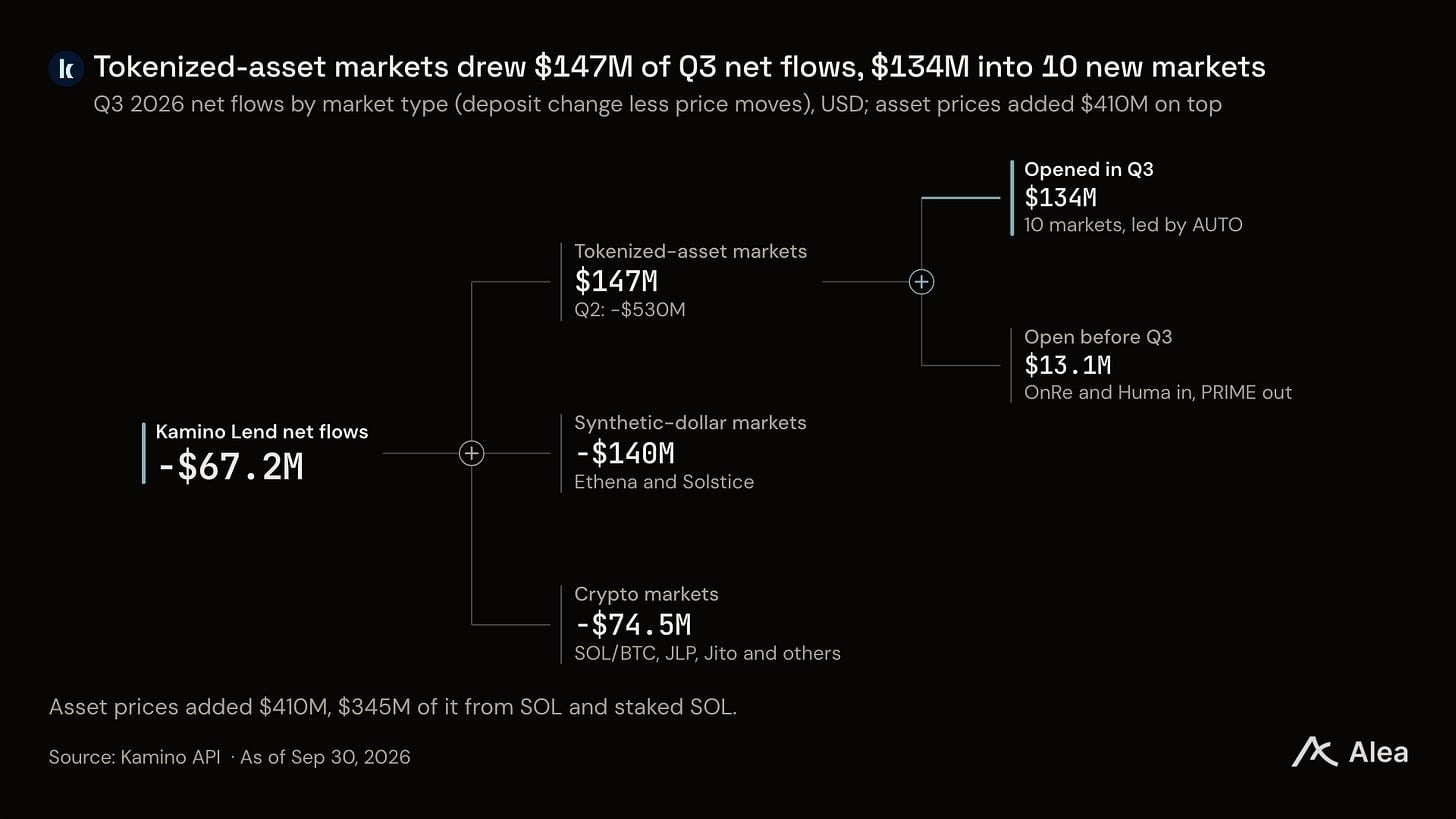
Kamino’s tokenized-asset lending markets were its only market category to record net inflows in the third quarter of 2026. Alea Research reported $147 million in net inflows to those markets, including $134 million across ten markets opened during the quarter. Its crypto-asset and synthetic-dollar markets, by contrast, lost a combined $215 million. The report separately attributed $410 million of growth in platform scale to rising asset prices—not to new deposits.
The shift raises two questions for Kamino’s lending model: whether tokenized collateral can sustain borrowing demand, and whether fixed-rate loans can make leveraged positions less exposed to changes in borrowing costs.
Where the tokenized-asset deposits went
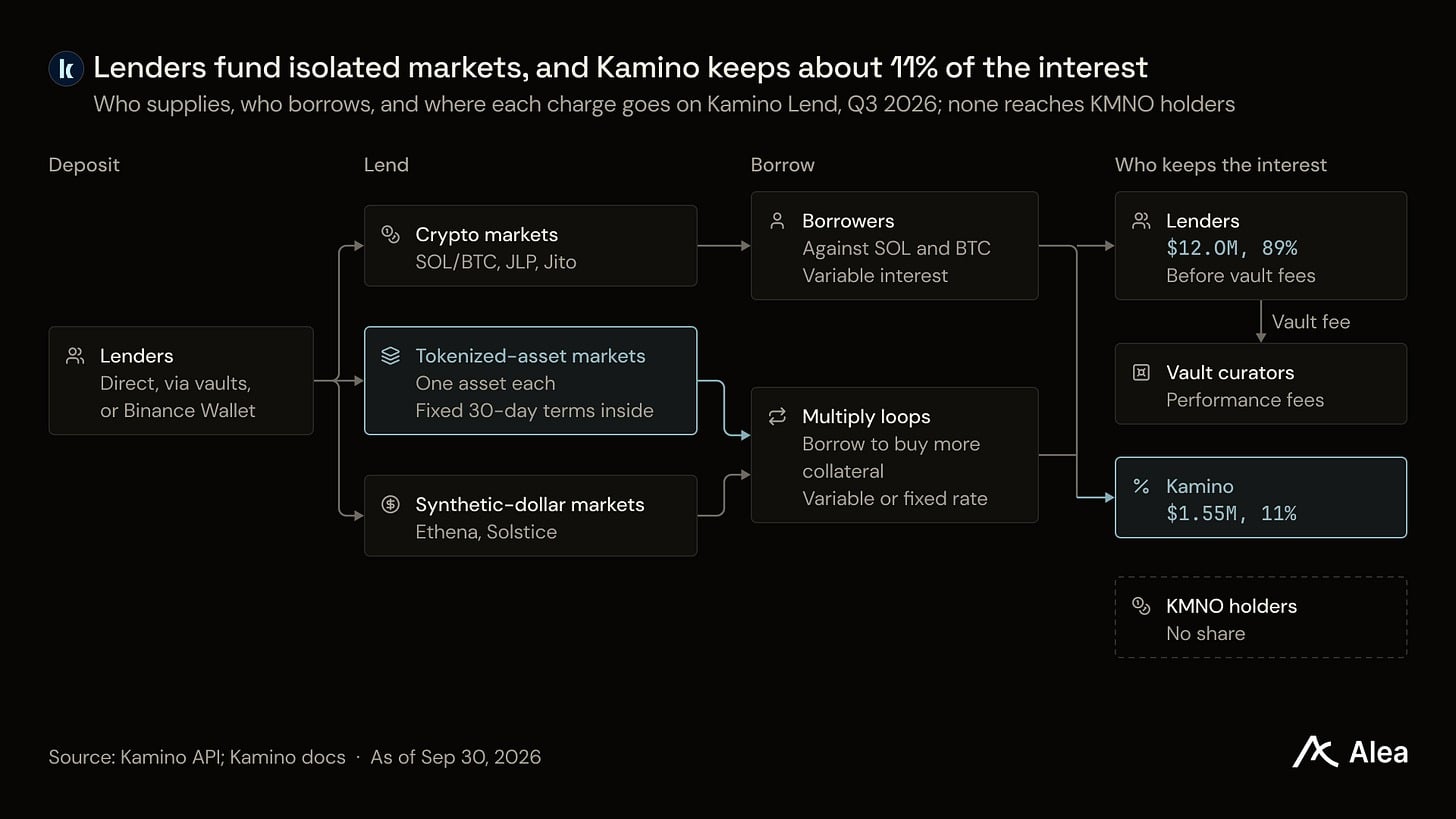
Kamino uses risk-isolated lending markets, generally with a single collateral asset and market-specific risk settings. Alea Research counted roughly 50 such markets. Its report describes Multiply as a mechanism for repeatedly borrowing against and increasing a collateral position. That structure can benefit from a positive spread between collateral yield and borrowing cost, but it also increases exposure if the spread narrows or the collateral changes in value.
Among dollar-collateral markets open throughout Q3, OnRe deposits grew by $92.5 million and Huma’s PST deposits by $62.5 million, while Figure’s PRIME market shrank by $125.5 million. The newer AUTO market held $64.9 million in deposits as of September 30; the report calculated its net carry spread at 2.23 percentage points. These figures support the report’s observation that deposits favored higher-spread markets, though they do not establish that carry was the sole reason for each flow.
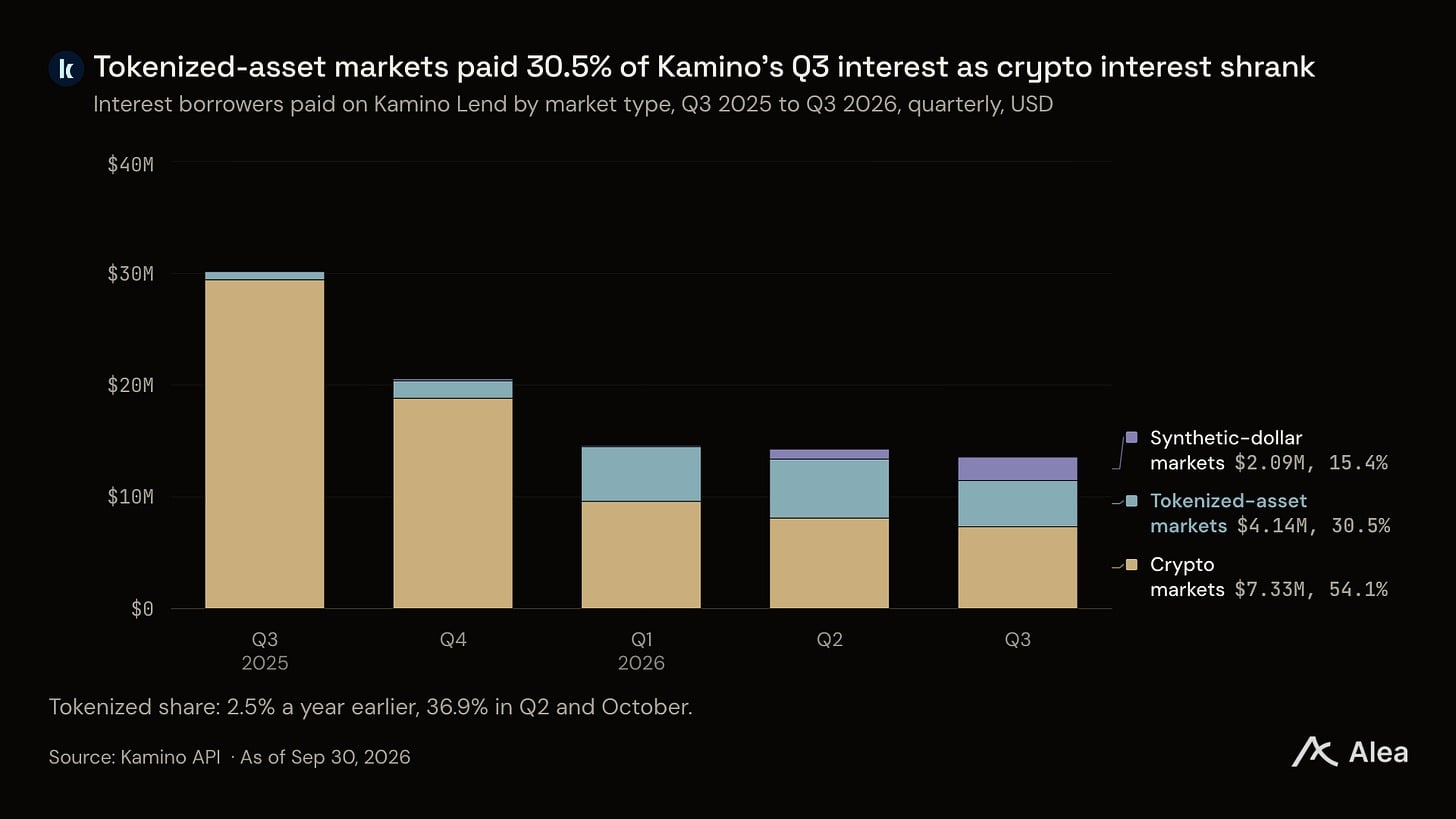
Tokenized-asset markets accounted for 30.5% of Kamino’s Q3 borrowing interest, according to the report’s calculation using daily reserve-level borrowing balances and rates. That was up from 2.5% a year earlier but below Q2’s 36.9%. Kamino retained $1.55 million of Q3 borrowing interest, versus $1.61 million in Q2—approximately 11% of the interest measured. The reported calculation excludes liquidation fees. This retained interest was not being distributed to KMNO holders; staking KMNO increased users’ token rewards rather than providing a dividend. CEO Michael Weisz said further plans for KMNO value capture would be announced, but the report did not describe an enacted distribution mechanism.
What fixed rates do—and do not—fix
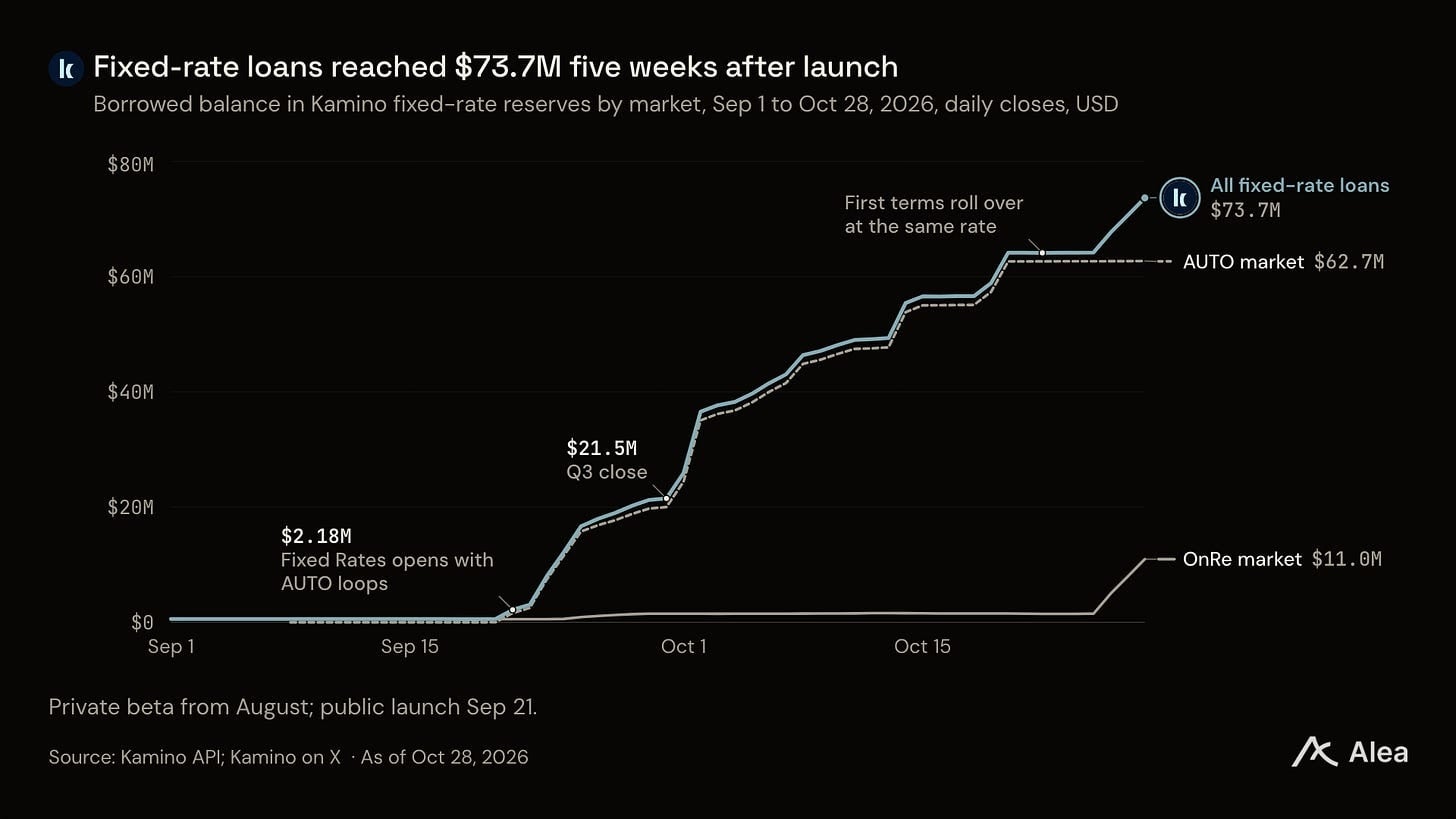
Kamino launched fixed-rate borrowing on September 21. Outstanding fixed-rate loans reached $21.5 million by September 30 and $73.7 million by October 28, when they represented 8.5% of platform loans. Under the mechanism described in the report, a loan can renew for another 30-day period at the same rate if no lender requests redemption. The first $12 million of loans renewed on those terms during the week of October 22. That initial renewal is evidence of how the mechanism operated in those cases, not a guarantee of future renewals.
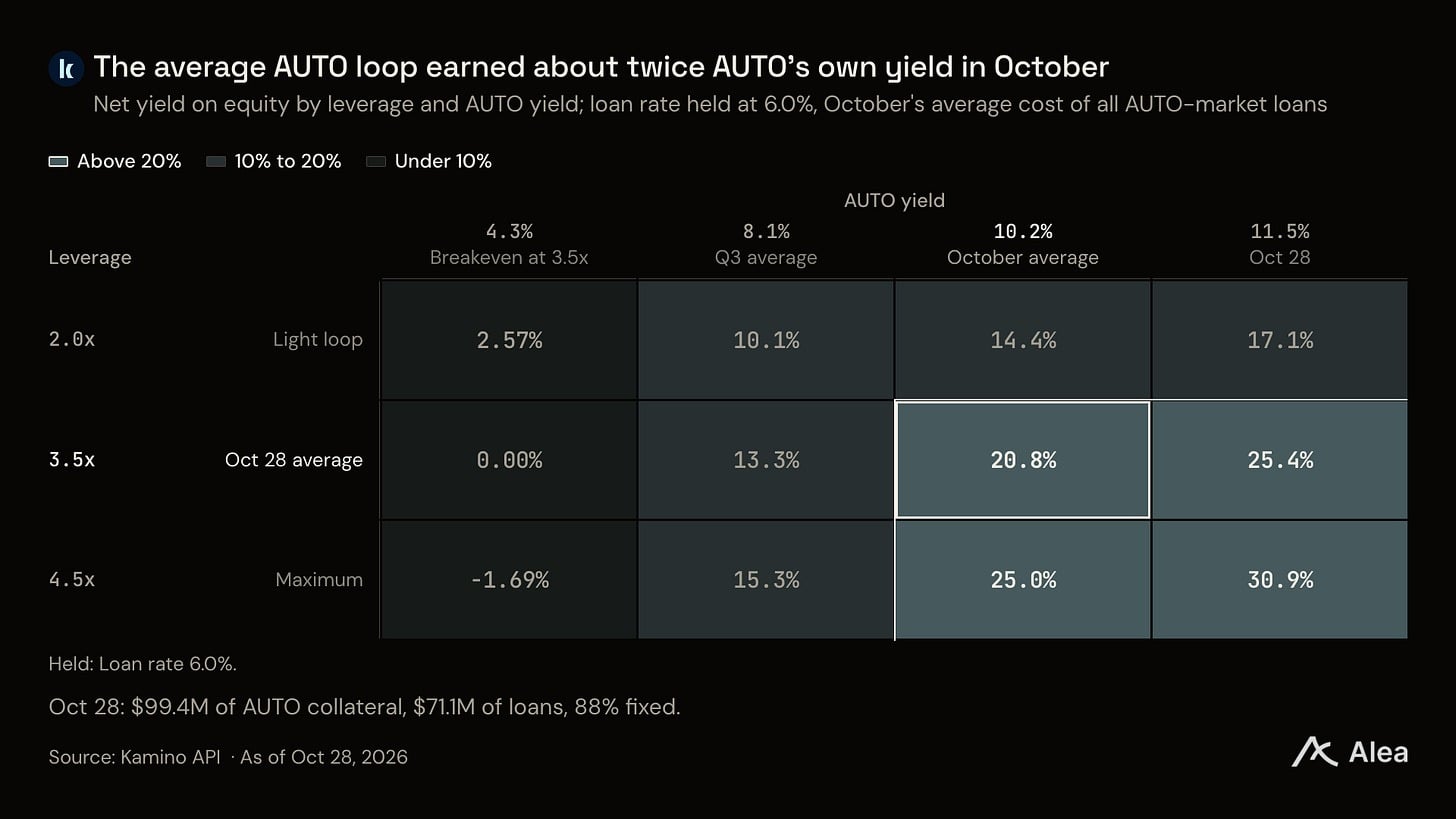
The distinction between fixed borrowing cost and variable collateral yield matters for AUTO leverage. Alea Research’s scenario used 3.5-times average leverage as of October 28 and a 6.0% borrowing rate. On those assumptions, it calculated a 4.3% collateral-yield break-even point. Applying AUTO’s reported 10.2% average October yield produced a modeled 20.8% net return for the leveraged position. The calculation excluded fees and price changes; the underlying AUTO yield was not fixed. The report also noted that, if that yield fell below the 6.0% borrowing rate, leverage would produce a lower net yield than holding the asset without borrowing. These are scenario inputs, not a forecast.
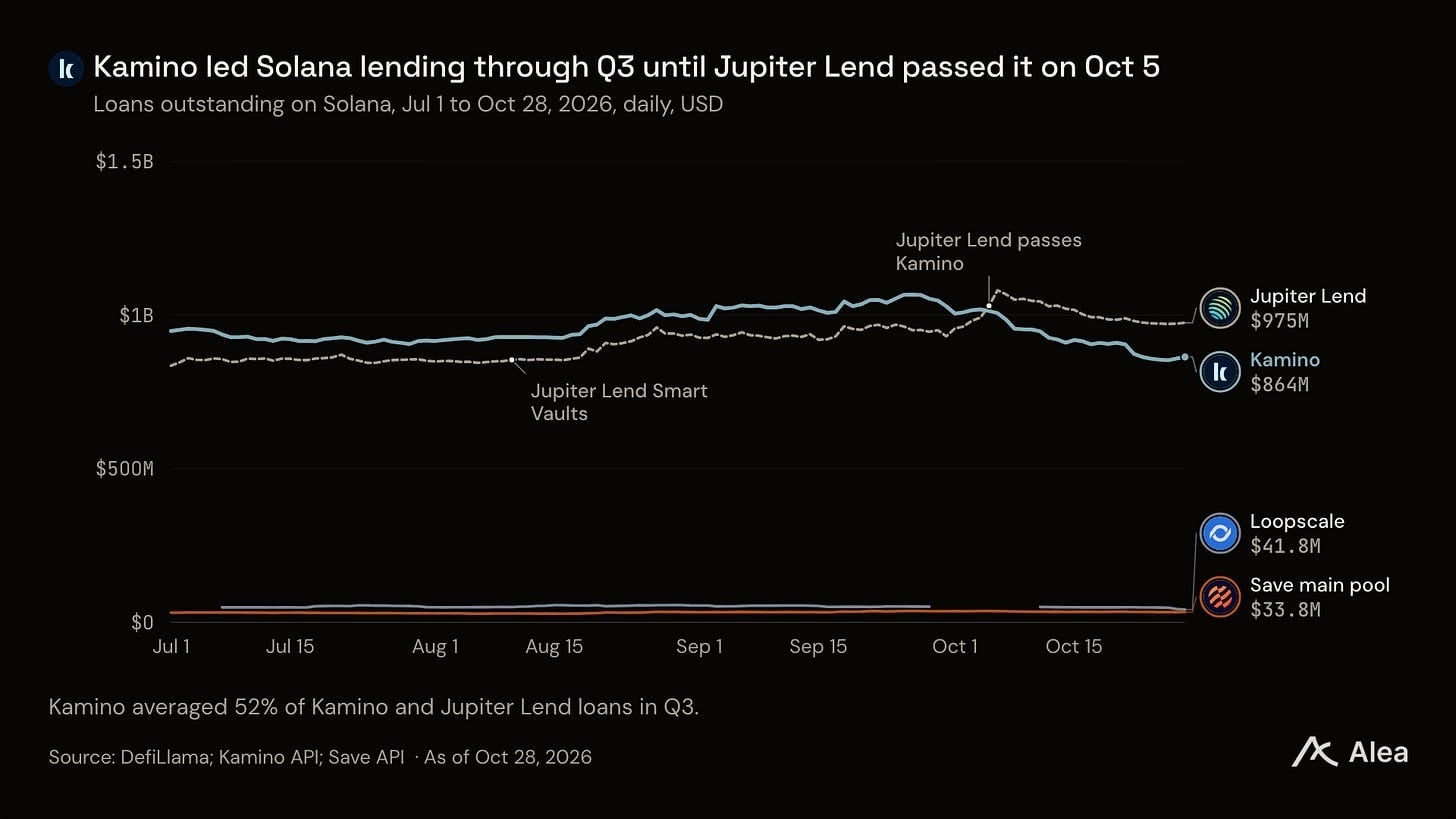
Competition limits what can be inferred from Kamino’s Q3 inflows. Alea Research put Kamino’s average share of loans across Kamino and Jupiter Lend at 52% in Q3, down from 58% in Q2. Jupiter Lend overtook Kamino in total borrowing on October 5. Across the broader comparison that also included Save’s main pool and Loopscale, Kamino’s average Q3 share was 50% and stood at 45% on October 28. Kamino nevertheless had higher average daily net deposits after loans than Jupiter Lend during Q3: $1.17 billion versus $1.02 billion, according to the report.
Source: techflowpost.com (originally published 2026-11-12 09:57 UTC+8)