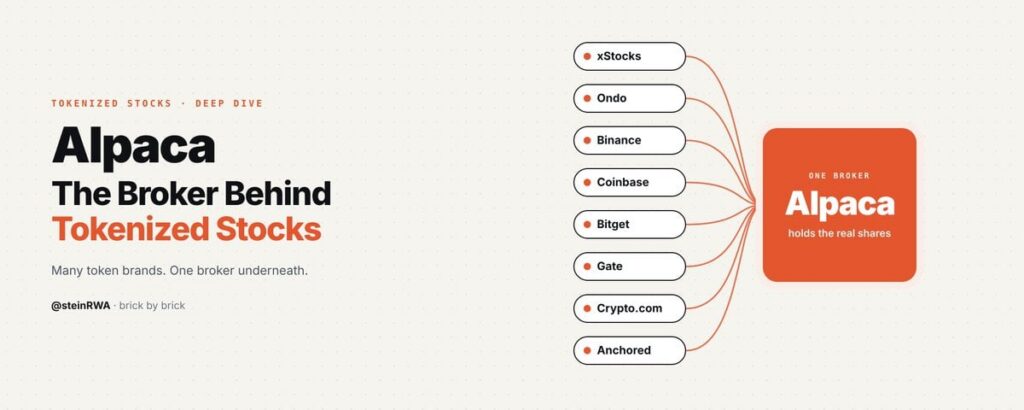
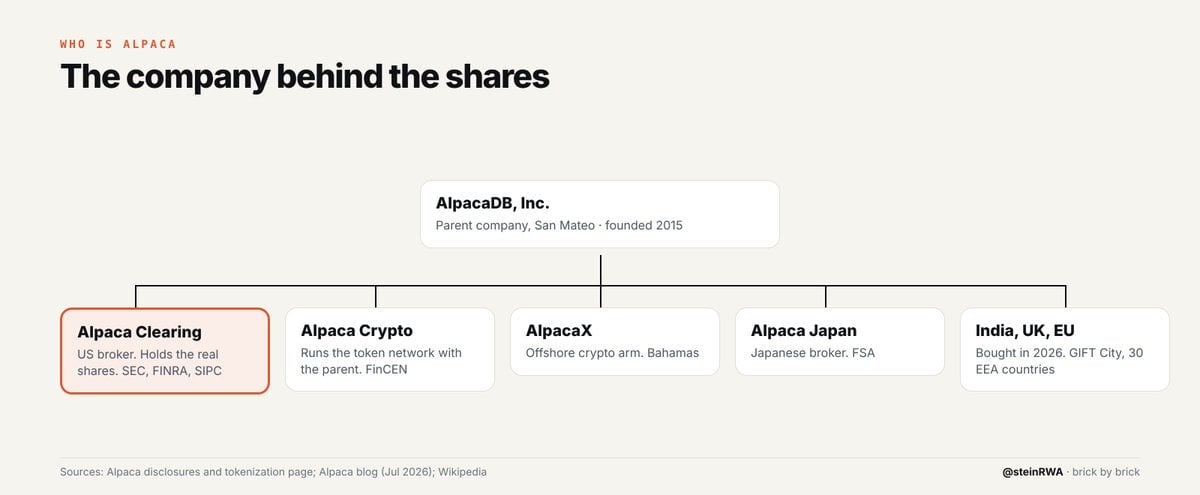
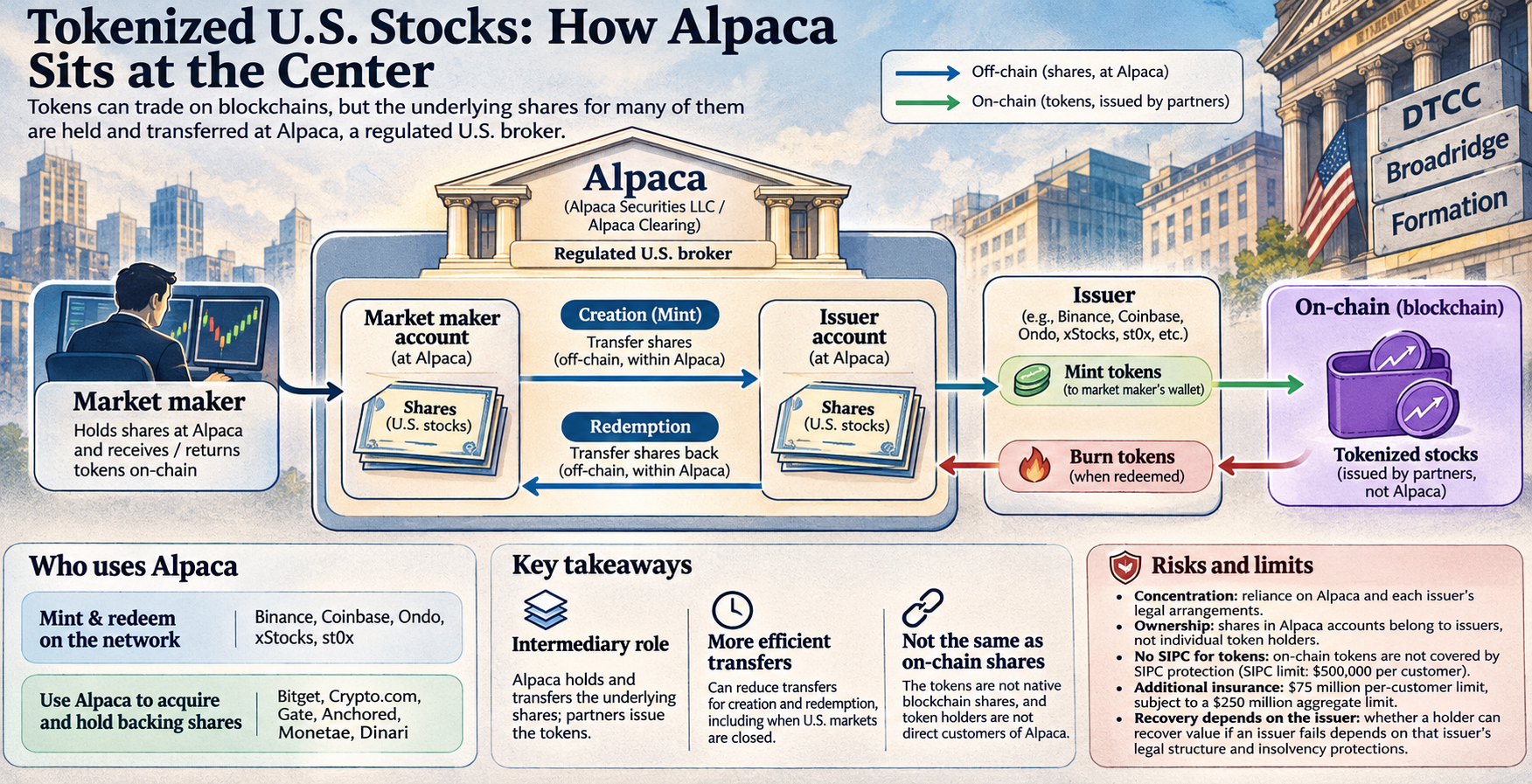
Tokenized stocks may move on blockchains, but the shares backing many of them remain in conventional brokerage accounts. In a report published on November 23, 2026, Stein described Alpaca Securities LLC—also called Alpaca Clearing—as a central intermediary for stock-token issuers and their market makers. That distinction matters: Alpaca holds and transfers underlying shares; its partners issue the tokens.
How shares become tokens
Alpaca’s Instant Tokenization Network (ITN) is designed to let a market maker exchange shares held in an Alpaca account for tokens without first selling the shares and wiring cash to an issuer. Under the process described in the report, Alpaca transfers the shares internally to the issuer’s account, and the issuer sends newly minted tokens to the market maker’s wallet. Redemption reverses those steps: the issuer destroys returned tokens, and the shares move back to the market maker’s Alpaca account.
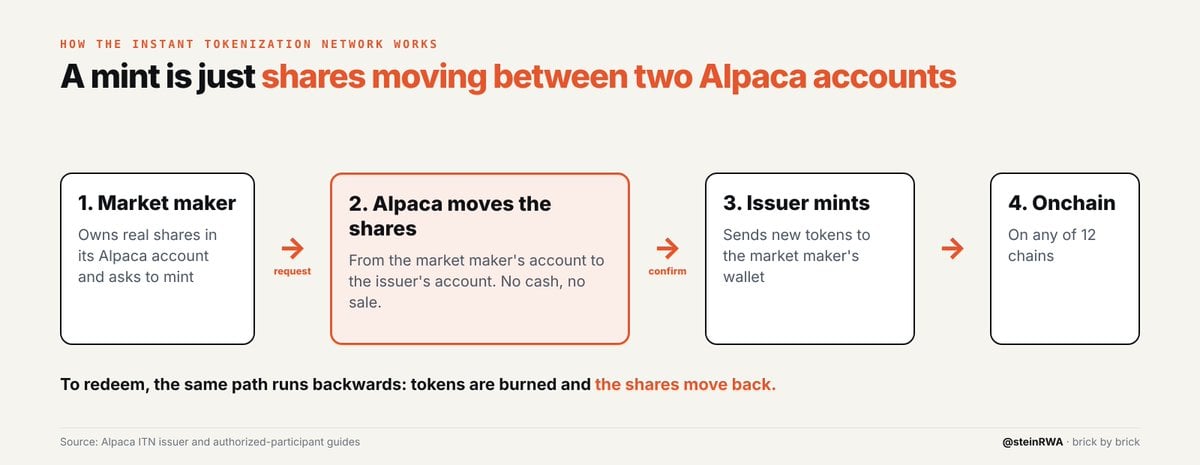
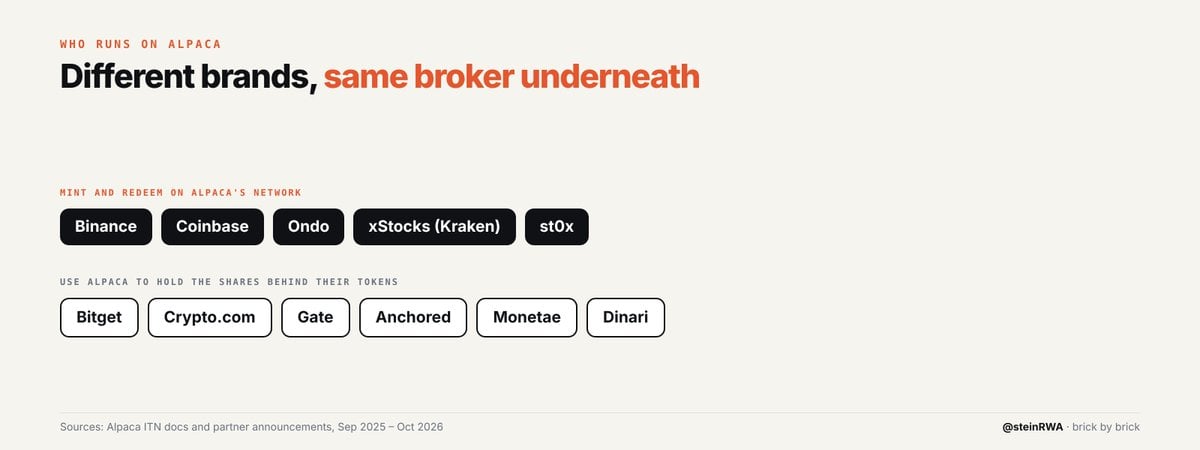
This mechanism can reduce the transfers needed for creation and redemption, including when U.S. stock markets are closed. It does not make the underlying shares native blockchain assets, or make token holders direct customers of Alpaca. The report lists Binance, Coinbase, Ondo, xStocks and st0x among participants in the mint-and-redeem network. It separately lists Bitget, Crypto.com, Gate, Anchored, Monetae and Dinari as using Alpaca to acquire and hold shares backing their tokens. The rights attached to those tokens are not necessarily identical.
What the scale estimates measure
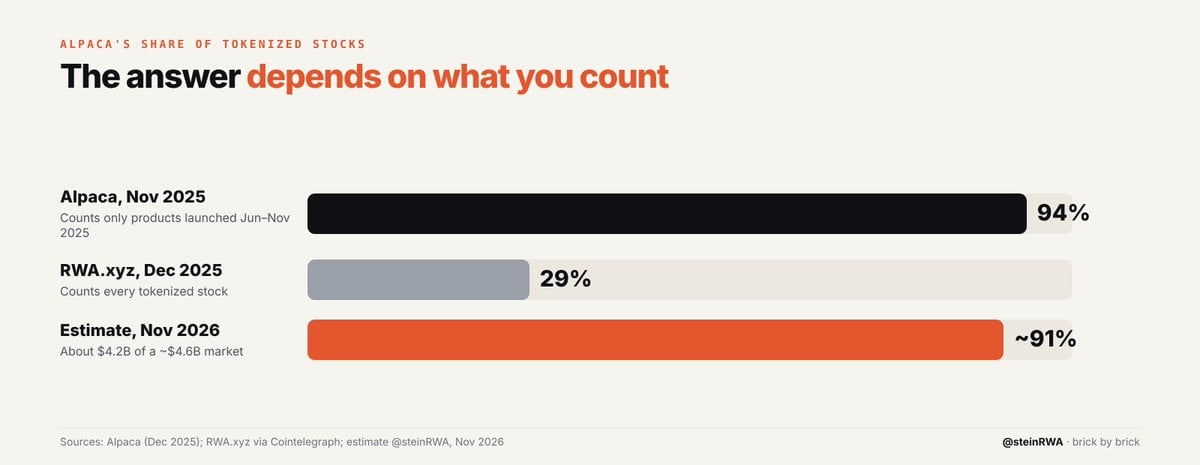
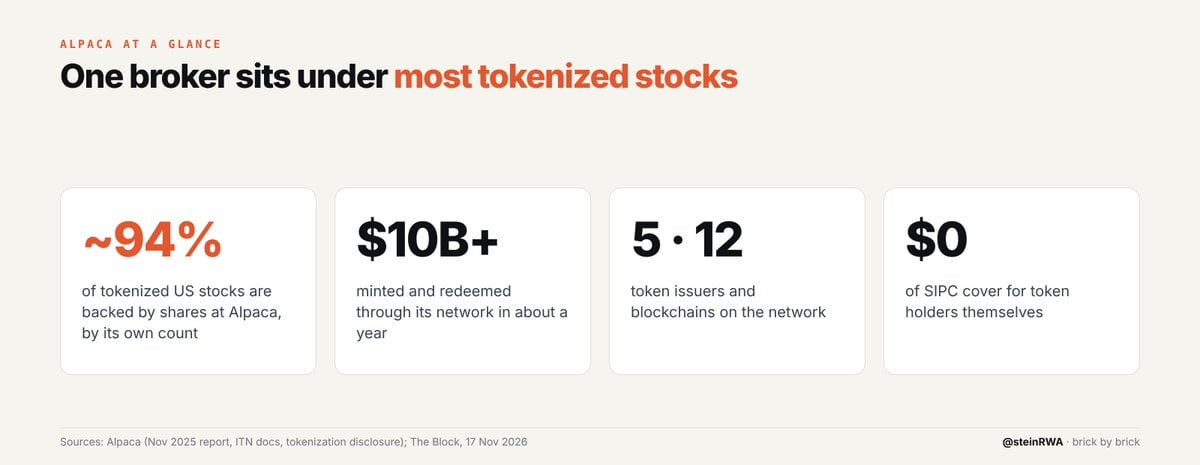
The report presents several figures with different scopes. It cites Alpaca’s estimate that the firm holds approximately 94% of shares backing the market’s tokenized stocks. Stein’s own calculation instead puts Alpaca at approximately 91% of an estimated $4.6 billion tokenized U.S. stock market in November 2026. The report also cites RWA.xyz’s 29% market-share estimate for December 2025, noting differences in the products counted. These figures should not be treated as a single continuous dataset.
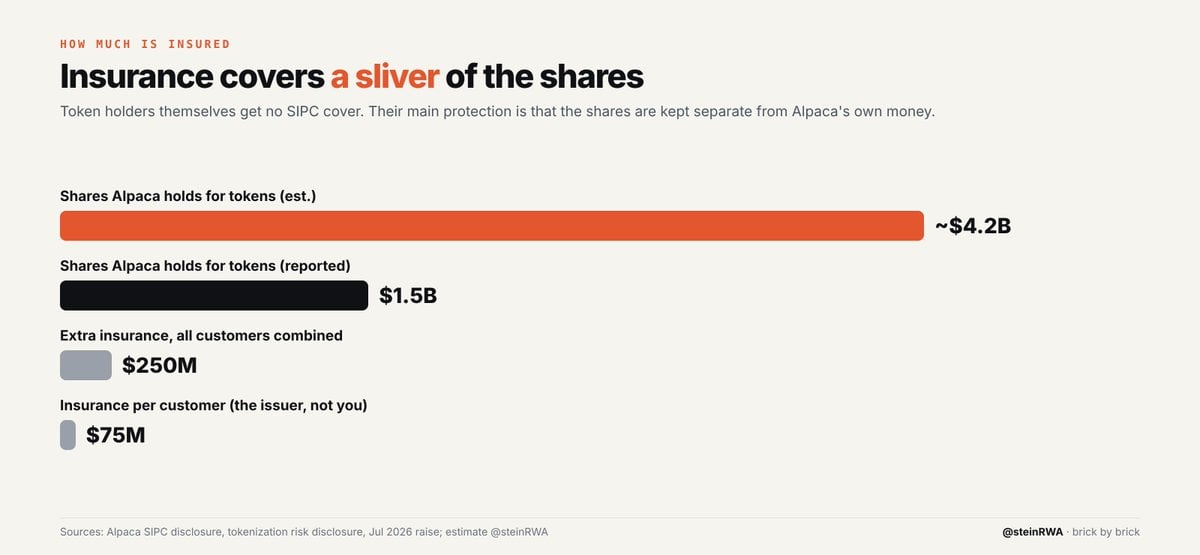
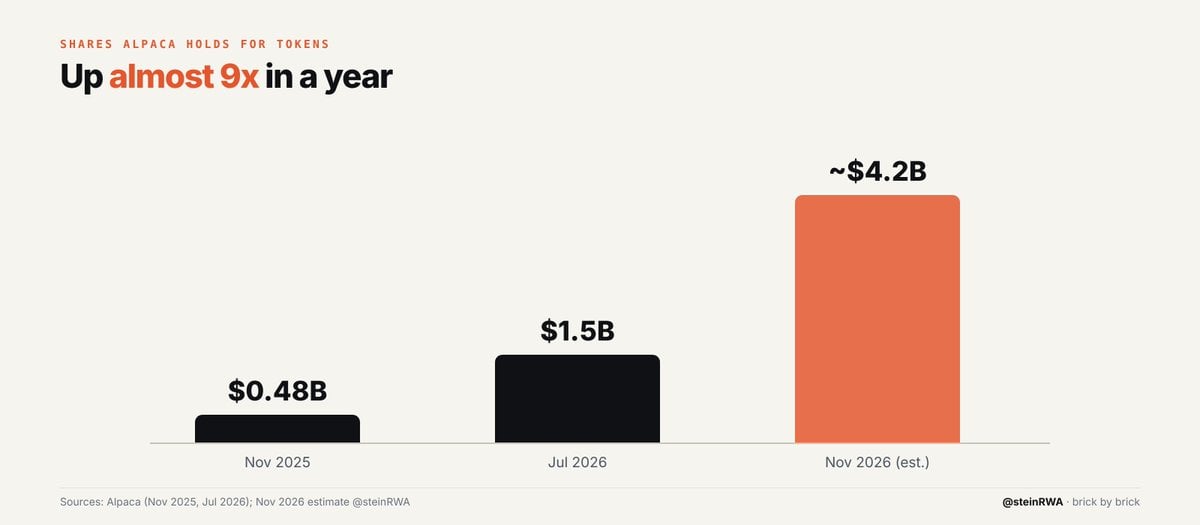
According to the report, the value of underlying shares held at Alpaca was about $480 million in November 2025, exceeded $1.5 billion in July 2026, and was estimated at about $4.2 billion in November 2026. Co-founder Hitoshi Harada said Alpaca had processed more than $10 billion in token creation and redemption over roughly a year. That activity figure is not the same as the value of shares held at a point in time.
Where the risks remain
A common broker can make transfers between issuers more efficient, but it also concentrates reliance on that broker and on each issuer’s legal arrangements. The report says the shares in Alpaca accounts belong to issuers rather than individual token holders. Alpaca’s risk disclosure says the on-chain tokens themselves are not covered by Securities Investor Protection Corporation (SIPC) protection. The report cites a standard SIPC limit of $500,000 per customer and additional insurance with a $75 million per-customer limit, subject to a $250 million aggregate limit. Those limits should not be read as insurance promises to token holders. Whether a holder can recover value if an issuer fails depends on that issuer’s legal structure and insolvency protections.
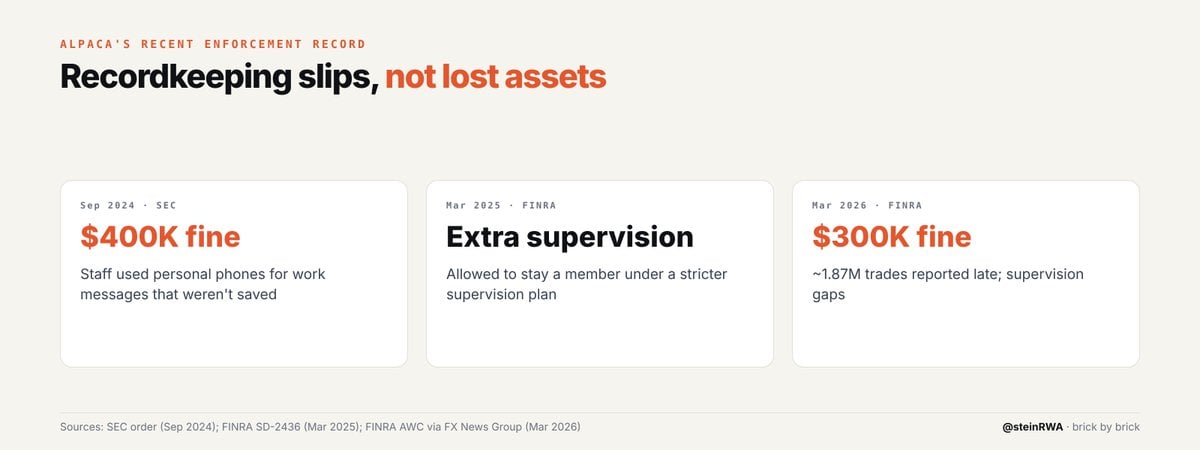
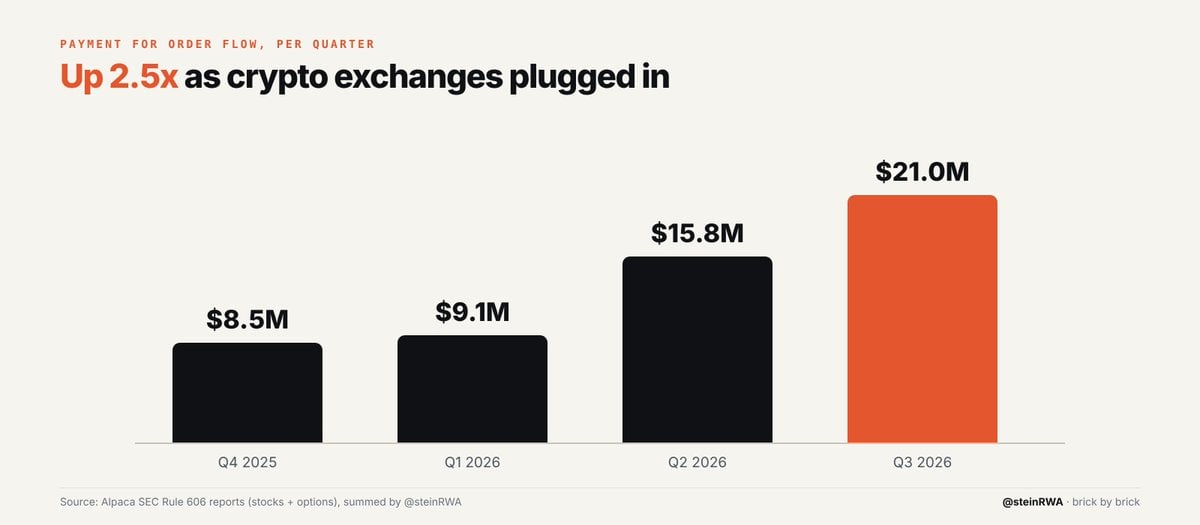
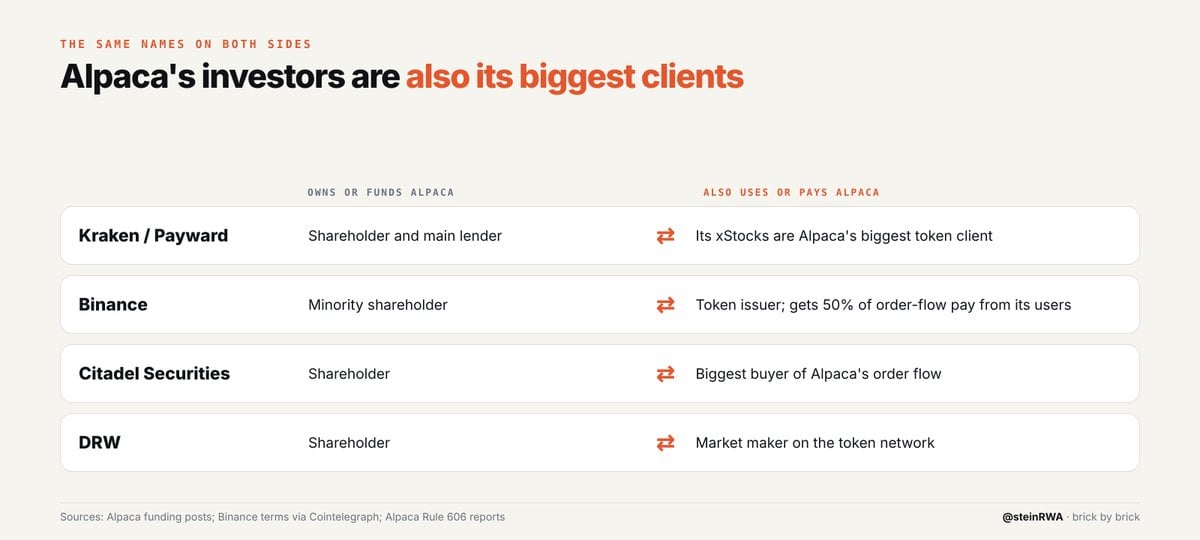
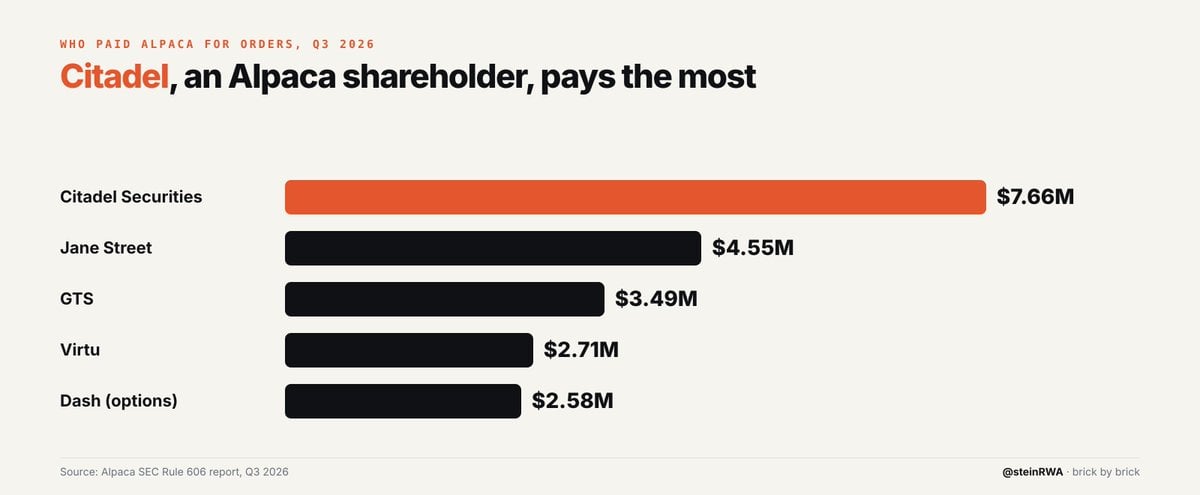
Stein also identifies overlapping commercial interests: the report describes Kraken, Binance, Citadel Securities and DRW as both Alpaca investors and business counterparties. It says Alpaca earns payment for order flow when stock orders are routed to market makers, but token minting and redemption do not themselves generate that revenue. Those relationships warrant scrutiny without, on the evidence presented, establishing misconduct.
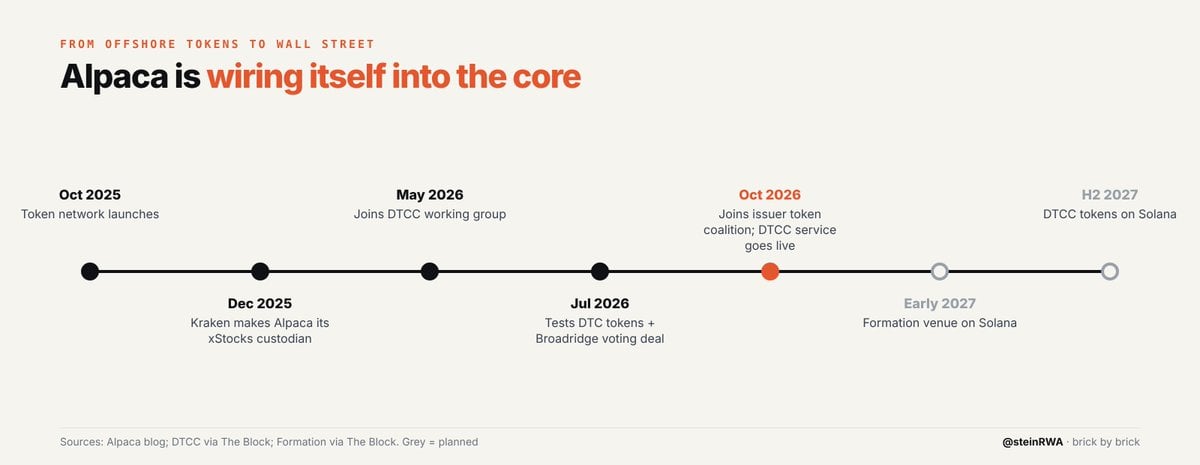
Alpaca’s role may evolve as regulated tokenization efforts develop. The report describes work with DTCC and Broadridge, and plans involving issuer-sponsored shares and a proposed Formation trading venue. Those initiatives differ from the existing issuer-backed tokens and should not be assumed to give current holders the same shareholder rights. As of the report’s November 2026 publication, Alpaca’s tokenization service was not open to U.S. investors.