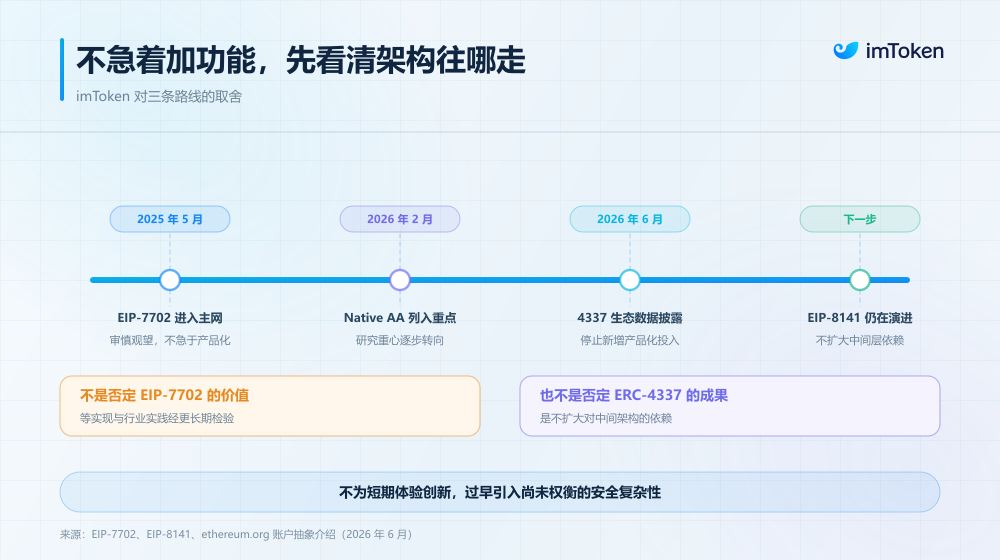
In an article dated November 21, 2026, imToken set out its account-abstraction strategy: it was taking a cautious approach to productizing EIP-7702, stopping new productization investment in ERC-4337, and gradually shifting its research focus toward native account abstraction. That is a statement of imToken’s priorities, not evidence that native account abstraction is ready to replace either existing approach.
The underlying question is how a wallet can make an account more capable without making its authority harder for a user to understand. A traditional externally owned account (EOA) is controlled by a private key. Account abstraction instead aims to make aspects of validation, execution and fee payment programmable. That can support operations such as batching transactions or having another party cover fees, but it also makes the boundaries of an authorization more important.
EIP-7702: Delegation changes what an EOA can do
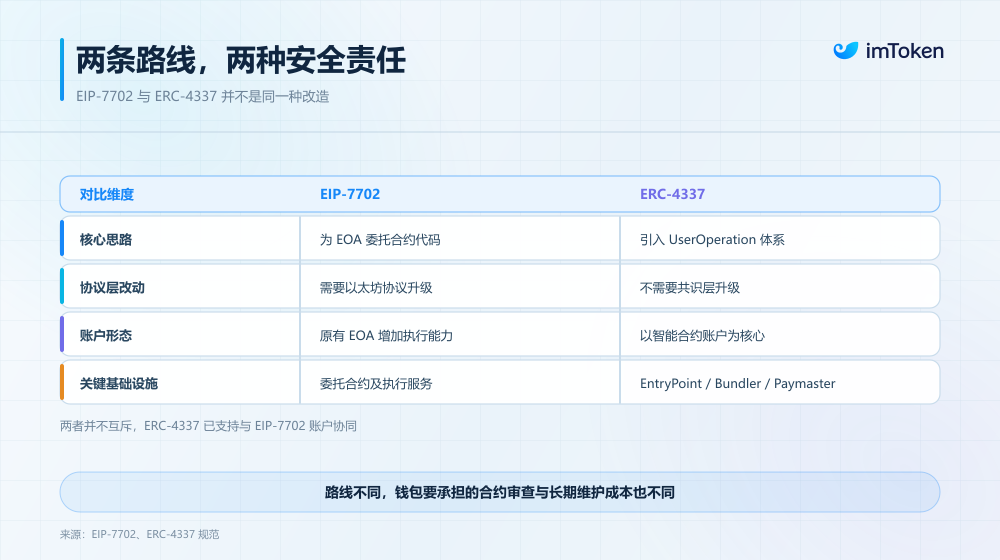
EIP-7702 lets an EOA authorize delegation to deployed contract code. As imToken explains, that can give an existing account capabilities such as batched operations and sponsored fees. The security consequence depends on the code selected: if a user delegates to a malicious or seriously flawed contract whose logic permits unrestricted transfers or calls, the exposure can extend beyond a particular token allowance to assets and subsequent operations across the account.
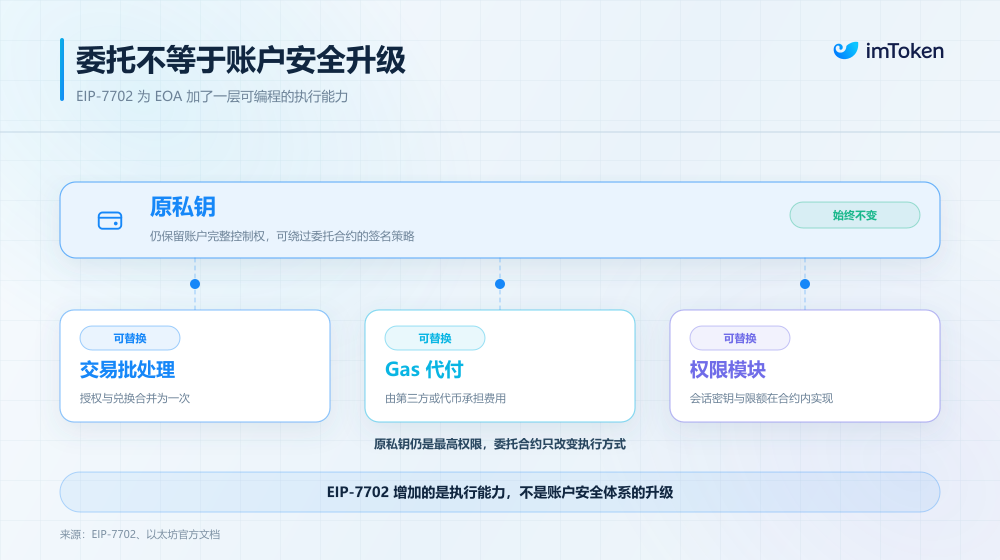
Delegation does not remove the original private key’s control over the EOA. According to imToken, that key may still bypass some signing policies in the delegated contract. A user can also authorize an empty address to remove delegation, but doing so cannot reverse transfers or other on-chain changes that have already occurred. These distinctions underpin imToken’s stated reluctance to roll EIP-7702 out broadly before delegation interfaces, contract review and permission controls have been tested further.
ERC-4337: A longer operational chain
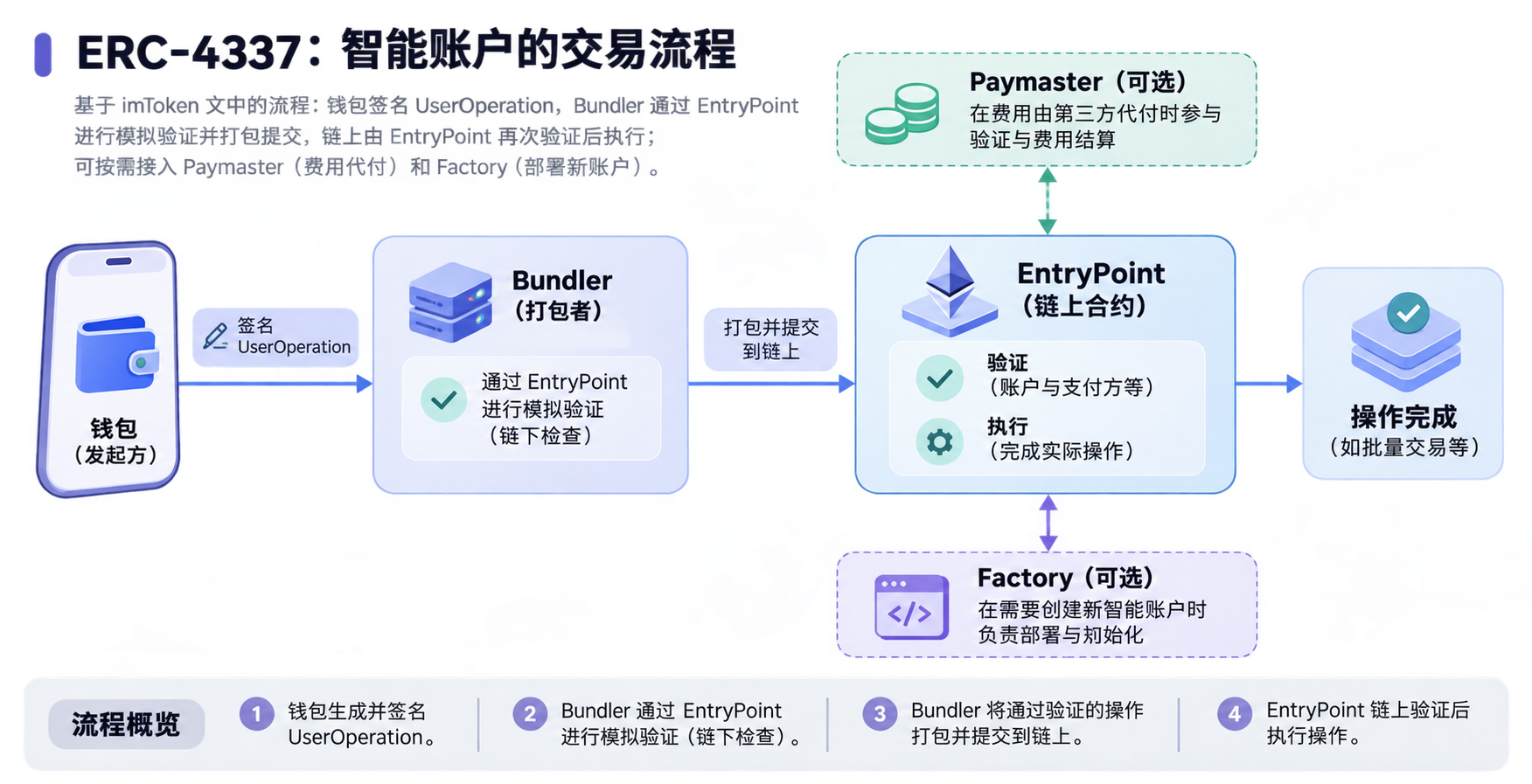
ERC-4337 uses smart accounts and a supporting transaction flow rather than adding delegation to an existing EOA. In the flow described by imToken, a wallet signs a UserOperation; a Bundler checks it through EntryPoint simulation, bundles it and submits it on-chain; EntryPoint then performs validation before execution. A Paymaster may participate when fees are sponsored, while a Factory may be involved in deploying a new account.
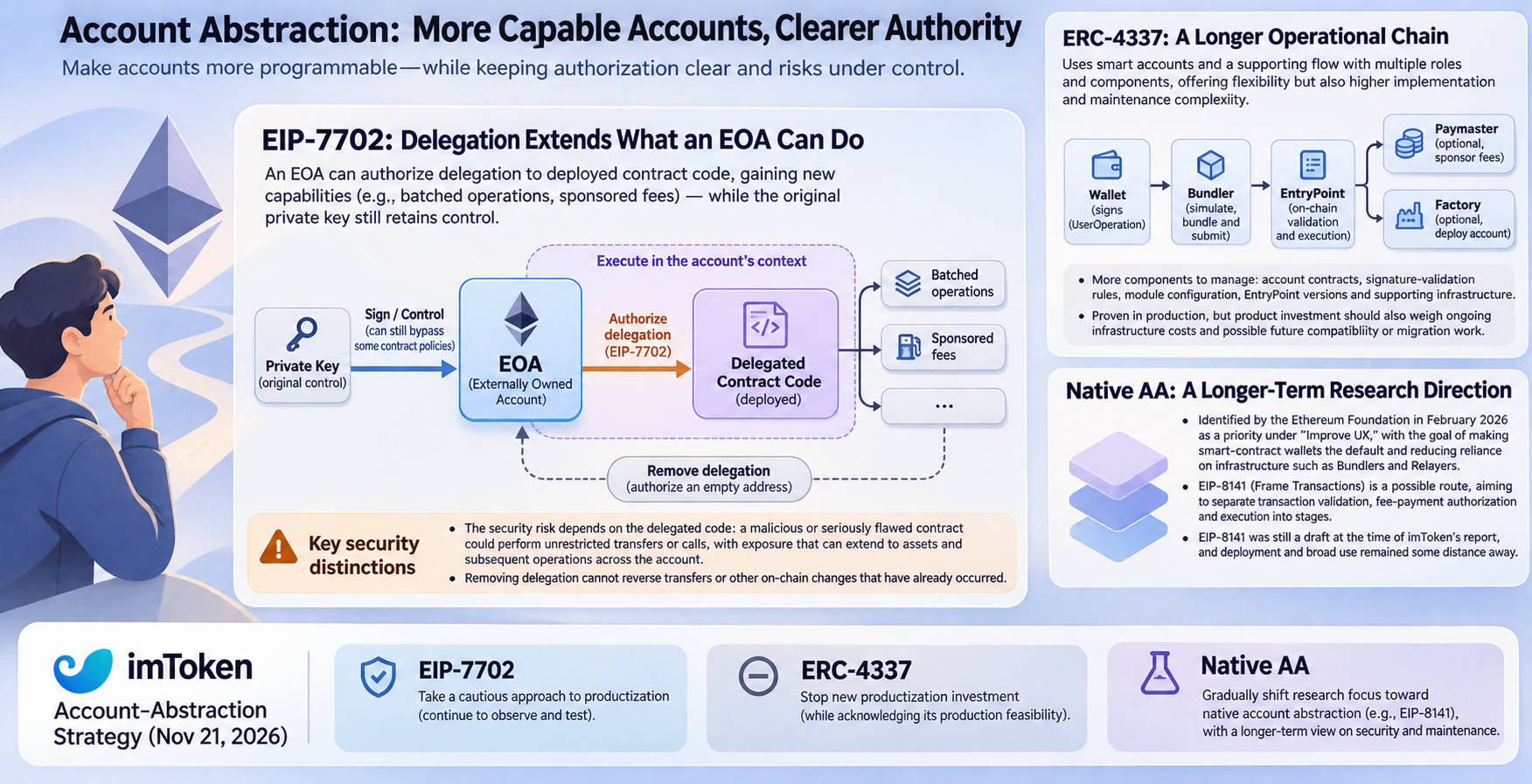
Each component creates implementation and maintenance questions for a wallet. ImToken points in particular to account contracts, signature-validation rules, module configuration, EntryPoint versions and supporting infrastructure. It says ERC-4337 has demonstrated the feasibility of smart accounts in production, but argues that further product investment should be weighed against ongoing infrastructure costs and possible future compatibility or migration work. EIP-7702 and ERC-4337 are not mutually exclusive; imToken notes that the latter has added support for compatibility with the former.
Native account abstraction remains a research direction
ImToken says the Ethereum Foundation identified native account abstraction as a priority under its “Improve UX” work in February 2026, with a long-term goal of making smart-contract wallets the default account form while reducing reliance on infrastructure such as Bundlers and Relayers. It highlights EIP-8141, or Frame Transactions, as one possible route for separating transaction validation, fee-payment authorization and execution into stages.
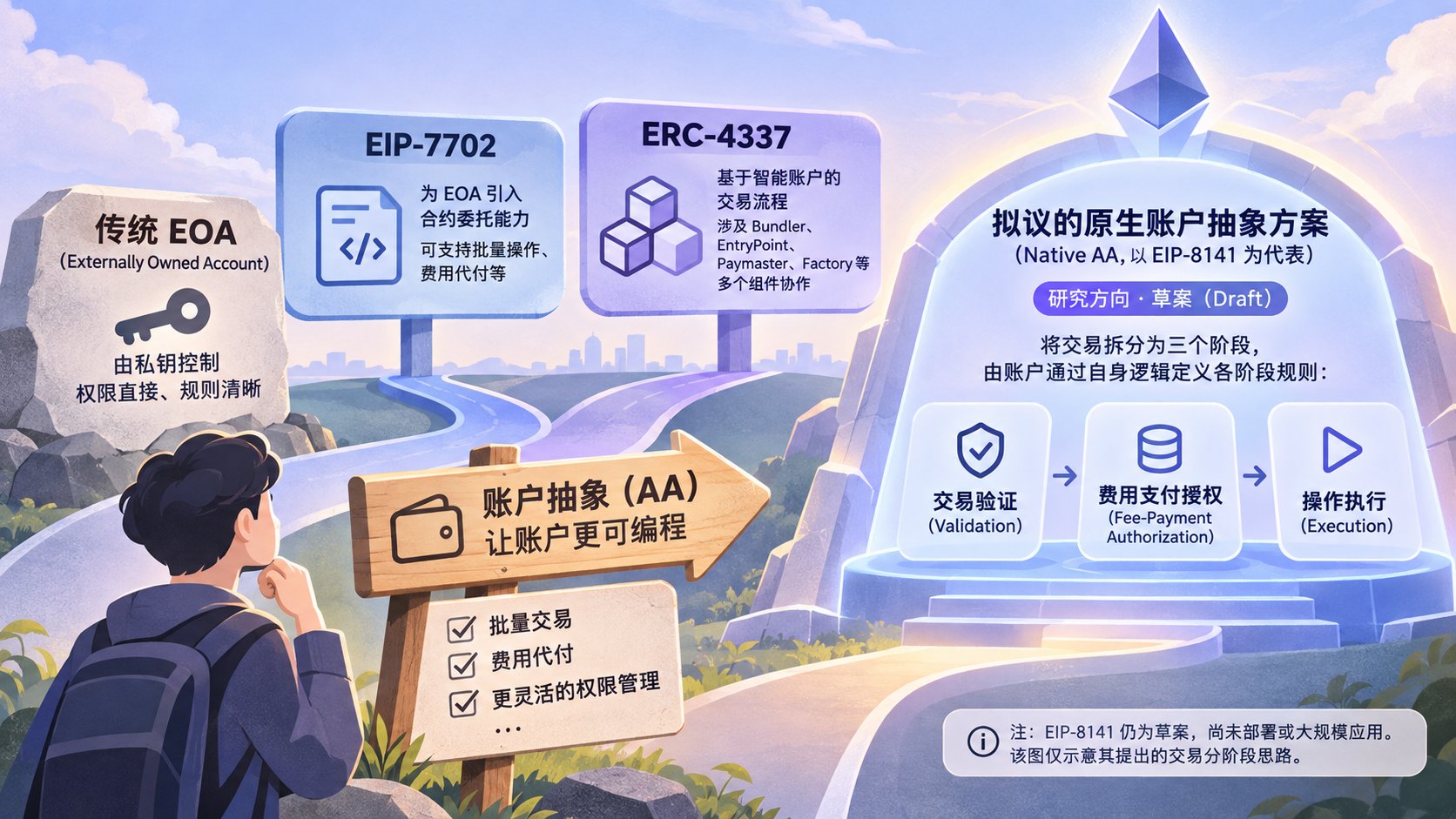
That route was not an enacted replacement at the time of imToken’s report. ImToken described EIP-8141 as a draft and said deployment and broad use remained some distance away. Native protocol support would not, by itself, eliminate risks in account-validation code or new fee-payment mechanisms. The defensible conclusion from imToken’s account is narrower: its proposed research shift favors examining those longer-term security and maintenance assumptions over expanding its current ERC-4337 product work.