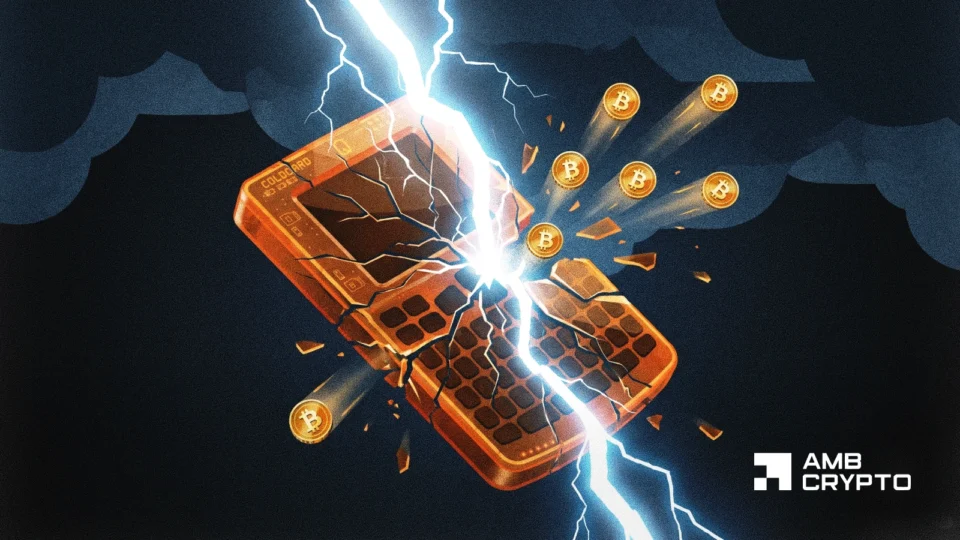
For more than five years, some COLDCARD Bitcoin hardware wallets generated recovery phrases that were valid but less unpredictable than intended. In a November 23, 2026 postmortem, wallet maker Coinkite said the flaw went undetected despite at least 15 independent security reviews, including AI-assisted research. At least 1,789 BTC, worth approximately $114.7 million at the time, was reportedly stolen in connection with the flaw.
Valid phrases, weaker randomness
Coinkite traced the problem to a software integration error in certain firmware versions released between March 29, 2021, and July 30, 2026. Affected devices used a weaker pseudorandom number generator instead of the intended hardware-based system. The wallets appeared to work normally, and their recovery phrases passed some security tests. A phrase could restore the correct wallet, however, without being as hard to guess as its owner expected.
Coinkite estimated that affected wallet seeds had about 40 bits of effective entropy on Mk2 and Mk3 devices and 72 bits on Mk4, Mk5 and Q devices, against an intended 128 bits. Entropy measures uncertainty: the lower figures meant an attacker had fewer possibilities to consider when guessing a seed. An attacker did not need physical access to the wallet.
What the fix covered
Coinkite fixed the firmware error on July 31, 2026, and introduced additional safeguards in August. The fix changed how devices generated new recovery phrases; it could not make an existing phrase more unpredictable. Affected users were advised to generate entirely new recovery phrases and transfer their Bitcoin to the new wallets rather than rely on a firmware update alone.
By November 18, Coinkite had received around 300 loss-related support tickets linked to 242 customer accounts. Those figures were not a final victim count; the number affected could be higher. As of November 26, 2026, Coinkite was still investigating with law enforcement and the Canadian Centre for Cyber Security and had not finalized a compensation plan.