In its November 11, 2026 account of the launch, Helius said its permissionless Solana Privacy Ring was live on mainnet. The mechanism is aimed at a specific limitation of public-chain payments: a wallet’s transaction amounts and asset holdings can be visible to anyone inspecting the ledger. Helius’s proposed answer is a shielded balance that can still be used within Solana’s execution environment.
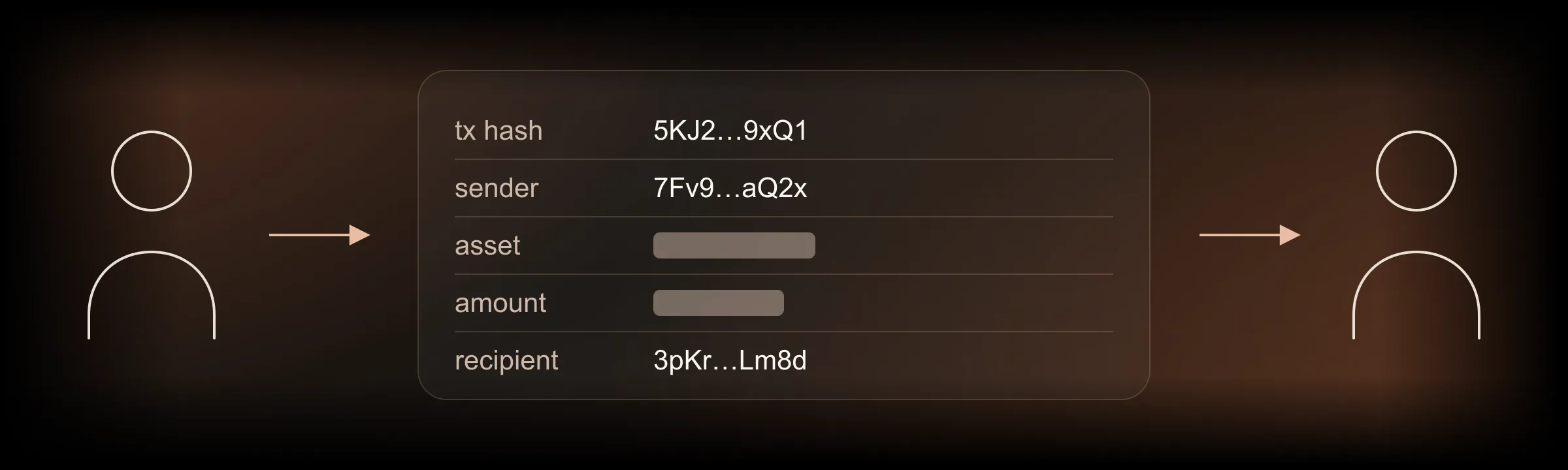
The default Ring’s privacy boundary
According to Helius, the default Ring encrypts asset types and transfer amounts, but wallet addresses remain public. An account holder can use a viewing key to read their own balance. Helius says transactions require the asset owner’s signature, encrypted state is stored on Solana, and zero-knowledge proofs establish transaction validity on-chain. It claims proof verification takes milliseconds; the supplied account does not provide an independent benchmark.
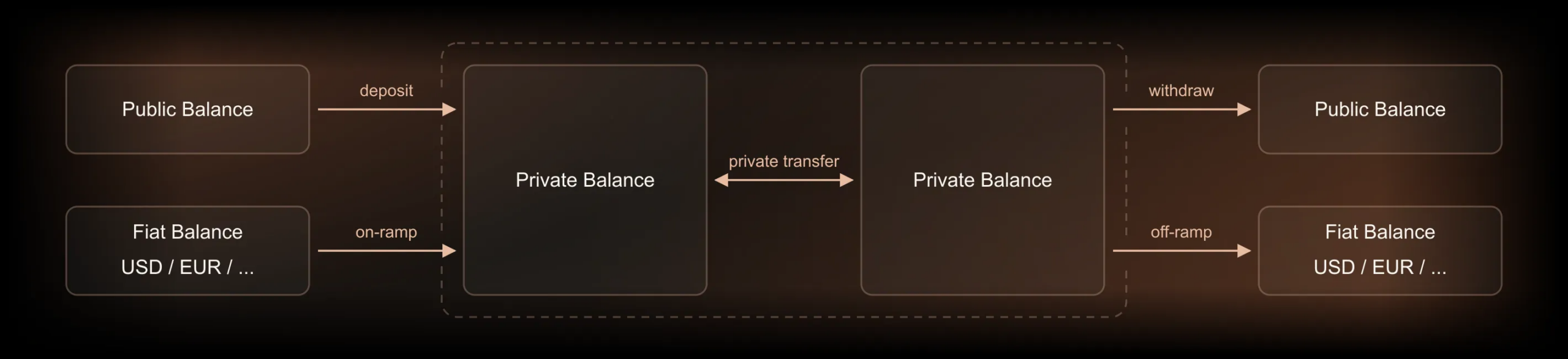
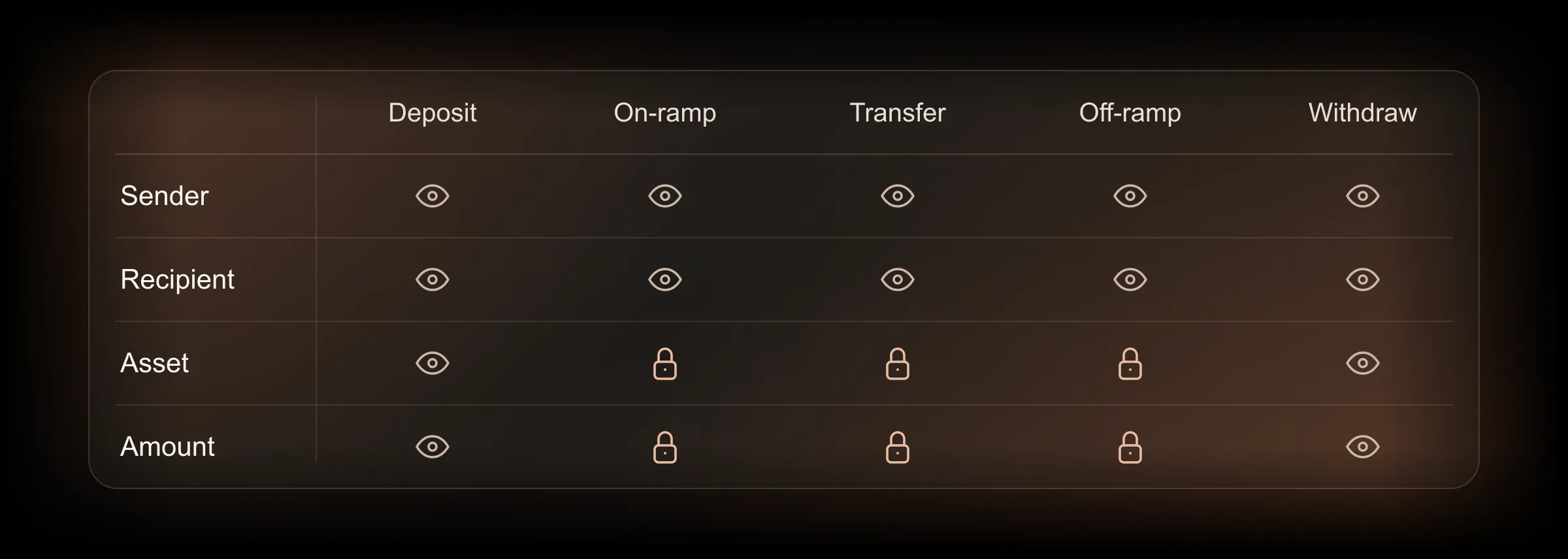
The distinction between a shielded transfer and entry or exit matters. Helius describes a flow in which users deposit from a public balance, transfer between private balances, and withdraw back to a public balance. Deposits and withdrawals expose the asset and amount on the public ledger, even though those fields are encrypted for transfers within the default Ring. The source also describes private fiat on- and off-ramps as a separate service-provider effort, not a feature that makes every deposit or withdrawal private.
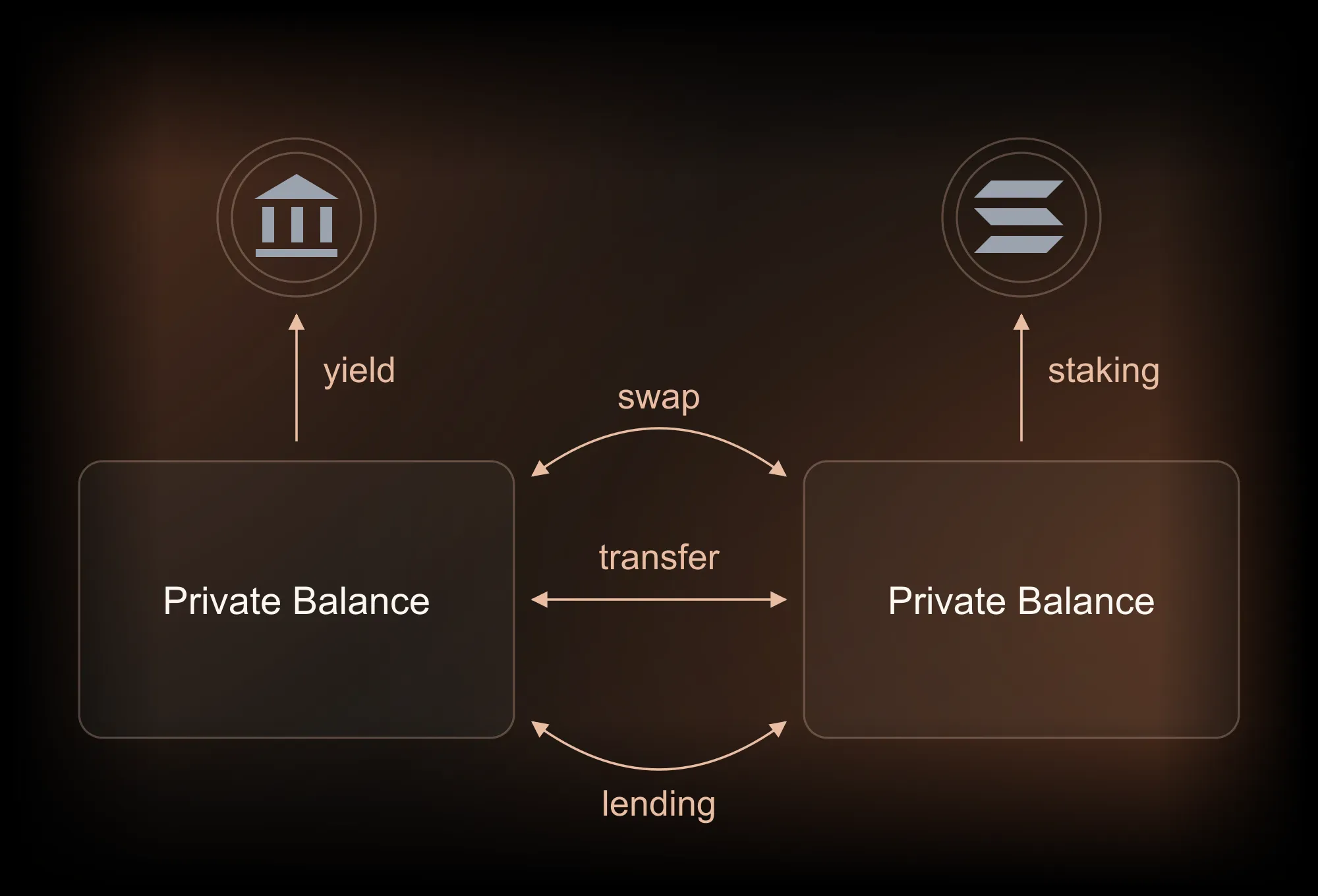
Helius says the Ring supports native SOL, standard SPL tokens and Token-2022 extension tokens. It presents private escrow—holding an encrypted balance for release under specified conditions—as a building block for swaps, lending, staking and conditional payments. Those are described capabilities and application designs, not evidence in the supplied account that each use case has been deployed at scale.
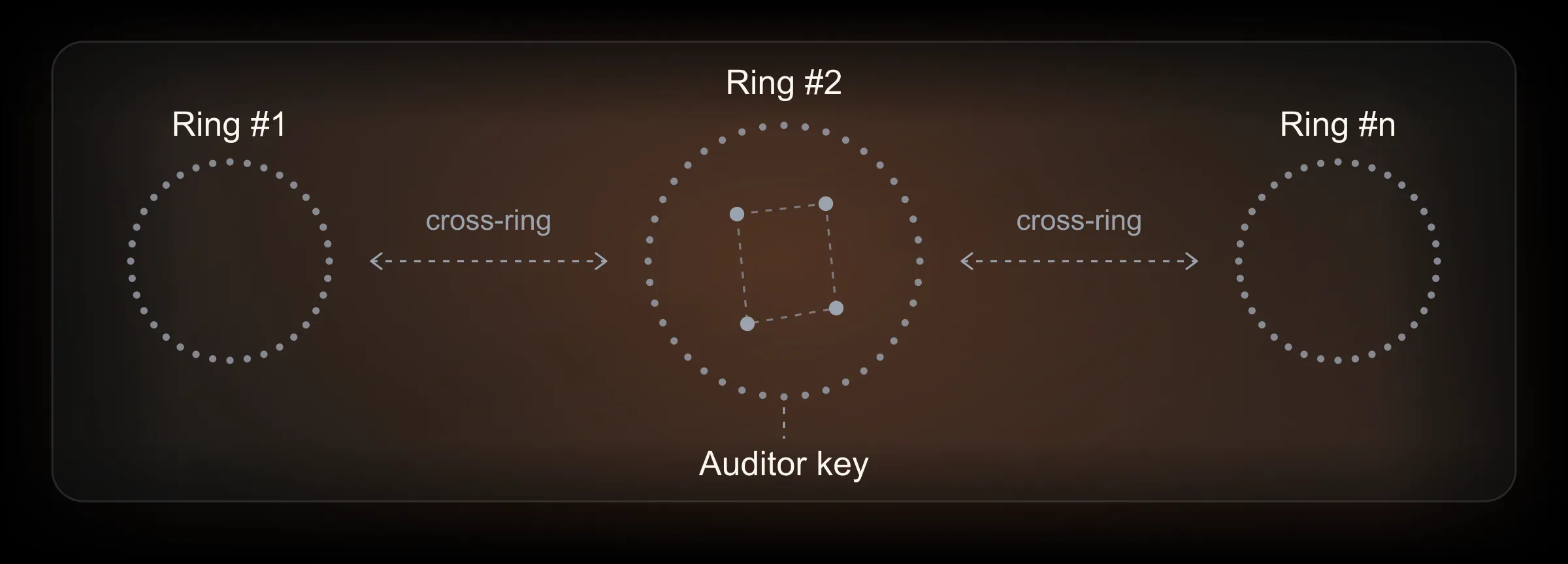
A separate institutional design
Helius distinguishes the live permissionless Ring from Custom Rings, which it said were undergoing security audits and were expected on Solana mainnet in the fourth quarter of 2026. Each Custom Ring is described as a separate Solana program. Proposed options include concealing counterparties as well as amounts and assets, issuing a read-only auditor key, selectively disclosing account or transaction records, and enforcing address lists, freezes or additional multisignature approvals. These are planned controls, not rules already in force across the default Ring.
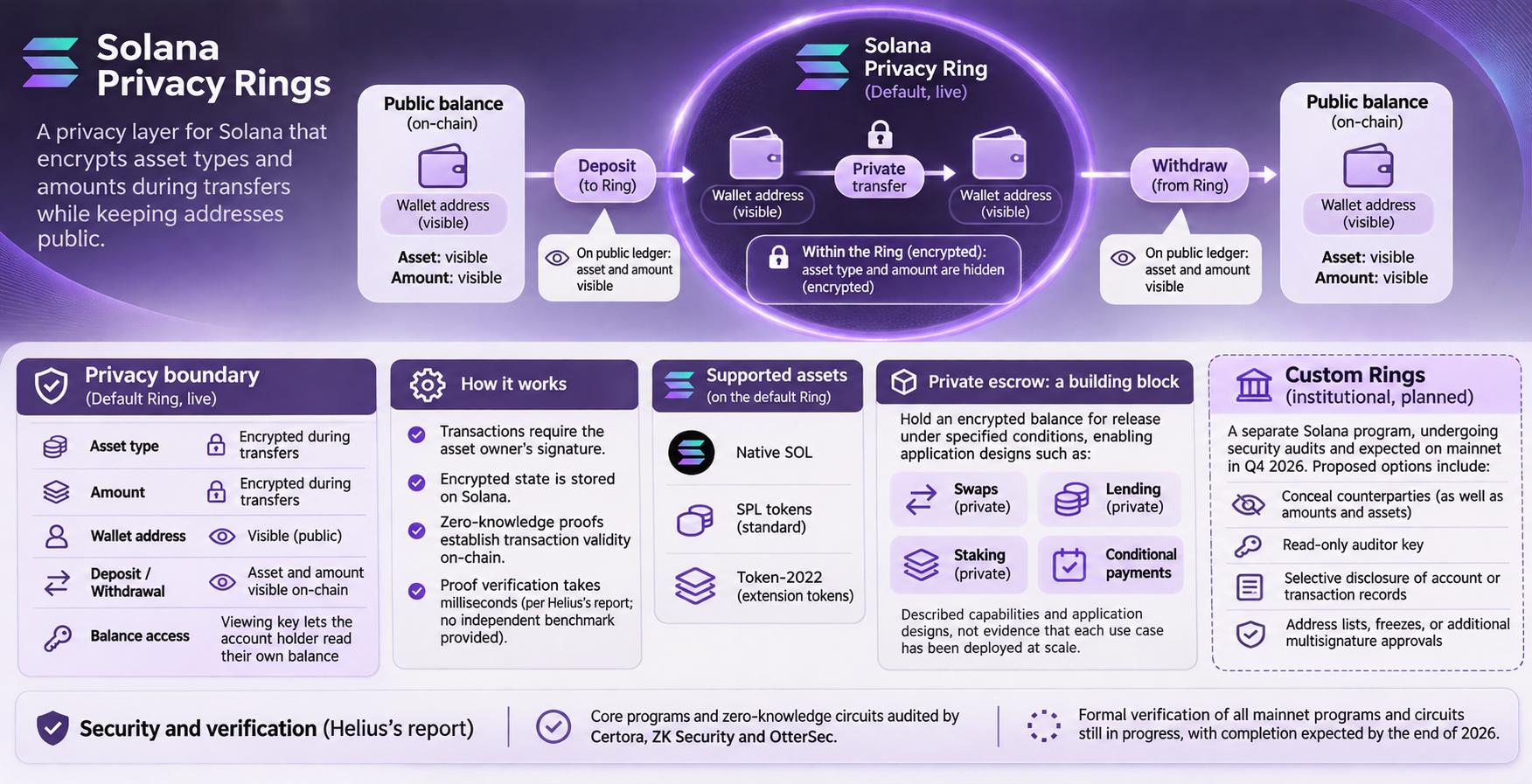
Helius also reported that the core programs and zero-knowledge circuits had been audited by Certora, ZK Security and OtterSec. It said formal verification of all mainnet programs and circuits was still in progress, with completion expected by the end of 2026. The account supplies those claims but not audit findings or verification results.
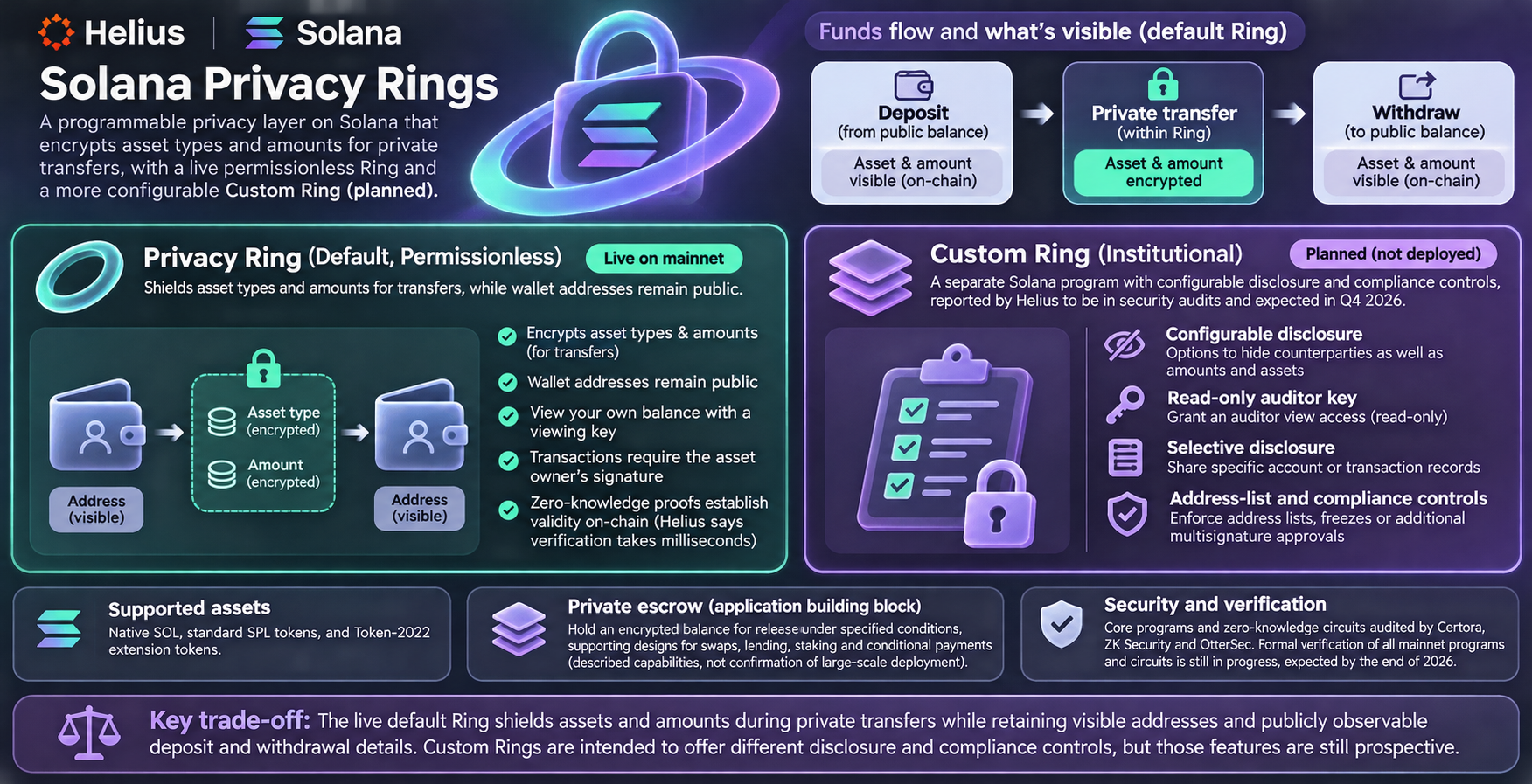
The central trade-off is therefore narrower than an anonymous Solana ledger: the live default Ring shields assets and amounts during private transfers while retaining visible addresses and publicly observable deposit and withdrawal details. Custom Rings are intended to offer different disclosure and compliance controls, but their described institutional features were still prospective as of Helius’s November 11 report.